God does not need your money. He needs your capacity to manage it for His purposes. Most of us spend our lives praying for a harvest we aren't yet equipped to distribute, forgetting that in the economy of heaven, wealth is always a tool before it is a reward.
I have spent years studying the lives of men and women in Scripture who didn't just have wealth, but who understood how to put it to work. These people were not merely "rich" in the worldly sense; they were strategic assets in the hands of the Almighty. They are the ones we now call Kingdom Financiers.
To understand who were the kingdom financiers in the bible, we have to look past their bank balances and look at their assignments. As I discuss in my hub on Kingdom Money Principles From the Bible, God never gives a vision without also providing the provision, but that provision almost always flows through a prepared person.
The difference between a wealthy person and a Kingdom Financier is direction. One accumulates to feel secure; the other allocates to see the Kingdom of God happen on earth. In my own walk, I had to learn that God wasn't looking for my "donation"; He was looking for my partnership in His work.
Before we look at the specific people, we need to understand what "financing" actually means in a biblical context. The word "financier" comes from the Old French finance, which traces back to the Latin finis, meaning an end, a settlement, or a completion.
In the Kingdom, a financier is someone who brings a matter to its intended end. They provide the resources so that the vision God has spoken can reach its full conclusion. They are the ones who "settle the bill" for the Gospel to move forward.
The Hebrew word often used for this kind of substance is hon. It refers to wealth, riches, or enough substance to get the job done. We see this clearly in the Proverbs. "Honour the LORD with thy substance, and with the firstfruits of all thine increase" (Proverbs 3:9, KJV).
That word "substance" is hon. It isn't describing a static pile of gold hidden in a vault or somewhere else in the bank. It is describing the "ready at hand" resources that are available for the Lord’s use. When you become a Kingdom Financier, your hon is no longer just for your comfort; it is the fuel for the mission.
I learned came to learn that if you don't honour God with the "substance" you have now, He won't trust you with the surplus later because what you have must serve its purpose and one of them is to extend the Lord's work here on earth. You have to be a steward of the small settlement before you can manage the national financing. It is about a heart that is ready to settle the accounts of the Kingdom.
The Financier of National Preservation
Joseph is perhaps the most famous example of a man who transitioned from a slave to a global economic powerhouse. However, guys, we often miss the scale of his financial influence. He didn't just "save food"; he managed the entire wealth of the known world during a crisis.
During the seven years of plenty, Joseph put in place a 20% national savings mandate. This was not a suggestion; but was a strategic capital reserve. As I've written before regarding how Joseph saved money, his brilliance was in his ability to see the value of the future over the consumption of the present.
When the famine hit, Joseph became the ultimate Kingdom Financier. He didn't just give the grain away for free; he traded it for silver, then for livestock, and eventually for land. By the end of the crisis, Pharaoh owned everything, and Joseph was the manager of it all.
But here is the Kingdom twist: he used that position of absolute economic control to provide a safe haven for the family of Israel. He ensured the lineage of the Messiah remained intact. He used the world’s wealth to protect God's purpose. This level of planning is something we should all aim for, which I talked about more in my post on how Abraham built generational wealth, and it really shifts your perspective on why we accumulate.
The Financier of the Covenant Foundation
We call him the Father of Faith, but Abraham was also a man of immense liquid assets and livestock. He was so wealthy that he had a private security force of 318 trained men born in his own house (Genesis 14:14, KJV). Think about the payroll required to sustain a private army of that size.
Abraham was a Kingdom Financier because his wealth was always at the service of the call. When God told him to move, he didn't ask about the cost of the relocation. When he rescued Lot, he refused to take a single thread from the King of Sodom, saying, "Lest thou shouldest say, I have made Abram rich" (Genesis 14:23, KJV).
Abraham understood that his wealth came from a higher source for a higher purpose. He didn't want the world's system to take credit for his Kingdom success. He was financing the foundation of a nation that didn't even exist yet.
His financial legacy wasn't just about his own comfort; it was about establishing a beachhead for the nation of Israel. He bought land, the cave of Machpelah, as a burial place, which was the first legal "title deed" the Hebrews held in the Promised Land. He used his capital to anchor his descendants into the promise. If you want to understand the wisdom behind this, you'll want to read what I wrote about what Proverbs says about money.
David: The Financier of the Dwelling Place
King David is a unique study in Kingdom financing because he distinguished between "state funds" and "personal wealth". When it came time to build the Temple, David had already prepared the national treasury, but then he did something radical. He gave out of his own private accounts.
"Moreover, because I have set my affection to the house of my God, I have of mine own proper good, of gold and silver, which I have given to the house of my God, over and above all that I have prepared for the holy house" (1 Chronicles 29:3, KJV).
The phrase "mine own proper good" refers to his private estate. David understood that leadership in Kingdom financing starts with personal sacrifice, not just administrative allocation. He didn't just sign off on a budget; he put his own skin in the game.
He financed the most expensive building project in human history, the Temple, not by taxing the people into poverty, but by inspiring them through his own massive personal giving. He didn't just write a cheque; he "set his affection" on the project. A true financier doesn't just provide the money; they provide the heart and the momentum.
The Financier of the Early Church
We often think of Kingdom Financiers as ancient kings or patriarchs, but the New Testament gives us powerful examples of business owners who funded the Gospel. Lydia was a "seller of purple" from the city of Thyatira (Acts 16:14, KJV). In those days, purple dye was a luxury item, meaning she dealt with high-end clients and had significant profit margins.
When Lydia was converted, she didn't just give a tithe; she opened her entire infrastructure to the mission. She said to Paul and his team, "If ye have judged me to be faithful to the Lord, come into my house, and abide there" (Acts 16:15, KJV). She became the primary financier for the church at Philippi.
Lydia is the model for the modern Christian entrepreneur. She didn't leave her business to go into "ministry"; she used her business to be the ministry’s foundation. She provided the housing, the food, and the meeting place for the apostles.
I've seen this in my own life. Some of the greatest moves of God I've witnessed were not funded by a "miracle" check from heaven, but by a "Lydia" who had a successful business and a heart for the Kingdom. If you're wondering how to find your own business path, the next thing worth looking at is how to start building income as a Christian.
The Financier of Infrastructure
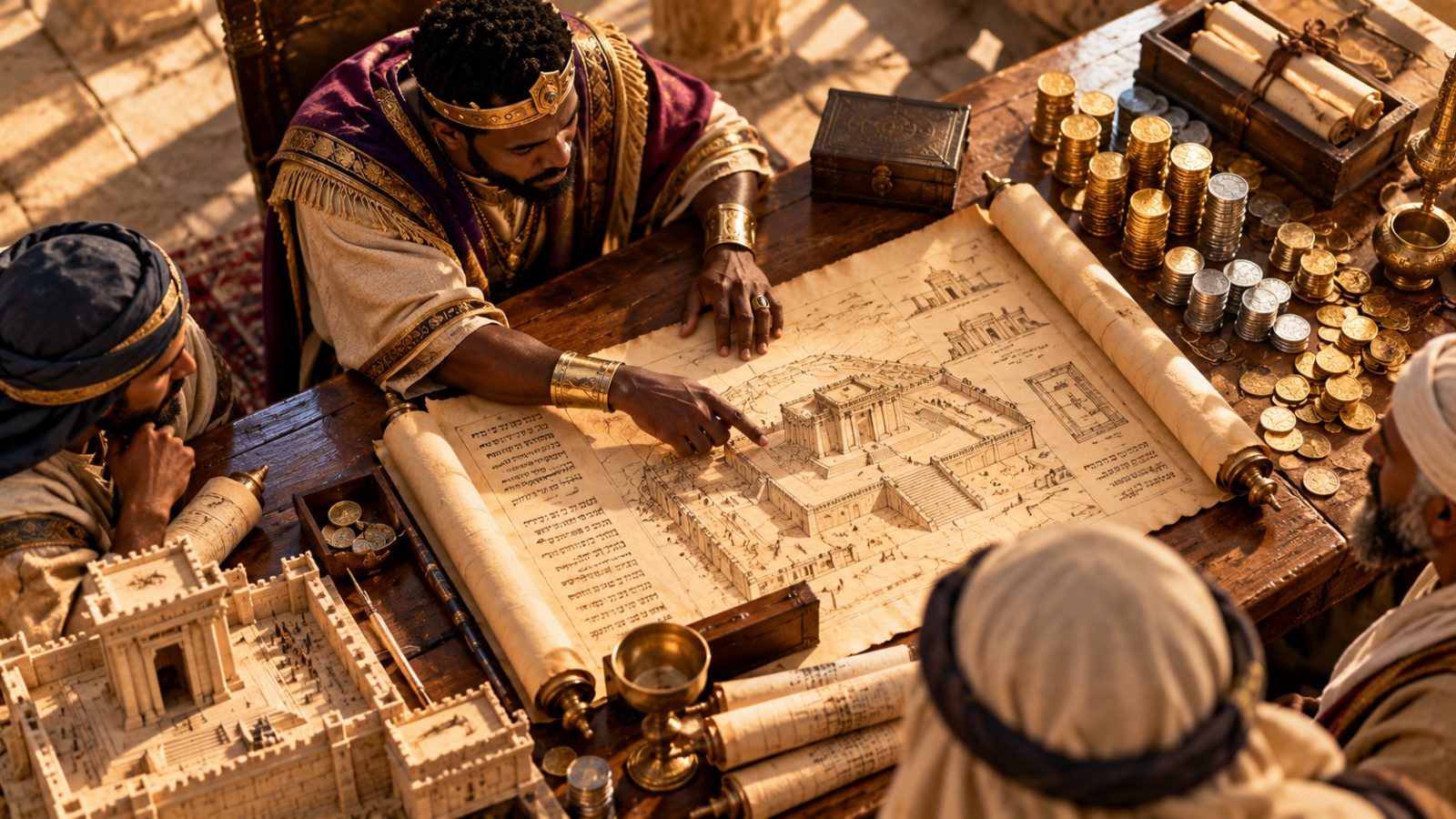
Nehemiah was a cupbearer to the king, a high ranking official with access to the highest levels of government and wealth. When he heard that the walls of Jerusalem were broken down, he didn't just pray for a miracle. He planned a project.
Nehemiah was a "Project Financier". He went to the king and asked for letters to the governors of the provinces and a letter to the keeper of the king's forest for timber (Nehemiah 2:7-8, KJV). He understood that to rebuild the Kingdom’s infrastructure, you need more than just good intentions; you need requisitioned resources.
He didn't use his own money alone; he used his influence to unlock the resources of the world's system for God's work. This is a higher level of financing. It is the ability to direct the "wealth of the nations" toward the purposes of God.
Brethren, we need more Nehemiahs today. We need people who know how to walk into boardrooms and government offices to secure the "timber" needed to build churches, orphanages, and Kingdom businesses. If you're struggling with the idea of using your skills this way, you'll want to read what I wrote about how the parable of the talents is a business plan.
The Job Description of a Kingdom Financier
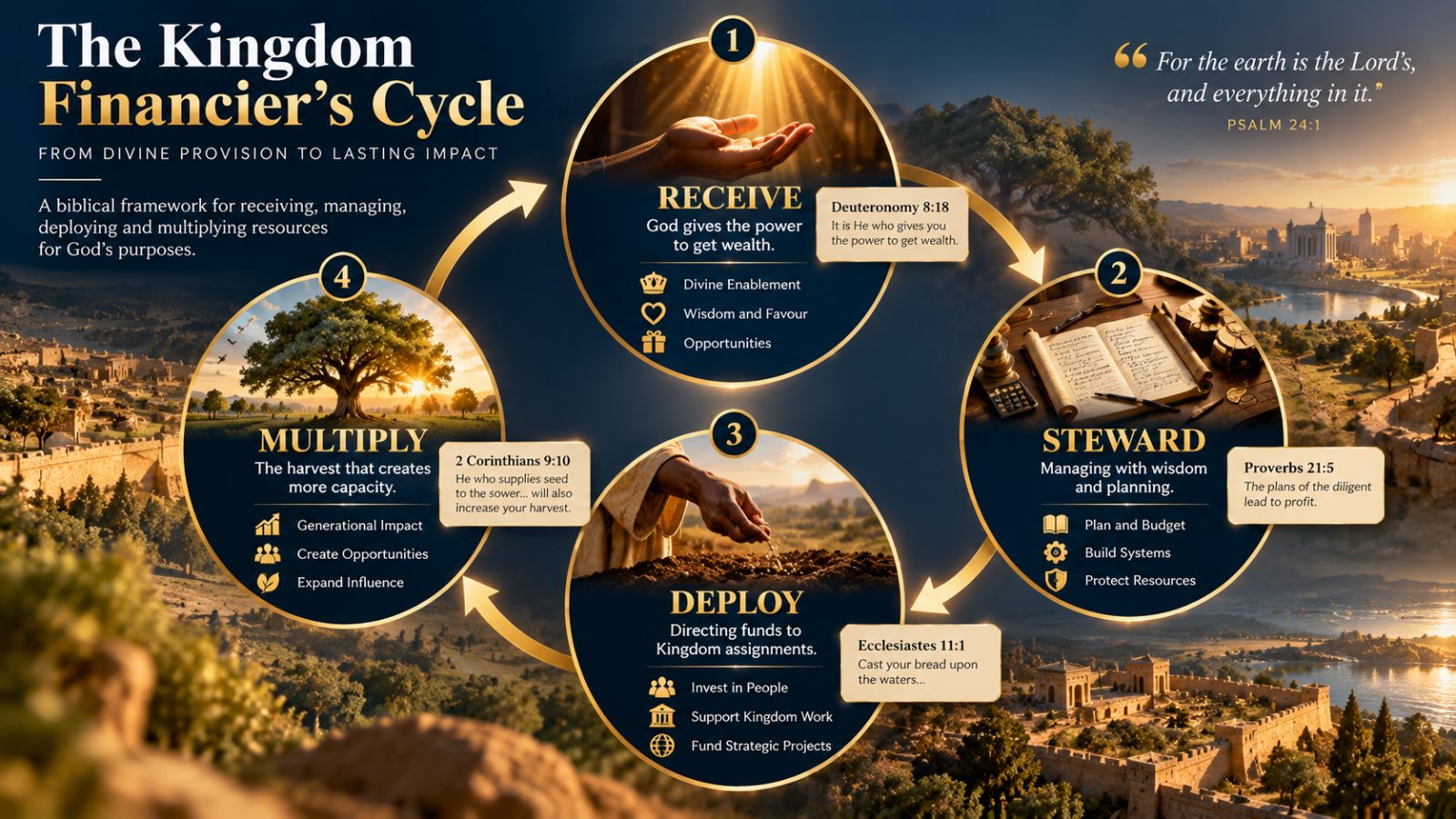
So, what does a Kingdom Financier actually do on a daily basis? It isn't just about having a large bank account. It is about a specific set of actions that align with the economy of heaven. I've found that there are three primary functions every financier must master.
First, they identify the need. A financier is observant. They don't wait for a desperate plea from the pulpit; they see the gaps in the Kingdom’s wall and start calculating the cost to fix them. They are proactive, not reactive.
Second, they allocate the capital. This is where the rubber meets the road. A financier doesn't just "give"; they invest. They look for where the money will have the greatest impact for the Gospel. They are strategic with their sowing.
Third, they maintain accountability. Biblical financiers like Joseph and Nehemiah were obsessed with proper management. They didn't just throw money at a problem; they made sure the money was doing what it was sent to do. They managed the resources with excellence. "Moreover it is required in stewards, that a man be found faithful" (1 Corinthians 4:2, KJV).
Faithfulness isn't just about being "nice". In the context of financing, it is about being effective. It is about ensuring that the Master’s business is thriving. If you want to dive deeper into this, check out what I wrote about what Jesus said about money and wealth.
The Heart Posture of the Financier
Here is the thing, people of God: you cannot be a Kingdom Financier if you are still a slave to the love of money. You have to reach a point where you are genuinely okay with the money leaving your hands as long as it is doing the Lord's work. The money must pass through you, not get stuck to you.
I learned this when I was first starting out. I wanted to be "rich", but God wanted me to be "useful". When I shifted my focus from my net worth to my Kingdom utility, the resources started to flow differently. I stopped being a dead end for money and became a conduit.
A Kingdom Financier understands that they own nothing. They are a manager of the King's assets. When the King says "move this amount to that project," the financier doesn't argue, because it wasn't their money to begin with. That is the freedom of stewardship.
If you are still afraid of losing what you have, you aren't ready to finance the Kingdom. You have to trust that the Source is greater than the stream. If the stream dries up, the Source can just open another one. Your job is to keep the channel clear of greed and fear.
How to Start Your Journey as a Financier
You don't start as a Joseph or a David. You start exactly where you are with what you have in your hand right now. Kingdom financing is a muscle that you build over time through consistent, faithful action.
Start by being the financier of your own household. Get your debts in order, build your savings, and be a faithful tither. You cannot manage the King's treasury if your own kitchen table is in a state of chaos. Excellence starts at home.
Next, look for a "micro assignment". Is there a missionary who needs a small monthly support? Is there a local ministry that needs a specific piece of equipment? Finance that. See it through to the "end". Experience the joy of bringing a vision to its completion.
Finally, pray for the capacity to do more. Don't just pray for "more money"; pray for "more capacity to manage". Ask God to enlarge your territory so that you can be a bigger blessing. He is looking for people He can trust with the logistics of the Covenant.

Child of God, the world is waiting for the manifestation of the sons of God, and that manifestation includes the financial realm. We have enough "rich" Christians who are only focused on their own comfort. What we need are Kingdom Financiers who are obsessed with the King's agenda.
Whether you are a Lydia in business or a Nehemiah in the workplace, your assignment is the same: to provide the resources for the Kingdom to reach its intended end. You are the logistics department of heaven. You are the one who makes the vision a reality on the ground.
May God grant you the wisdom of Joseph, the faith of Abraham, and the heart of David as you walk this out. Remember, the Lord is your provider, and He is more than able to supply everything you need to fulfil the assignment He has placed on your life.
Go with grace, and trust that He is already working in your finances. Walk in faith. Steward with wisdom. Trust the One who owns it all.
Where To Read Next
If you want to go deeper into how God uses people and resources to build His Kingdom, I've put together a few more studies that will help you on this journey.
How Did Abraham, Isaac, and Jacob Build Generational Wealth? What the Bible Teaches
What Does Proverbs Say About Money And The Financial Wisdom Most Believers Never Apply?
What Did Jesus Say About Money and Wealth? The Teaching Most People Miss
Frequently Asked Questions
Does God want every Christian to be a Kingdom Financier?
While every believer is called to be a faithful steward of what they have, not everyone is given the specific assignment of a large-scale financier. However, we are all called to use our resources to advance the Kingdom according to the measure God has given us. It is about faithfulness to your specific assignment, whether that is managing thousands or millions.
What is the first step to becoming a financier if I have no money?
The first step is always stewardship of the "little". You must prove yourself faithful with a small budget before God will trust you with Kingdom capital. Focus on getting your own finances in biblical order first, and pray for the wisdom to manage more as you grow in your walk.
Is there a difference between a financier and someone who just gives a tithe?
Yes, there is a difference in scope and strategy. Tithing is the baseline of obedience for every believer, but a financier goes beyond the tithe to strategically fund specific projects and visions. A financier is like a Kingdom investor who looks for where capital can have the most impact for the Gospel.
Can I be a Kingdom Financier and still be wealthy myself?
Absolutely. Many of the financiers in the Bible, like Abraham and David, were incredibly wealthy. The key is that their wealth was not their master; it was their servant. As long as the wealth is being used to establish God's covenant and you are living in obedience to His leading, there is no conflict between being wealthy and being a financier.
Found this helpful? Share it with someone who needs it.