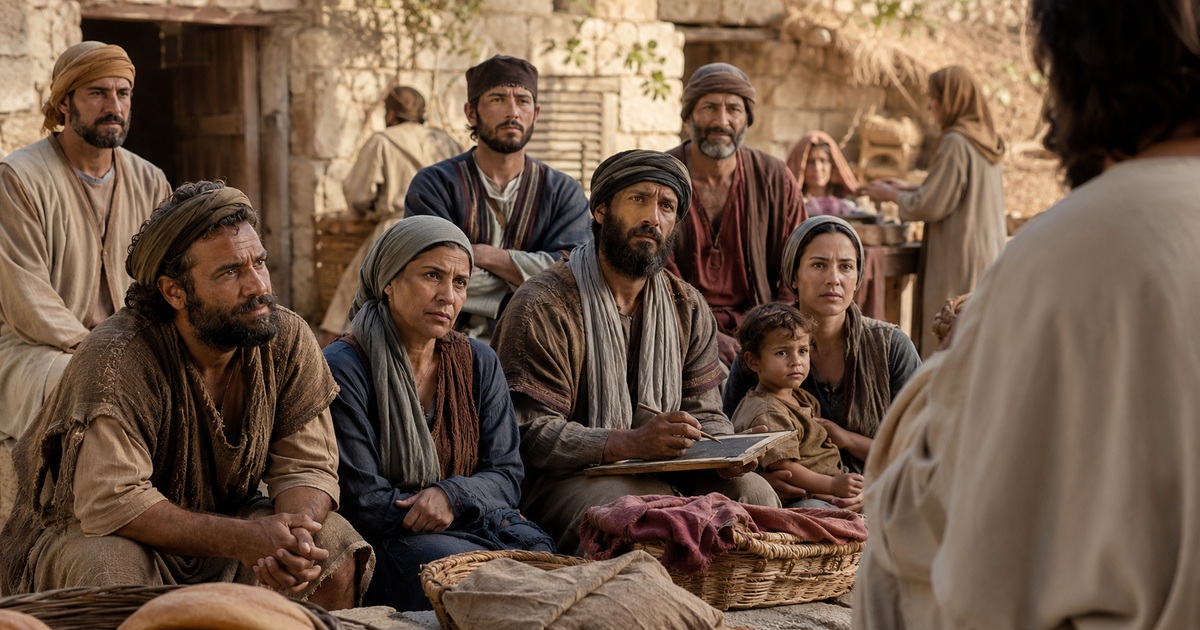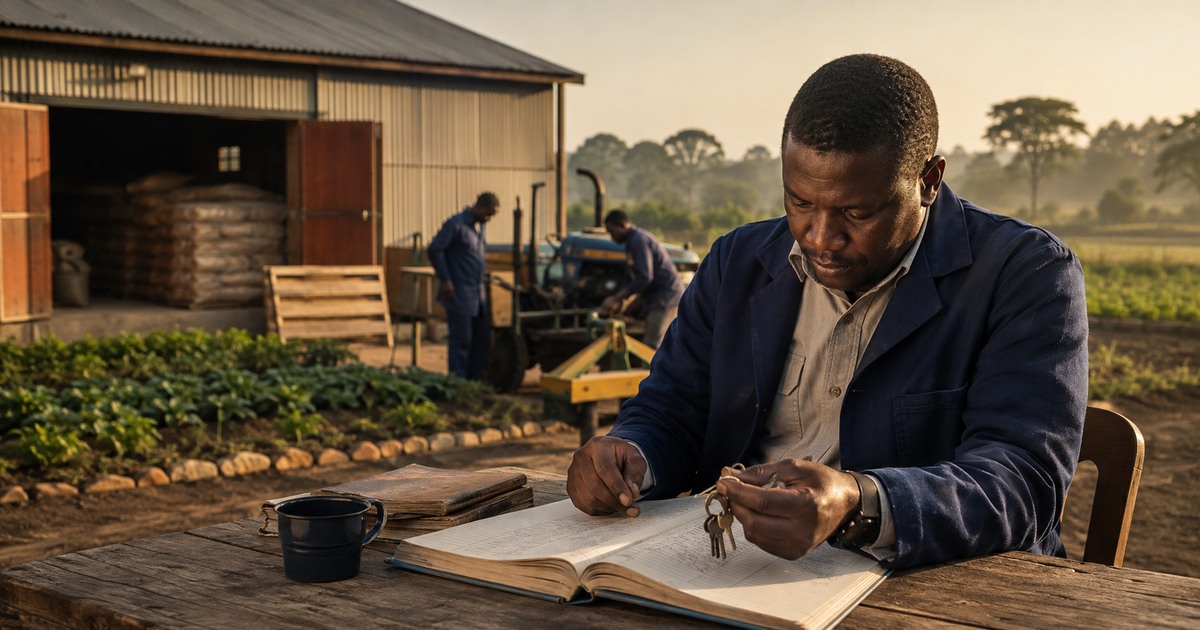
Jesus did not come to earth to make you a millionaire. He came to make you a citizen of an entirely different Kingdom. Most of us have been taught to look at the parables as either purely spiritual stories about heaven or practical tips for a better bank account, but both of those views miss the heart of the Master. I have learned the hard way that when you make money the centre of your faith, you lose the Father, but when you make money the enemy, you lose your ability to function in the world He placed you in.
The truth is that Jesus spent a staggering amount of time talking about money because He was introducing the culture of heaven to a world obsessed with the culture of accumulation. He wanted us to learn how to represent our Heavenly Father well as His children and representatives. Wealth is paramount to our livelihood as Kingdom citizens, but it must never be our main target. Our target is fulfilling God's purpose and expanding His Kingdom on this earth.
When we look at the parables, we have to be very careful. We cannot make money the centre of His message, but we also cannot treat it as a dirty secret. We have to see it for what it is: a resource for the assignment. Let us look at the stories He told and find the truth that sits right in the middle of our daily survival and our eternal calling.
What Oikonomos Tells Us About Wealth
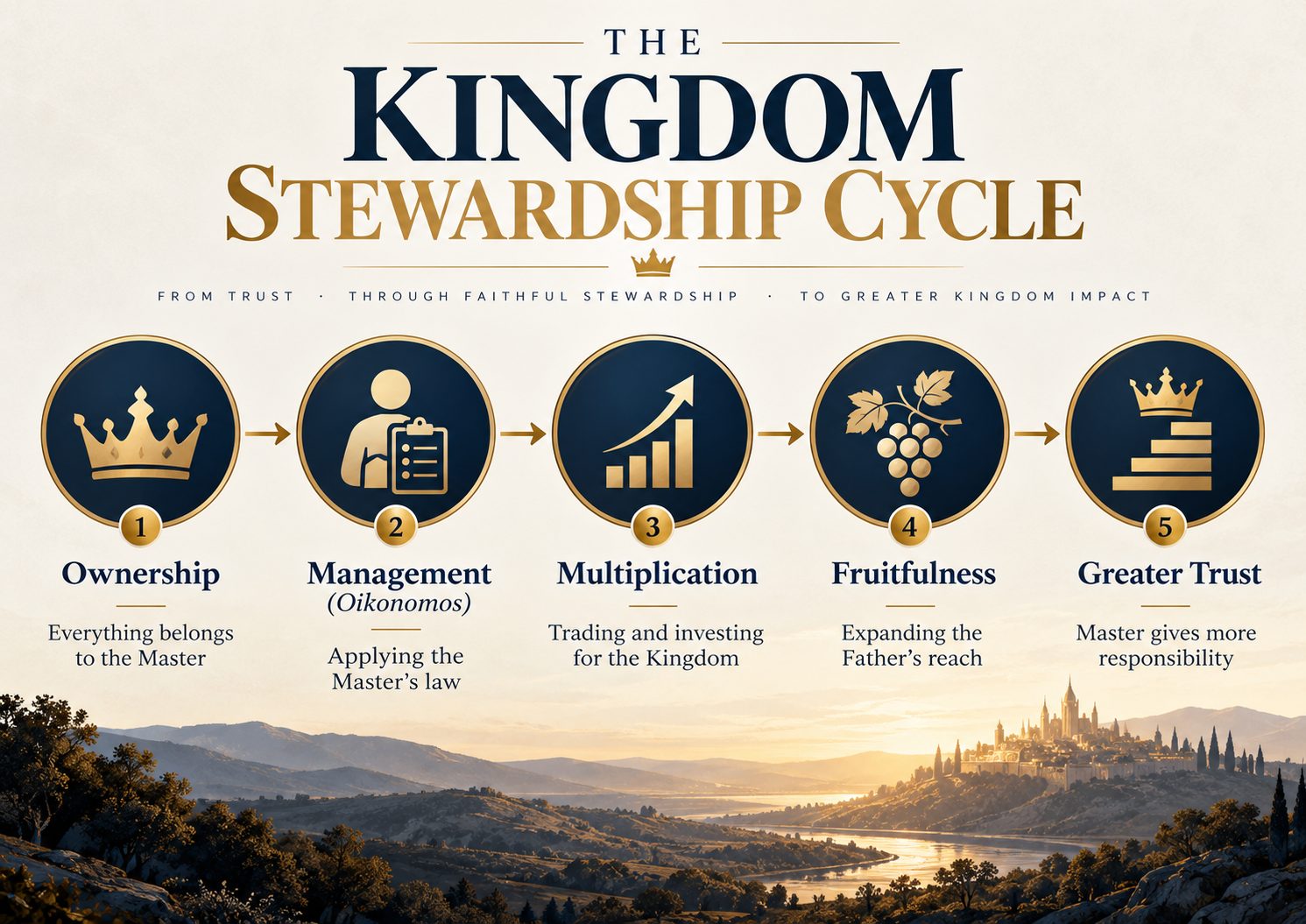
To really grasp what Jesus was saying, we have to start by understanding the core Kingdom money principles from the Bible that He was building on. The English word "steward" sounds administrative and a bit dry, doesn't it? But the Greek word Jesus uses repeatedly in His parables is oikonomos, and once you understand the root, you cannot see your bank balance the same way again. Oikos means "house" and nomos means "law".
An oikonomos is the person who governs a household according to the owner's law, not their own preferences or plans. "Moreover it is required in stewards, that a man be found faithful" (1 Corinthians 4:2, KJV). The word "required" here is the Greek zeteo, which means it is being actively sought out or demanded. God is not passively watching your finances; He is evaluating how you handle His resources to see if you are ready for the true riches of the Kingdom.
You are a manager, not an owner. That shift in mindset is the first step in moving from a worldly financial struggle to a Kingdom financial flow. I used to think my salary was my reward for hard work. I was wrong. My salary is the seed for my assignment. When you realise you are managing the King's estate, you stop asking "How much of my money should I give to God?" and you start asking "How much of God's money should I use for my needs?"
This is the foundation of what it really means to be a steward instead of an owner, and honestly, it is the only way to live free from the fear of loss. When you don't own it, you don't have to panic when the economy shifts. You just keep following the Master's instructions.
Why Jesus Warned Against Building Bigger Barns
We live in a culture that measures success by the size of the safety net we build for ourselves. If you have a massive pension and three properties, people call you wise. But Jesus told a story about a man who did exactly that and called him a fool. "The ground of a certain rich man brought forth plentifully: And he thought within himself, saying, What shall I do, because I have no room where to bestow my fruits?" (Luke 12:16-17, KJV).
The man's mistake was not his success. God is the one who made his ground bring forth plentifully. The problem was his monologue. He said "I" and "my" six times in two verses. He had no room for God's purpose in his planning. He thought the surplus was for his own comfort, saying to his soul, "Soul, thou hast much goods laid up for many years; take thine ease, eat, drink, and be merry" (Luke 12:19, KJV).
But God said, "Thou fool, this night thy soul shall be required of thee" (Luke 12:20, KJV). This is a heavy warning for us today. If your financial plan is designed to help you "take your ease" and forget your dependence on God, you are building a prison, not a barn. Wealth in the Kingdom is never meant to be a dead end; it is meant to be a channel.
I have seen this in my own walk. Whenever I start focusing on the "pile" of money rather than the "purpose" of the money, anxiety starts to creep in. Real security comes from the Provider, not the provision. I shared more about this in my post on the honest truth about why so many believers struggle with their finances, and the feedback showed me I wasn't the only one feeling this weight.

The Astonishing Parable of the Dishonest Manager
The story of the dishonest manager in Luke 16 is one of the most misunderstood teachings of Jesus. A manager is about to be fired for wasting his master's goods, so he quickly goes to the master's debtors and cuts their bills in half. He is using his current position to secure his future. And then, Jesus says something that makes religious people uncomfortable: "And the lord commended the unjust steward, because he had done wisely" (Luke 16:8, KJV).
Jesus wasn't praising the man's dishonesty. He was praising his shrewdness. He was pointing out that "the children of this world are in their generation wiser than the children of light." The manager realised his time was short and he used temporal resources to buy himself a future. Jesus is telling us to "Make to yourselves friends of the mammon of unrighteousness; that, when ye fail, they may receive you into everlasting habitations" (Luke 16:9, KJV).
What does that actually mean for you and me? It means we should use the money of this world to invest in things that last forever. We use money to represent the Father's heart , to help the poor, to spread the Gospel, and to build the Kingdom. Money is a tool that belongs to this world's system, but we are to use it with the wisdom of the next world. You are using a temporary currency to produce an eternal result.
This is where we start to see the specific things Jesus taught about money that most people miss in their Sunday morning sermons. He wants us to be tactically brilliant with our resources. Don't just let money sit there. Use it to expand the culture of heaven. If you are just paying bills and buying clothes, you are missing the tactical opportunity God has given you.
An Investment Mandate
Many people think being "spiritual" means being passive with money, but the Parable of the Talents in Matthew 25 proves the opposite. A master gives three servants different amounts of money , five talents, two talents, and one talent , based on their "several ability." The first two go out and trade, doubling what they were given. The third one, driven by fear, buries his talent in the ground.
When the master returns, he calls the first two "good and faithful" servants. But to the one who just kept the money safe, he says, "Thou wicked and slothful servant" (Matthew 25:26, KJV). In the Kingdom of God, "safe" is often another word for "unfaithful." God expects increase. He expects you to take what He has given you , your skills, your income, your time , and put them to work so the Kingdom grows.
I used to be like the third servant. I was so afraid of losing what I had that I never took a risk to grow it. But I realised that God is a multiplier, not a hoarder. He gives seed to the sower, not the storer. If you want to see God's provision move in your life, you have to be willing to put His resources into action. I've even looked at whether making a profit is actually biblical for a Christian, and the answer in this parable is a resounding yes, as long as it serves the Master's house.
The master wasn't interested in the servant's excuses about how "hard" the world is. He was interested in the fruit. As Kingdom citizens, we represent the Father well when we are productive, diligent, and focused on growth. Wealth is not the goal, but fruitfulness is. If you want to see how this applies to your work, you should read about how the parable of the talents works as a practical business plan for modern believers.
The Treasure and the Pearl And Choosing Your Centre
Jesus told two very short stories that reveal the true value of the Kingdom. One is about a man who finds treasure hidden in a field and sells everything he has to buy that field. The other is about a merchant who finds one pearl of great price and sells all his other pearls to get that one. "Again, the kingdom of heaven is like unto a merchant man, seeking goodly pearls: Who, when he had found one pearl of great price, went and sold all that he had, and bought it" (Matthew 25:45-46, KJV).
These parables show us that the Kingdom is not just another priority in our lives; it is the ultimate value that redefines everything else. The merchant didn't hate his other pearls. He just realised they couldn't compare to the one he had found. When you truly see the Kingdom of God, your relationship with money changes instantly. You no longer chase wealth for the sake of status or ego, because you have found something far more valuable.
You start to see money as the "all that he had" that you use to buy the "field" where the purpose of God is hidden. This is the balance we must find. We don't make money the centre, but we also don't ignore it. We use it to secure the things that actually matter. If you are struggling to let go of a certain level of lifestyle or a specific financial goal, ask yourself if you have actually seen the beauty of the Kingdom yet.
When the Kingdom is your main target, your financial decisions become easy. You aren't "losing" money when you give or invest in God's work; you are simply trading a lesser currency for a greater one. It is a joyful exchange, not a religious obligation. I've found that shifting your perspective to a kingdom financial mindset for success is the only way to keep your heart right while your bank account grows.
The Danger of Two Masters
We cannot talk about the parables without mentioning the clear line Jesus drew in the sand. "No man can serve two masters: for either he will hate the one, and love the other; or else he will hold to the one, and despise the other. Ye cannot serve God and mammon" (Matthew 6:24, KJV). Notice He didn't say you cannot serve God and "money." He used the word mammon.
Mammon is a Syrian word that refers to riches, but it carries the idea of "that in which one trusts." It is a spirit that wants to take the place of God in your life. Money is a tool, but Mammon is a master. Money says, "Use me to help others." Mammon says, "Trust me to keep you safe." Money is neutral, but Mammon is a competitor for your heart.
You have to decide who is the boss of your life. If your bank balance determines your peace of mind, Mammon is on the throne. If God's promise determines your peace of mind, then you are serving the King. We represent our Heavenly Father well when we show the world that we are not controlled by the same economic fears they are. We have a Father who knows what we have need of before we even ask.
I have had to repent many times for letting Mammon bark orders at me. I have had to remind myself that my job is to fulfill God's purpose, and His job is to provide the resources for it. When you get that order right, the stress of "making it" disappears and is replaced by the joy of "managing it."

Representing the Father as Kingdom Citizens
At the end of the day, the parables of Jesus reveal that our financial life is the primary training ground for our spiritual authority. If you cannot be faithful with "unrighteous mammon," who will commit to your trust the true riches? (Luke 16:11, KJV). God is using your mortgage, your grocery budget, and your business profits to see if you can represent His culture on this earth.
We are ambassadors. An ambassador doesn't worry about the economy of the country they are posted to; they are sustained by the economy of the country they represent. When you start living as a representative of heaven, you stop being a victim of the earth's cycles. You start to look for ways to expand the Father's influence through your excellence, your generosity, and your wise management.
Don't make money your target. Make the King your target. When you seek first the Kingdom of God and His righteousness, all these other things , the food, the clothes, the resources for your livelihood , will be added unto you (Matthew 6:33, KJV). That is not a "prosperity gospel" hype; that is a Kingdom culture promise. Trust the truth for what it is, and walk in the freedom that comes from knowing you are a child of the most high God.
May God grant you the wisdom of the oikonomos as you manage His estate this week. I am praying that you see your finances not as a burden, but as a glorious opportunity to show the world what your Father is really like. Walk in faith, steward with precision, and keep your eyes on the King.
Where To Read Next
If you want to go deeper into how to handle your resources with Kingdom wisdom, these articles will help you build a solid foundation.
What Did Jesus Say About Money and Wealth? The Teaching Most People Miss
Biblical Stewardship Versus Ownership: The Truth That Frees You From the Fear of Loss
Why Christians Struggle With Money: The Honest Truth Nobody Preaches On Sunday
Frequently Asked Questions
Does Jesus want all Christians to be poor?
No, Jesus never taught that poverty itself is a virtue. He taught that our hearts must not be attached to wealth and that we must be faithful stewards of whatever resources God gives us, whether that is much or little.
What is the main lesson of the Parable of the Talents?
The main lesson is that God expects us to use and multiply the resources, skills, and opportunities He gives us for the expansion of His Kingdom. Faithfulness involves active growth, not just passive preservation.
Is it a sin to have a lot of money according to the parables?
Having money is not a sin, but trusting in money or hoarding it for selfish ease is a spiritual danger. The parables warn us that wealth is a responsibility that we will one day have to give an account for.
How can I use "unrighteous mammon" for the Kingdom?
You use worldly money for the Kingdom by being generous, supporting the work of the Gospel, helping those in need, and conducting your business with such integrity that people see the character of the Father through you.
What did Jesus mean by "seeking first the Kingdom"?
It means that your primary motivation for earning and spending money should be the advancement of God's purposes on earth. When the Kingdom is your priority, God takes responsibility for your personal needs.
Found this helpful? Share it with someone who needs it.