Money is not automatically a blessing, and having less money does not automatically make a person holy. I have watched Christians become anxious at the mention of wealth because they do not want to be associated with greed or the prosperity gospel. I have also watched believers pray about money while avoiding the honest numbers, difficult decisions and steady work their situation requires. Scripture gives us a better way than either fear or fantasy.
Kingdom money principles are not steps for forcing God to make us rich. They help us receive, earn, manage and release resources under God’s authority. The goal is not to make money the centre of the Christian life. The goal is to stop money from quietly becoming its master.
When I say “kingdom,” I mean that Jesus is King, and because He is King, He has the right to shape what we love, how we work, what we keep, what we spend, and what we give. This goes far beyond offerings in church. It reaches into the salary you receive, the market stall you run, the farm you manage, the side business you are building, the loan you are repaying, the emergency fund you are growing, and every opportunity that has been placed in your hands.
If you want to build a strong financial foundation, you have to begin by seeing your entire financial life through the lens of God’s authority. Money is not separate from discipleship. The way we earn, manage, multiply, save, spend, and give all reveal what we believe about ownership, stewardship, and trust.
You can also read my article, What Do the Parables of Jesus Reveal About Wealth? to understand more clearly how Jesus viewed money, stewardship, responsibility, and the Kingdom. His teachings show that wealth is never just about possession. It is about what we do with what has been entrusted to us, and whether our financial lives reflect the values of the King.
What Kingdom Money Principles Actually Mean
The first principle is ownership. Psalm 24:1 says, “The earth is the Lord’s, and the fulness thereof.” That does not mean you cannot legally own a home, a company or a bank account. It means your legal ownership sits beneath God’s ultimate ownership. You are not free to treat people, opportunities or resources as though you created them and answer to nobody.
The New Testament word often translated “steward” is oikonomos. It described a household manager entrusted with another person’s affairs. A steward had real authority, but not absolute ownership. The steward could make decisions, organise supplies and supervise work, yet would eventually give an account. That is why 1 Corinthians 4:2 says, “also it is required in stewards, that a man be found faithful.”
This changes the question. Instead of asking only, “What do I want to buy?” I begin asking, “What has been entrusted to me, what responsibility does it carry, and what would faithfulness look like here?” Income, skill, time, relationships and influence all belong in that examination. More money does not remove the need for stewardship; it increases the responsibility attached to it.
A steward receives authority together with accountability. When you embrace this truth, the constant panic over losing possessions begins to settle because you realise the burden of ownership was never meant to rest on your shoulders.
Faith Does Not Remove Financial Responsibility
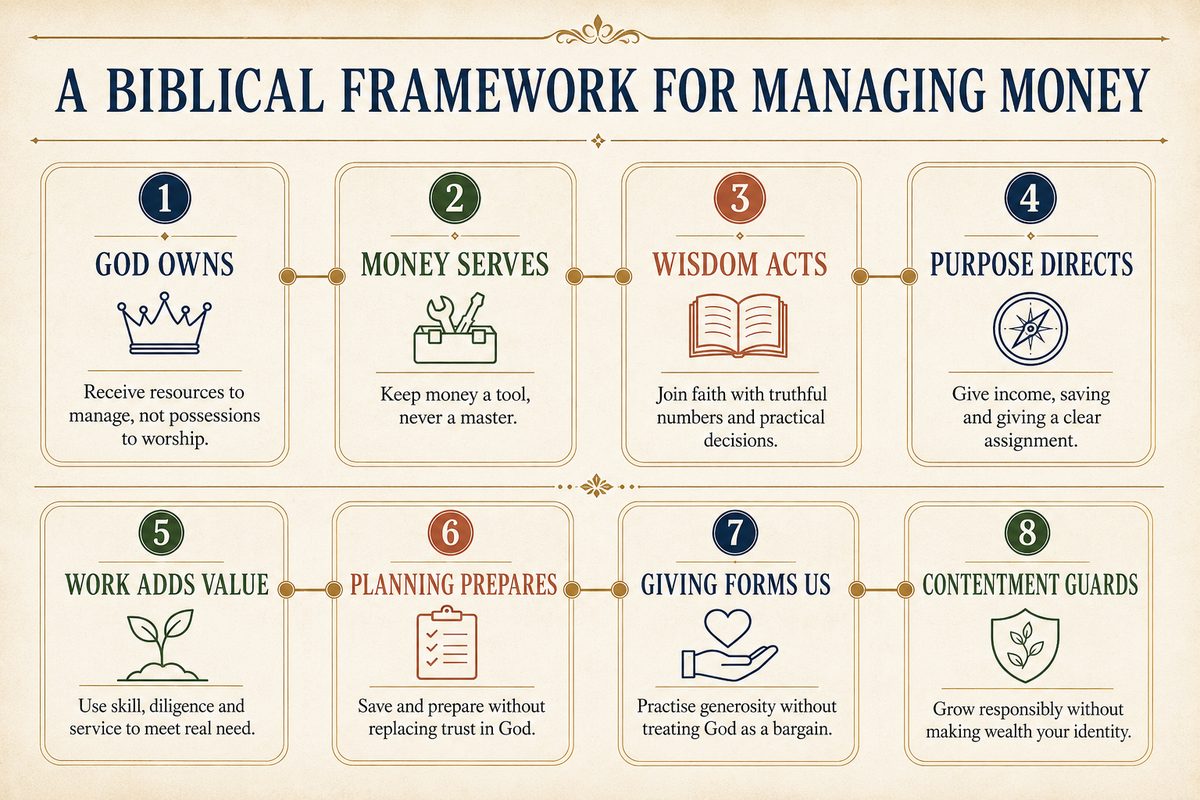
Trusting God is not the same as refusing to plan. Jesus told people to count the cost before building a tower (Luke 14:28,30). He was teaching about discipleship, not offering a budgeting seminar, so I will not force the passage into saying more than it says. Still, the example works because His listeners already understood a simple truth: responsible people examine the cost before they begin.
A budget cannot replace prayer, but prayer should make us more truthful, not less. If your income is 5,000 kwacha and your commitments require 6,500, hope alone will not make the gap disappear. You need the courage to name the shortage, reduce what you can, renegotiate what you must and seek a responsible way to increase income. That is the practical point behind Why God Cannot Bless a Plan You Never Made: faith can guide a plan, but it does not excuse the absence of one.
A plan is not a prediction. It is a present decision about what you will do with what you know, with room to adjust when prices, work or family needs change. Biblical wisdom is humble preparation under God. When we refuse to look at our figures, we are not walking in faith; we are simply hiding from reality.
Purpose Gives Money an Assignment
Money without purpose is easily consumed by the loudest desire. Before income arrives, you must direct your money before appetite directs it for you. Begin with necessities and honest obligations. Then make deliberate room for a reserve, productive growth and generosity. The amounts will differ from household to household, but the principle is stable.
For a family living close to the edge, purpose may begin with food, rent, transport and a small emergency buffer. A business owner may need to protect stock, wages, tax and maintenance before personal withdrawals. Somebody repaying debt may meet every minimum while directing extra money towards one balance. The plan must fit your real life, not somebody else’s photograph on social media.
Giving also needs purpose. Scripture calls believers to generosity, but generosity does not require financial confusion. You can give willingly, quietly and sacrificially while still caring for dependants and paying what you owe. Paul’s language in 2 Corinthians 9:7 is deliberate: giving should not be done “grudgingly, or of necessity.” Pressure may produce a payment, but it cannot manufacture worship.
Purpose gives every unit of income a responsibility before impulse takes control. If you leave your cash unassigned, the world's marketing machine will gladly assign it for you before the week is through.
Work, Skill and Planning Belong in the Same Theology
Biblical stewardship is not limited to spending. It includes the capacity to produce value. Proverbs repeatedly joins diligence, skill, foresight and honest trade. Work is not only employment under a company. It can include farming, teaching, repairing, caring, designing, selling, building or turning learned knowledge into a service that genuinely helps another person.
This is why The Parable of the Talents Is a Business Plan is useful when read carefully. The parable is ultimately about faithfulness while the master is absent, not a promise that every Christian entrepreneur will become wealthy. Yet Jesus intentionally pictures servants being judged by what they did with entrusted resources. Fear buried what faithfulness should have deployed.
You must sharpen your skill before you sell it. Desire is not competence, and Christian language cannot compensate for poor service. If you promise a customer a strong product, meet the standard you named. If you are still learning, be honest about your level and practise before charging as an expert. A good name is part of the value you are building, and character is what keeps that name from collapsing when money begins to come.
Joseph’s preparation in Genesis 41 did not create the harvest, but it kept abundance from being wasted. Proverbs 21:20 commends storing resources rather than consuming everything. Saving is not automatically unbelief. It becomes dangerous when stored wealth replaces God as our security or fear makes us unwilling to serve.
Debt, Giving and Contentment Need the Same Heart
Debt limits future choices because part of tomorrow’s income has already been promised. Romans 13:8 should not be reduced to a technical ban on every form of borrowing, but Scripture repeatedly treats debt as serious and warns that the borrower becomes servant to the lender.
Contentment is the shield that protects you from the pressure of consumer culture. It allows you to say, “I am grateful for what I have today, and I can wait for what I cannot yet afford.” When you chase status through debt, you forfeit the peace that God intended for your home.
Giving should not stop because money is tight. Even when you are working through debt, keep a posture of generosity. It anchors your soul in the truth that God is your provider, not your salary or your creditors. When we keep our hands open, God is able to move freely through our lives without interference.
Where To Read Next
How to Develop a Kingdom Financial Mindset for Successful Living
Biblical Stewardship Versus Ownership: The Truth That Frees You From the Fear of Loss
Kingdom Economics Versus World Economics: The Biblical Financial System
How Sabbath Rest Is a Biblical Wealth Principle That Most Believers Have Never Applied
How Did Abraham, Isaac, and Jacob Build Generational Wealth? What the Bible Teaches
Does the Bible Support Multiple Income Streams? What Scripture Says About Financial Diversification
What Did Jesus Say About Money and Wealth? The Teaching Most People Miss
What Does Proverbs Say About Money And The Financial Wisdom Most Believers Never Apply?
Biblical Investment Principles: What Scripture Teaches and What It Does Not
When Wealth Becomes an Idol: Biblical Warnings and Protection
Frequently Asked Questions
What are kingdom money principles?
Kingdom money principles are biblical guidelines that help believers manage, earn, and release financial resources under God's authority rather than living in fear or worldly greed.
Does the Bible say it is a sin to borrow money?
Scripture does not explicitly call borrowing a sin, but it warns that debt places you in a position of bondage and vulnerability, making the borrower a servant to the lender.
How can I start budgeting if my income is unstable?
Base your budget on your lowest expected monthly income, cover essential survival needs first, and allocate any extra funds during high-earning months toward savings and debt reduction.
Why is tithing important if stewardship covers everything?
Tithing acknowledges God's priority and first place in your life, acting as a spiritual rhythm that keeps your heart detached from greed while you manage the rest of your resources.
Found this helpful? Share it with someone who needs it.