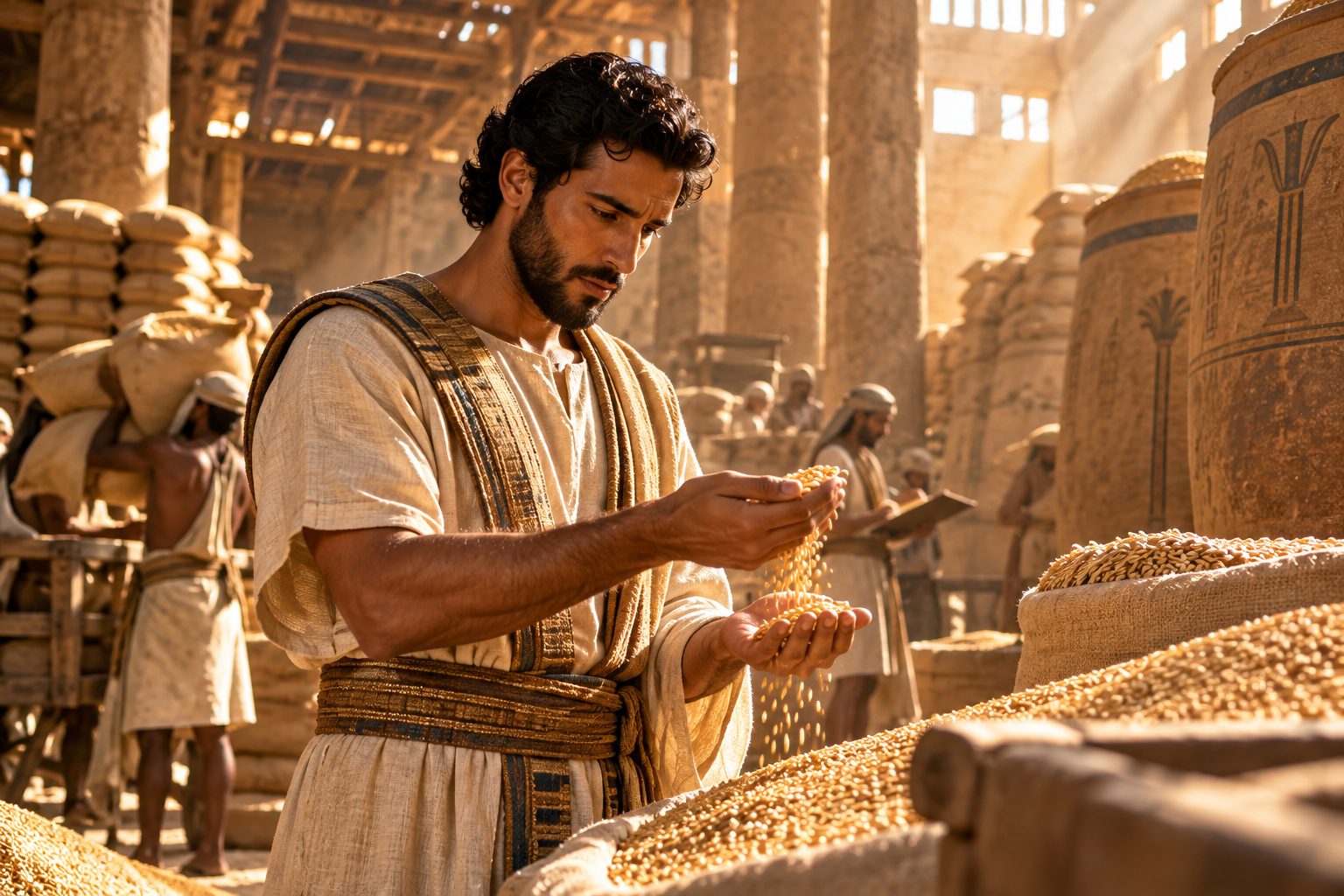
Genesis 41:46-49 and 53-57 shows Joseph handling two very different seasons. During plenty he goes throughout Egypt, gathers food and lays it up in the cities. When famine comes, there is bread in Egypt and the storehouses open. This study follows that movement so that we can understand abundance as a responsibility, saving as purposeful preparation and resources as things God can place in our hands to serve needs that reach beyond the present moment.
Many of our prayers for increase are deeply personal. We ask God to help us breathe again, care for our families, settle obligations and move beyond pressure that has followed us for years. Those are honest prayers. Joseph's story also teaches us to ask what greater usefulness may become possible when God gives us room, strength, skill, opportunity or resources.
Lesson 6 followed Joseph from the prison to Pharaoh's court and then into the work of Egypt. Lesson 7 slows down over one part of that work. Joseph now has authority, access, knowledge of the coming famine and an extraordinary harvest moving through the land. The question is what he will do with all of it.
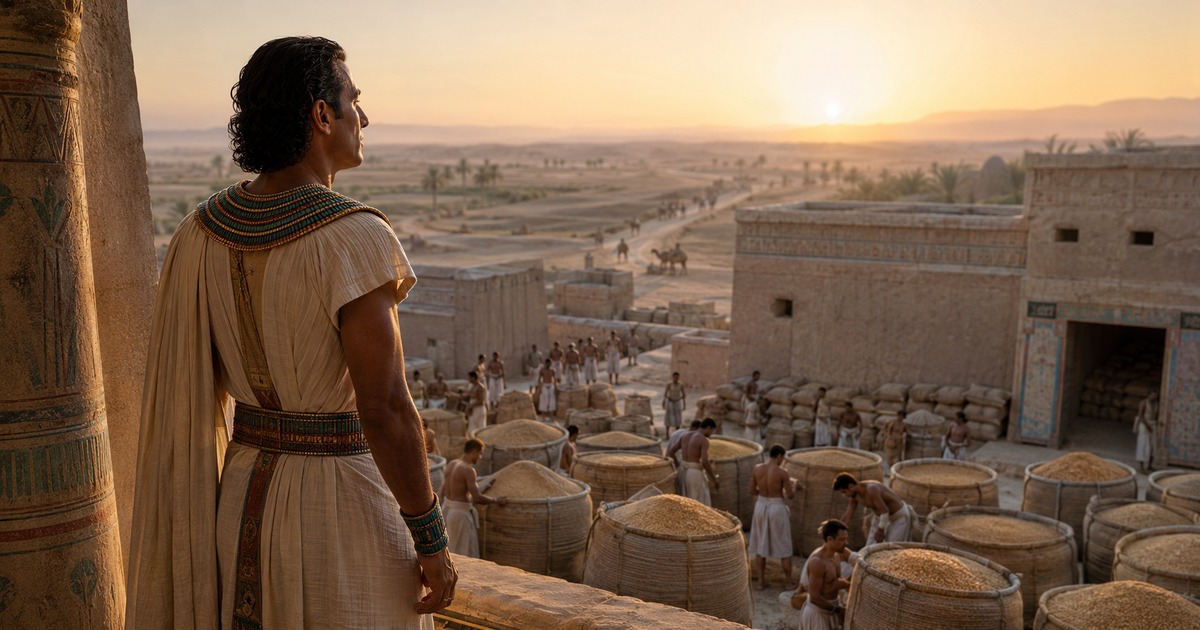
The answer is very practical. Joseph goes through the land. He gathers. He lays food up in cities. He continues until the grain is beyond numbering. Then the season changes exactly as God had shown. Famine arrives, people cry for bread, and Joseph opens the places where food has been kept. What was preserved in a strong season becomes useful in a difficult one.
That sequence speaks directly into Christian stewardship. We may never manage a nation's grain, yet every one of us handles something: income, time, skill, strength, property, knowledge, relationships, opportunities or influence. The size differs from person to person. Faithfulness begins with recognising that what is in our hands carries responsibility before God.
I have learned to ask a deeper question about money: what has God entrusted to me, and how can I manage it faithfully? That question changes the purpose of saving, earning and giving. Money can remain a servant. It can help provide for a family, create breathing room, meet an obligation, support ministry, create work for another person or make help possible when a difficult season arrives.
This study is one part of The Story of Joseph in the Bible: 10 Powerful Lessons From His Life, where I follow the whole movement from the pit to faithful work, responsibility, reconciliation and legacy.
Genesis 41:46 - Authority Sent Joseph Into the Work
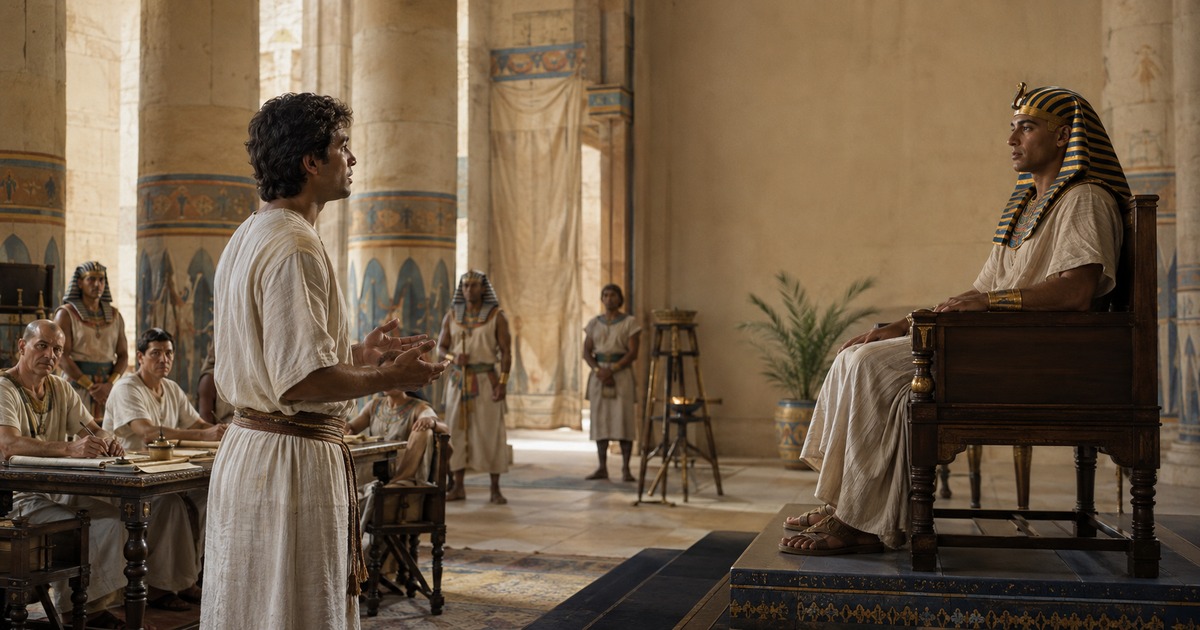
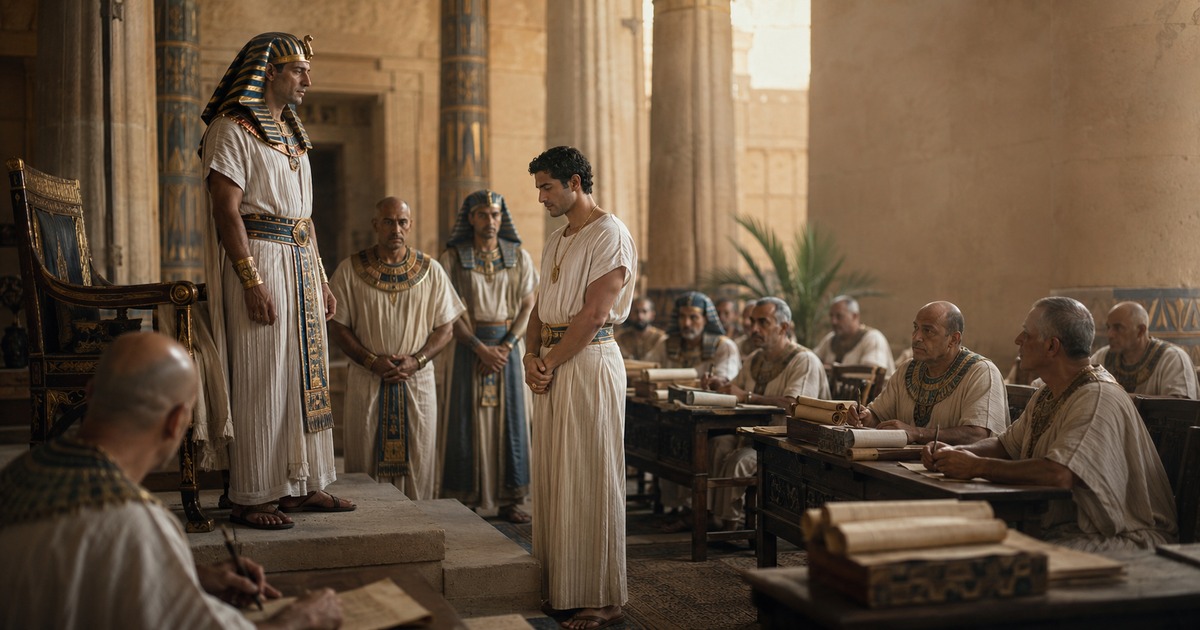
Verse 46 tells us Joseph was thirty years old when he stood before Pharaoh. Then the verse immediately says he went out from Pharaoh's presence and went throughout all the land of Egypt. His new position becomes movement. He has received authority, and now he enters the place where that authority must become useful.
This is important for any conversation about resources. Access by itself is only access. A salary, business, field, skill, title, opportunity or growing audience carries possibility, but stewardship asks what we will do with it. Joseph does not remain around the throne admiring what has changed in his life. He goes through the land connected to the responsibility God has allowed him to carry.
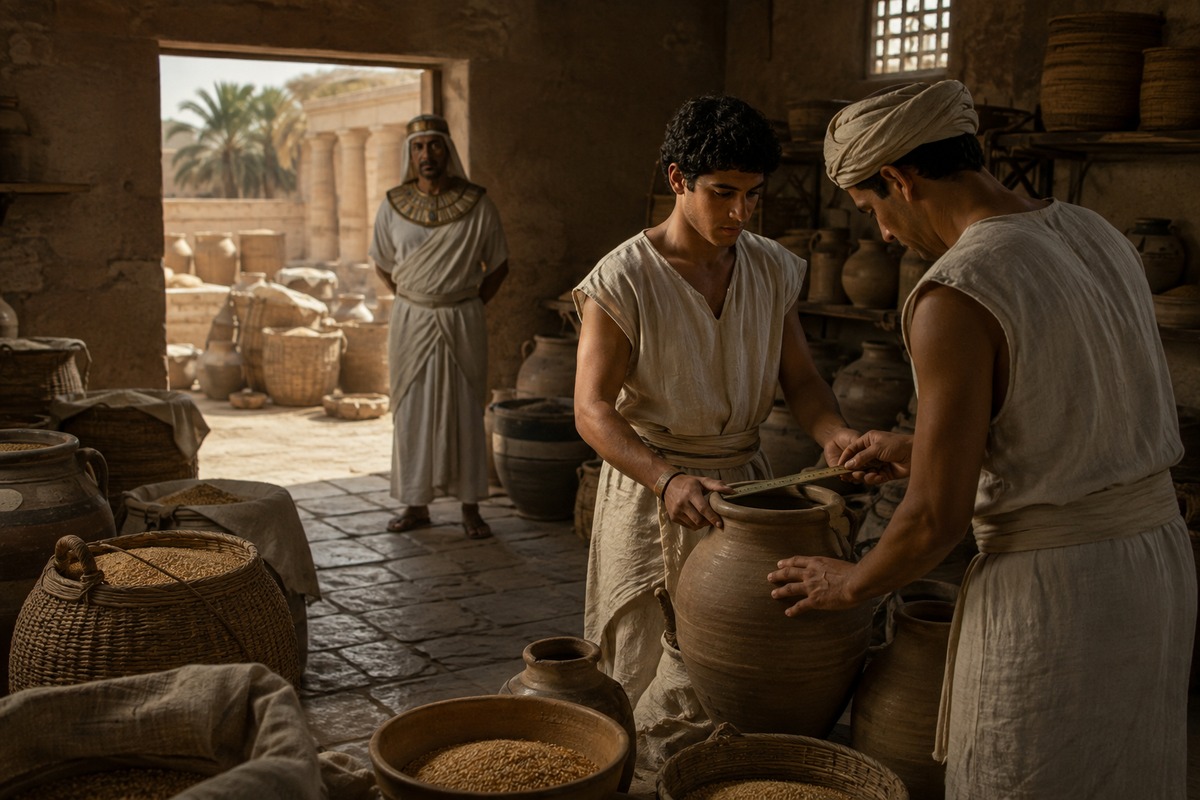
There are seasons when our prayer is simply for relief, and God understands the pressure of ordinary needs. Yet when relief comes, wisdom helps us turn new room into responsible action. A little margin can begin a reserve. A stronger income can help settle obligations. A growing business can strengthen its records, serve customers well and eventually create employment. A gift can be developed until it becomes useful to more people.
Genesis 41:47-49 - Plenty Was Given a Future Purpose
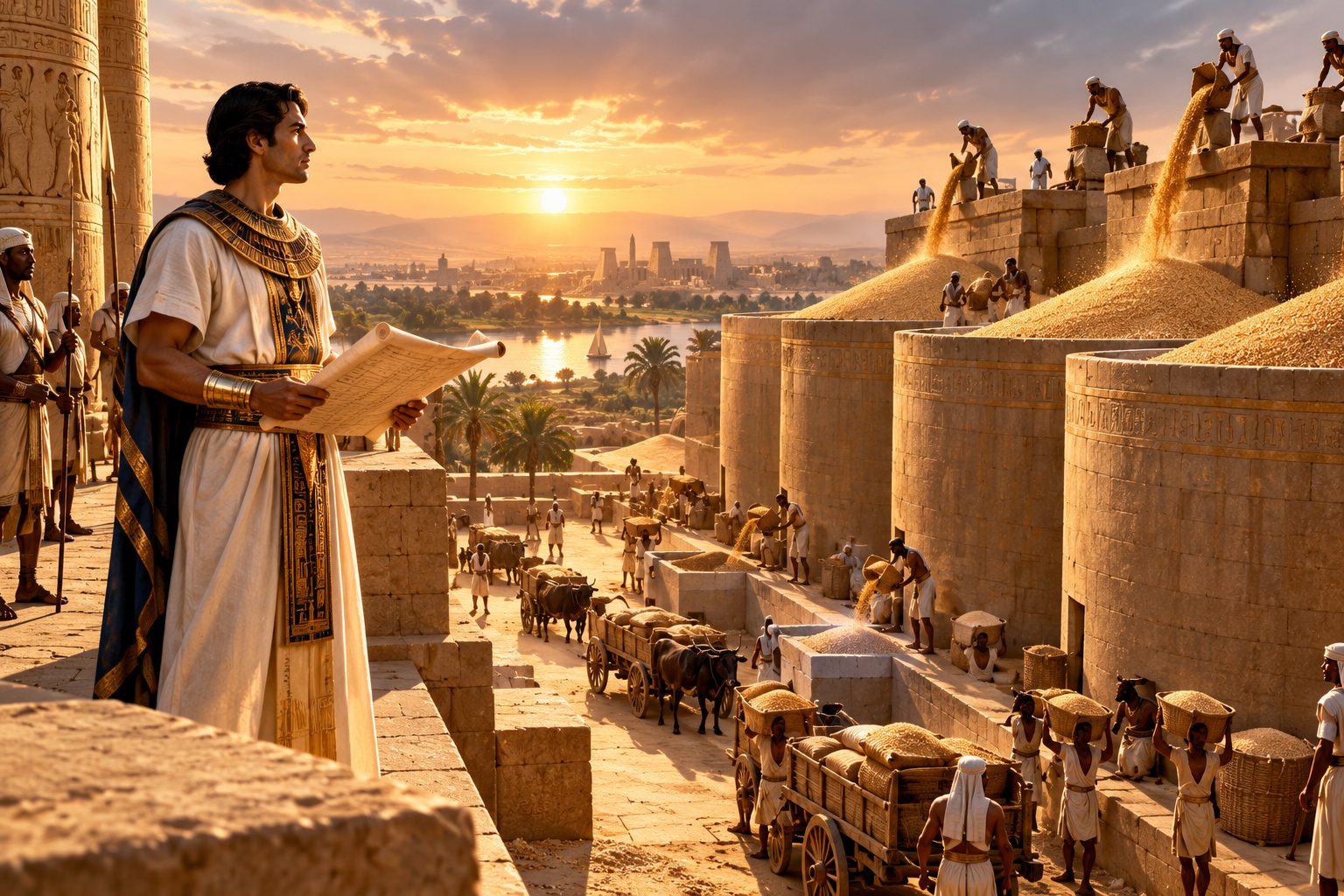
The earth brings forth 'by handfuls.' Joseph is standing inside abundance on a scale the text describes as the sand of the sea. His response is disciplined: he gathers the food of the seven years and lays it up in the cities, placing the produce of the surrounding fields in the city connected to those fields.
There is both scale and order here. Joseph does not wait for famine before deciding how the abundance should be handled. The strong season is the time when preparation happens. Grain is gathered while grain exists. Storage is built into the years of plenty, because the years of plenty have a purpose connected to what comes after them.
This gives saving a beautiful place within stewardship. Saving can create room between today's provision and tomorrow's responsibility. A household reserve can help when income is interrupted, school costs arrive, a repair cannot wait or a family member genuinely needs support. Preparation can reduce the number of decisions we are forced to make in panic.
Generosity belongs beside that preparation. A person does not have to wait to become wealthy before learning to give. At the same time, wisdom can preserve part of today's resources so that future responsibilities do not find us empty-handed. Joseph's grain reminds us that something kept with purpose can later become something useful.
Genesis 41:53-54 - The Season Changed, but There Was Bread
Verse 53 is quiet and final: the seven years of plenteousness were ended. A season that once looked abundant enough to continue without limit came to an end. Scripture then tells us that the seven years of dearth began, according as Joseph had said. The contrast is sharp. Plenty ends; dearth begins.
Then comes one of the most important lines in the passage: 'but in all the land of Egypt there was bread.' The famine is real, and the need is real, yet the earlier years were handled with the later years in view. What had been gathered and laid up now stands between a changing season and immediate emptiness.
This is why a season of enough deserves attention. When income improves, a debt is cleared, a contract is won, a harvest is strong or a business experiences a better month, the extra room can be given purpose. Some may go towards present needs, some towards known future obligations, some towards a reserve, some towards giving and some towards building the work that produces value. The exact amounts differ, but purpose keeps abundance from disappearing without thought.
Planning and faith can live in the same life. Joseph acted because he took seriously what God had shown. He did not sit beside full fields waiting for the famine to organise itself. He worked during plenty so that bread would still be available when conditions became difficult.
Genesis 41:55-56 - The Storehouses Opened When the Need Arrived
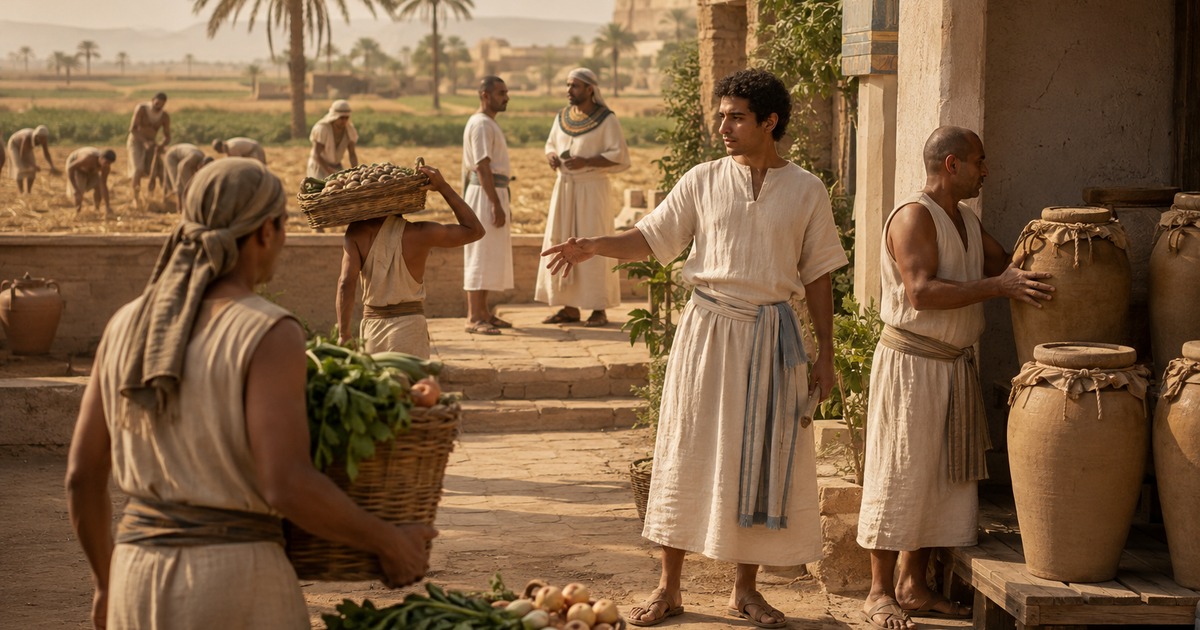
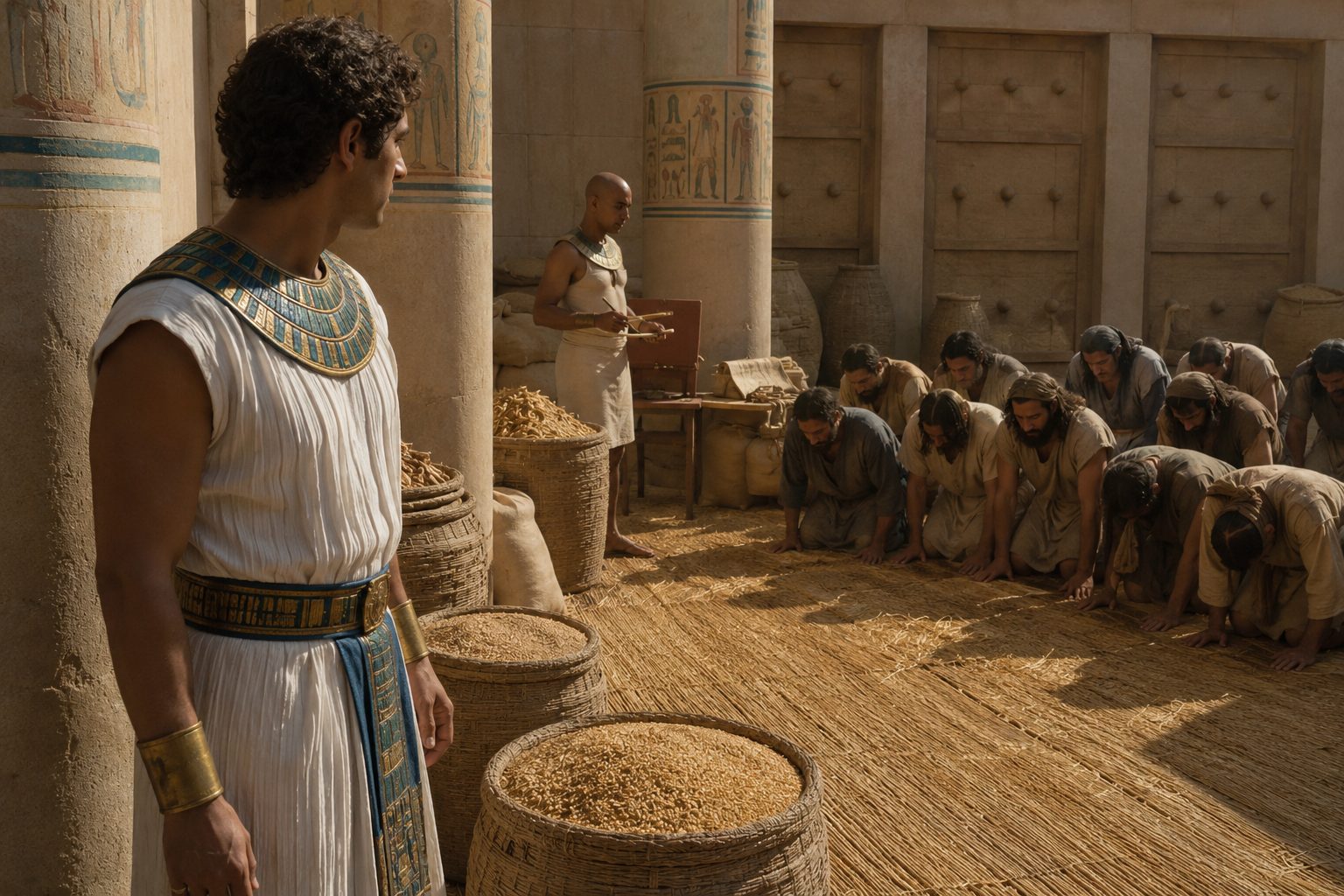
As the famine deepens, the people cry to Pharaoh for bread. Pharaoh sends them to Joseph, and verse 56 records the decisive action: 'Joseph opened all the storehouses, and sold unto the Egyptians.' The resources do not remain sealed while people are hungry. Storage had a purpose, and the arrival of need brings the moment for what was kept to move again.
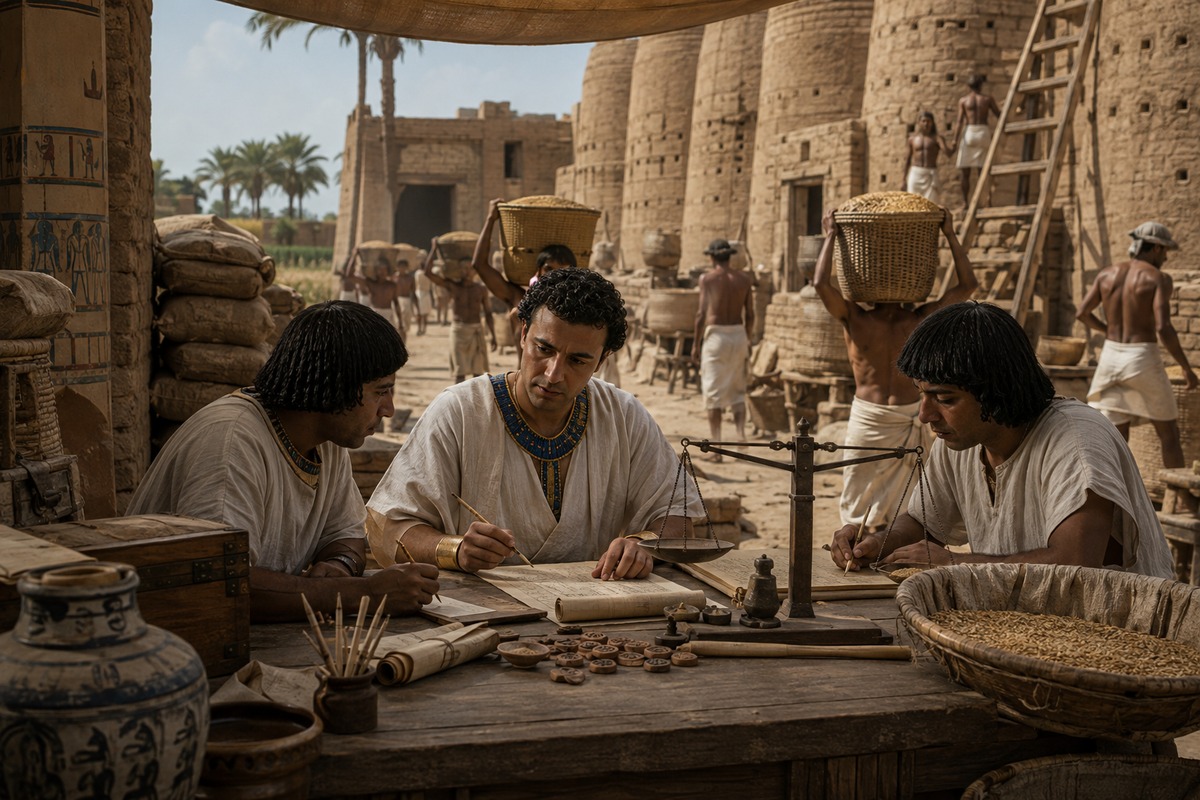
This part of Joseph's stewardship is easy to overlook. Wisdom knows how to keep, and wisdom also knows why it is keeping. Fear can make a person hold everything simply because letting go feels dangerous. Pride can make resources a measure of personal importance. Purpose asks a better question: what responsibility was this resource meant to help me carry?
For an ordinary household, opening a storehouse may look very ordinary. It can be using a reserve for the emergency it was built to cover. It can be helping a parent with a genuine need, paying school costs that were planned for, supporting faithful ministry, providing a meal, assisting someone towards useful work, giving from what you have or using your skill without always asking what you will receive back.
The passage also shows order. Joseph sold grain through the system he had been appointed to administer. Help and responsibility can live together. Generosity gains strength when it is willing, thoughtful and free from manipulation. We can care deeply about people while still asking how the resources in our hands can serve them wisely.
Genesis 41:57 - Prepared Resources Reached Beyond Egypt
Verse 57 widens the picture: countries beyond Egypt come to Joseph to buy grain because the famine is severe in all lands. What was gathered locally during the good years becomes useful far beyond the field from which it came. Joseph could never have served this need at this scale if the years of plenty had been consumed without preparation.
This is where wealth with a kingdom purpose becomes more than a phrase. Resources under God's authority can strengthen more lives than our own. A stable family can become able to help relatives without collapsing under every request. A healthy business can create honest work. Knowledge can be taught. A home can host people. A vehicle can serve a need. Income can support ministry and giving. Savings can protect a family through a difficult season. Influence can open a door for someone whose ability deserves to be seen.
We should therefore learn to ask who may become stronger because God has placed something in our hands. The answer begins with the responsibilities closest to us and can grow outward as capacity grows. Joseph's stored grain becomes bread for people because abundance was given direction before the famine came.
How I Apply This Passage
Start by giving every season of enough a purpose. If income rises or an expense disappears, decide before the money quietly finds new places to go. Build a little margin. Strengthen the household. Deal responsibly with debt. Prepare for known costs. Set something aside for the unexpected. Keep giving as part of your life. The percentages can differ, but purpose should be present.
Build a future buffer gradually. A rainy-day fund does not need to begin with a dramatic amount. Consistency matters. When a difficult month comes, even a modest reserve can reduce panic and help protect food, housing, transport, school, medical or family responsibilities while you make the next decision prayerfully and wisely.
Let generosity begin with the capacity you have now. Giving is more than money: it can be food, time, transport, knowledge, a referral, mentoring or practical help. As resources grow, generosity can grow with them. Let it remain willing and wise, without pressure, performance or the need to be seen.
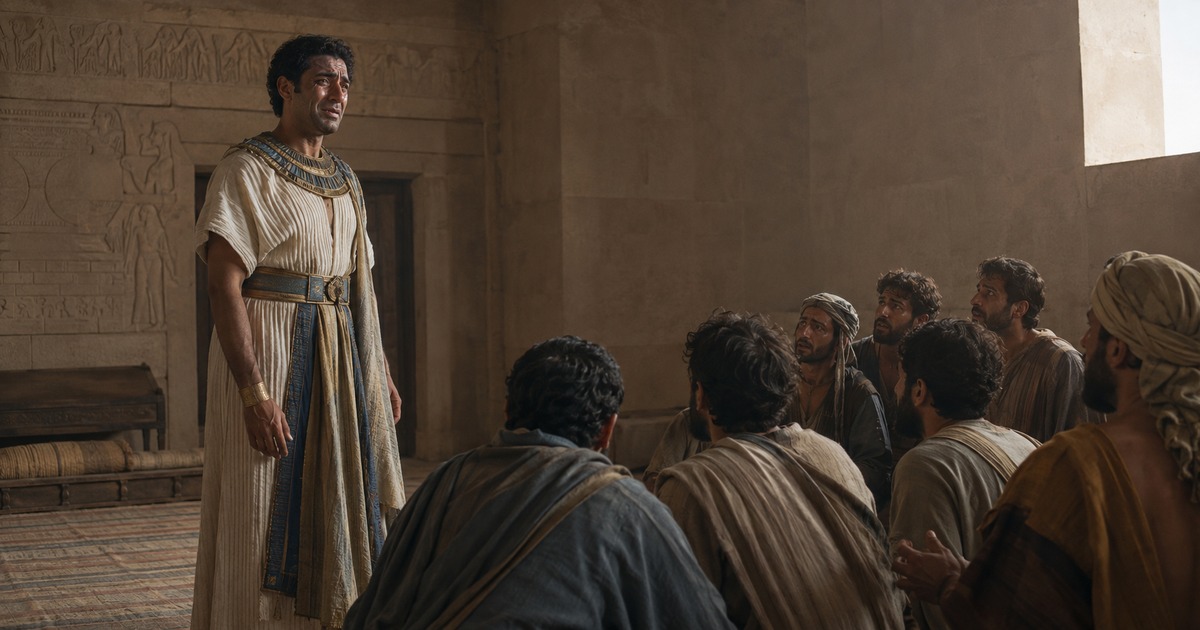
The resources Joseph prepared eventually bring his past back into the room when his brothers come for grain. The relational test begins in Facing the Past: A Genesis 42–44 Bible Study on Forgiveness, Discernment, Rebuilding Trust and Recognising Genuine Change.
Where to Read Next
You Meant Evil, God Meant Good: A Genesis 45 and 50 Bible Study on Forgiveness, Mercy and God's Purpose After Betrayal — Worth reading next.
Legacy and Blessing: A Genesis 48 To 50 Bible Study on Generational Faith, God's Promise and Finishing Well — Worth reading next.
The Story of Joseph in the Bible: 10 Powerful Lessons From His Life
Further Reading
Found this helpful? Share it with someone who needs it.