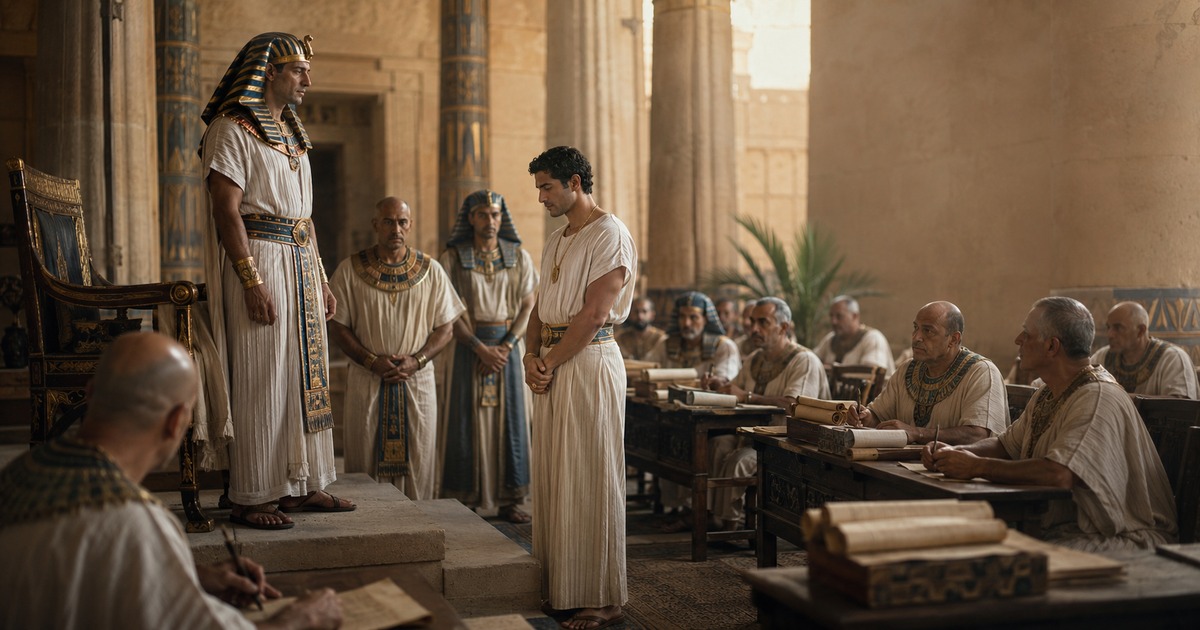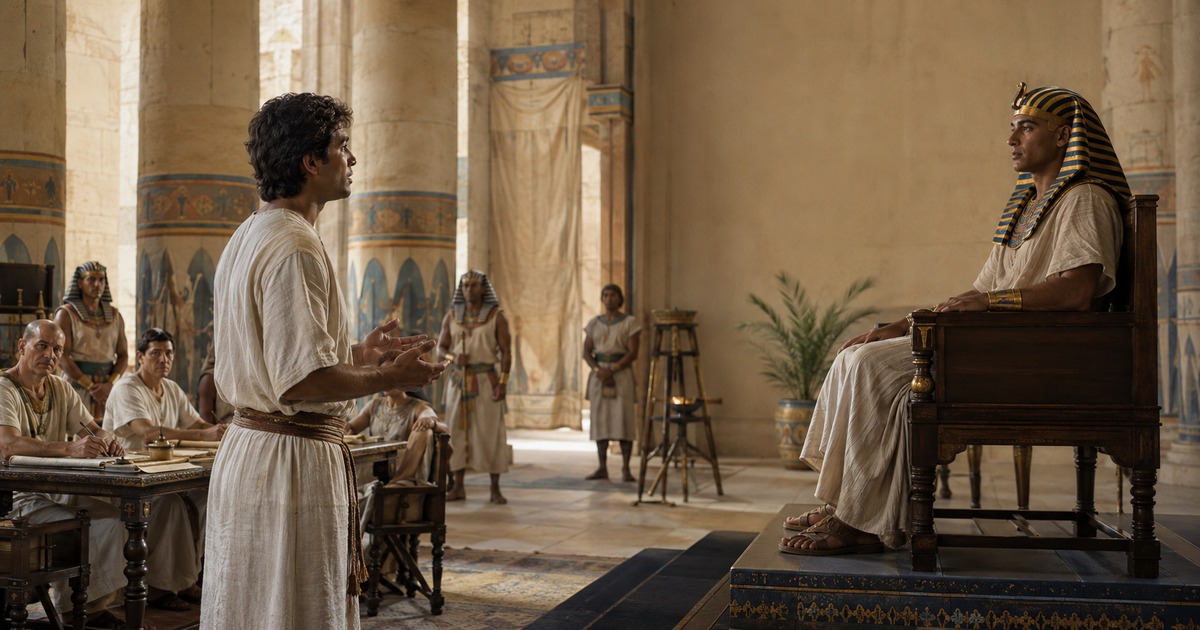
God did not promote Joseph because he was a dreamer. He promoted him because of the man he became while those dreams were still unfulfilled. Most of us want the palace, but we despise the character building that happens in the pit and the prison. We blame and curse the days and moments when we are in the hard times because all we think about are the days and destinations but not considering the process. We think promotion is a matter of timing, but in the Kingdom, promotion is a matter of preparation.
Joseph stood out because he was the same man in the dark as he was in the light. When you study the life of this patriarch, you realise that the character qualities that made joseph stand out were not flashy or spectacular. They were quiet, consistent, and deeply rooted in a fear of God that superseded his fear of men or his desire for comfort. He possessed a rare blend of spiritual sensitivity and practical administrative excellence that made him indispensable to every master he served.
In my own walk, I have often looked at Joseph's life when I felt overlooked in my career or stuck in a season of "prison" management. I realized that if I could not be trusted with the small, messy details of someone else's business, I would never be ready for the weight of my own calling. You see, Joseph's story is the ultimate blueprint for The Story of Joseph in the Bible: 10 Powerful Lessons From His Life, proving that God is more interested in the state of your heart than the size of your platform.
The Internal Compass That Guided Joseph
The English word "integrity" often feels a bit clinical, like something you find in a corporate mission statement. But the Hebrew concept that defines Joseph’s life is tom, and once you see it through the lens of Genesis, it changes how you view your daily choices. Tom doesn't just mean "doing the right thing"; it means completeness, simplicity, and being "whole." It is the same root used to describe a sacrificial lamb without blemish.
When Joseph stood in Potiphar’s house, he was tam (the adjective form). He was undivided. In Genesis 39:9, he asks, "how then can I do this great wickedness, and sin against God?" (KJV). Notice he didn't say "sin against Potiphar," though it certainly was that. He saw his integrity as a direct reflection of his relationship with the Almighty. The word tom suggests that Joseph wasn't playing a role; his internal reality and his external actions were one and the same. To God, this "wholeness" is what makes a man or woman stand out in a world of fractured compromises.
This matters for you right now because God is not looking for your "professional" self or your "Sunday" self. He is looking for tom. He is looking for the person who manages the company credit card the same way they manage their tithe envelope. If you are divided, you are unstable. But if you are whole, you are ready to be used.
Why Integrity Is the Foundation of Kingdom Wealth
I believe many Christians are stuck in a cycle of financial struggle not because they lack "favour," but because they lack the character to sustain it. Joseph was a "prosperous man" even as a slave (Genesis 39:2, KJV). Think about that for a moment. He owned nothing, he had no bank account, and he was someone else's property, yet the Bible calls him prosperous.
This tells me that prosperity is a state of being before it is a state of the bank account. Joseph stood out to God because he understood that stewardship is the highest form of worship. Whether he was faithful in someone else's house or managing the entire economy of Egypt, his standard of excellence never wavered.
If you want to stand out this year, you have to be the person who does the job right when no one is checking. We live in an era of "quiet quitting" and doing the bare minimum. Joseph did the maximum for a master who didn't even pay him. That is the kind of character that catches the eye of the King of Kings.
The Quality of Diligence in the Forgotten Places
One of the most striking character qualities that made joseph stand out was his refusal to become bitter when he was forgotten. Most of us, if we were wrongly accused and thrown into a dungeon, would spend our days complaining to anyone who would listen. We would let our skills rot while we nursed our wounds.
Joseph did the opposite. He looked around the prison and saw a need for order. He began to serve the other prisoners. He became so useful that the keeper of the prison "committed to Joseph's hand all the prisoners that were in the prison" (Genesis 39:22, KJV). He was practicing for the palace while he was still in the pit.
I have seen so many believers miss their promotion because they were "too big" for their current assignment. They want to lead a global ministry but they won't arrive on time to serve in the church car park. Joseph teaches us that diligence in the forgotten place is the prerequisite for authority in the public place.
Administrative Wisdom as a Spiritual Gift
We often separate "spiritual" gifts from "practical" skills. We think prophecy is spiritual, but accounting is secular. Joseph destroys this false divide. When he stood before Pharaoh to interpret the dream, he didn't just give a spiritual word; he gave a 14 year economic plan. You can read more on Why God Cannot Bless a Plan You Never Made.
He told Pharaoh to "look out a man discreet and wise" and to "appoint officers over the land" to take up a fifth part of the land's produce (Genesis 41:33-34, KJV). This was administrative wisdom. It was the ability to take a divine revelation and turn it into a logistical reality. This is one of the primary qualities that made him stand out , he was "discreet and wise."
Pharaoh's response is telling: "Can we find such a one as this is, a man in whom the Spirit of God is?" (Genesis 41:38, KJV). Pharaoh didn't see the Spirit of God in Joseph because he was falling into a trance; he saw the Spirit of God in Joseph's ability to organise a nation's food supply. Your ability to manage your household budget or your business logistics is a spiritual testimony.

The Power of a Forgiving Spirit
You cannot carry the weight of the palace if you are still carrying the baggage of the pit. One of the most difficult character qualities that made joseph stand out was his radical capacity for forgiveness. When his brothers finally stood before him, he had every legal and political right to destroy them. He had the power to make them suffer the way he had suffered.
Instead, he looked at them and said, "But as for you, ye thought evil against me; but God meant it unto good" (Genesis 50:20, KJV). This is not just "being nice." This is a profound theological position. Joseph's character was so anchored in the sovereignty of God that he refused to see himself as a victim of men.
If you are holding onto a grudge against a former employer, a business partner who cheated you, or a family member who held you back, you are disqualified from the next level of leadership. Bitterness clouds your judgment. Forgiveness, however, clears your vision so you can see you meant evil, God meant good. It allows you to lead with mercy rather than malice.
Humility Amidst Great Promotion
Success kills more people than failure ever does. Many of us can handle the struggle, but few of us can handle the spotlight. Here, i want us to look at whhen Joseph was brought out of the dungeon to speak to the most powerful man on earth, he didn't try to take the credit. Pharaoh told him, "I have heard say of thee, that thou canst understand a dream to interpret it" (Genesis 41:15, KJV).
Joseph’s immediate response was: "It is not in me: God shall give Pharaoh an answer of peace" (Genesis 41:16, KJV). He was humble enough to know his source. He didn't use the moment to negotiate a better salary or a release from prison. He used it to point to God.
This humility is what kept him safe in the palace. When you realise that your talent is a gift and your promotion is a providence, you don't become arrogant. You become a steward. I have seen many talented Christians lose their way because they started believing their own press. Joseph stayed grounded because he knew that the same God who was with him in the prison was the one who put him on the throne.
How to Develop Joseph's Qualities in Your Career
It is one thing to admire Joseph; it is another to emulate him. Building these character qualities requires a daily decision to submit your ambition to God's altar. You have to decide that you are not working for a "boss" or a "client," but for the Lord. This shift in perspective changes everything about how you handle your tasks.
If you are struggling to find your footing in your career, I want you to look at these three practical steps based on Joseph's life:
Master your current "prison": Whatever job you have right now , even if you hate it , manage it with such excellence that you become the "head" of that department in spirit before you are in title.
Guard your "no": Integrity is defined by what you refuse to do. Like Joseph in Potiphar's house, set your boundaries early. Do not wait for temptation to decide your values.
Develop your "discreet and wise" skills: Don't just pray for a breakthrough; study for it. Joseph knew how to save, how to store, and how to distribute. He understood how did joseph save money in the bible because he applied his mind to the problem.

The Result of Standout Character
When you possess the character qualities that made joseph stand out, you don't have to chase promotion. Promotion will chase you. The Bible says that Pharaoh took off his ring from his hand and put it upon Joseph's hand, and arrayed him in vestures of fine linen (Genesis 41:42, KJV). This was not a lucky break. This was the inevitable result of a man whose character was finally large enough to hold his destiny.
God is looking for people He can trust with His resources. He is looking for "Kingdom financiers" and "Kingdom leaders" who won't be corrupted by the gold or the glory. If you are in a season of waiting, do not waste it. Use it to build the tom , the wholeness , that Joseph had.
I believe that in these coming years, the world will look for "discreet and wise" men and women who have the Spirit of God and the practical skill to navigate difficult times. You can be that person. But it starts with the choice you make when no one is watching.
Where To Read Next
If you want to go deeper into the life of Joseph and how his character translates into financial and career success, I highly recommend these articles:
Frequently Asked Questions
What character qualities made Joseph stand out to God?
Joseph stood out because of his unwavering integrity, his diligence in difficult circumstances, his administrative wisdom, his radical forgiveness, and his deep humility. He was a man who feared God more than he feared men, which allowed him to remain faithful whether he was in a pit, a prison, or a palace. "The LORD was with Joseph, and he was a prosperous man" (Genesis 39:2, KJV).
Is it a sin to be ambitious for promotion like Joseph?
Ambition is not a sin if it is submitted to God's timing and purpose. Joseph didn't "hustle" his way to the top; he served his way to the top by being faithful to the assignments God put in front of him. True Kingdom promotion comes from God, not from self-promotion. "For promotion cometh neither from the east, nor from the west, nor from the south. But God is the judge: he putteth down one, and setteth up another" (Psalm 75:6-7, KJV).
How do I develop integrity in my workplace?
You develop integrity by making a series of small, honest decisions when no one is watching. This includes being honest on your time sheets, refusing to participate in office gossip, and doing your best work even when your boss is away. Integrity is about being "whole" (Hebrew: tom) so that your private life matches your public reputation.
What does the Bible say about Joseph's work ethic?
The Bible shows that Joseph had an exceptional work ethic, becoming the head of every environment he was placed in. He was not just a dreamer; he was a doer who managed Potiphar's estate, the king's prison, and eventually the entire nation of Egypt with excellence. "Seest thou a man diligent in his business? he shall stand before kings; he shall not stand before mean men" (Proverbs 22:29, KJV).
Should I forgive someone who betrayed me in business?
Yes, forgiveness is essential for your own spiritual and emotional health, as well as your future success. Joseph forgave his brothers because he trusted that God was in control of his story, despite their evil intentions. Forgiveness doesn't always mean immediate restoration of trust, but it does mean releasing the right to seek revenge.
Found this helpful? Share it with someone who needs it.