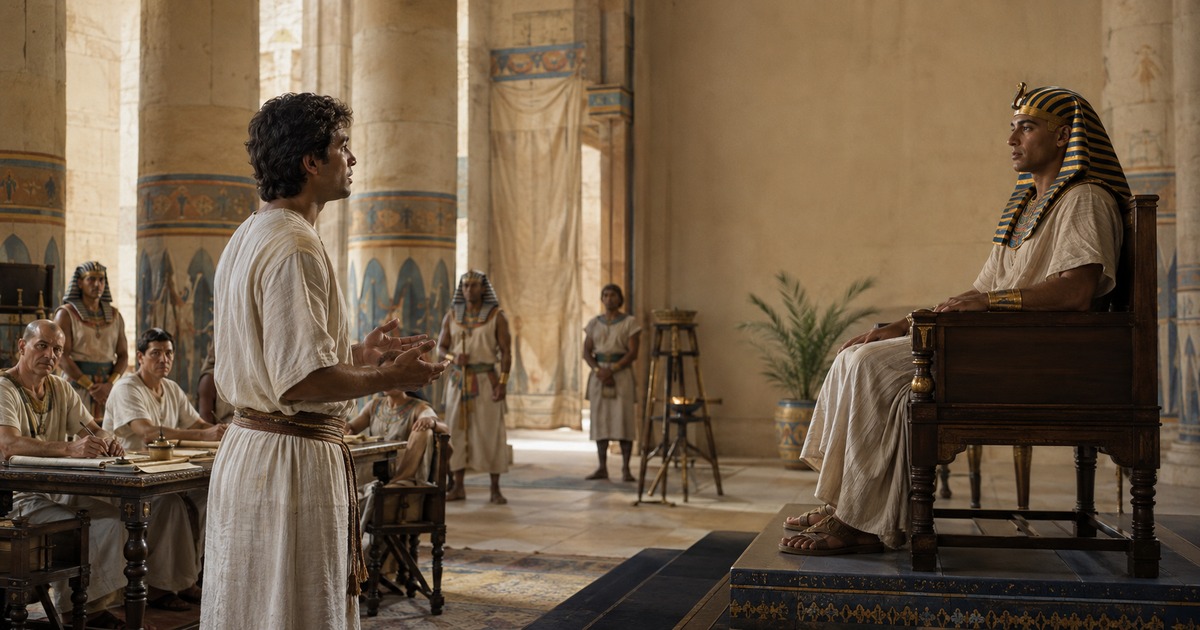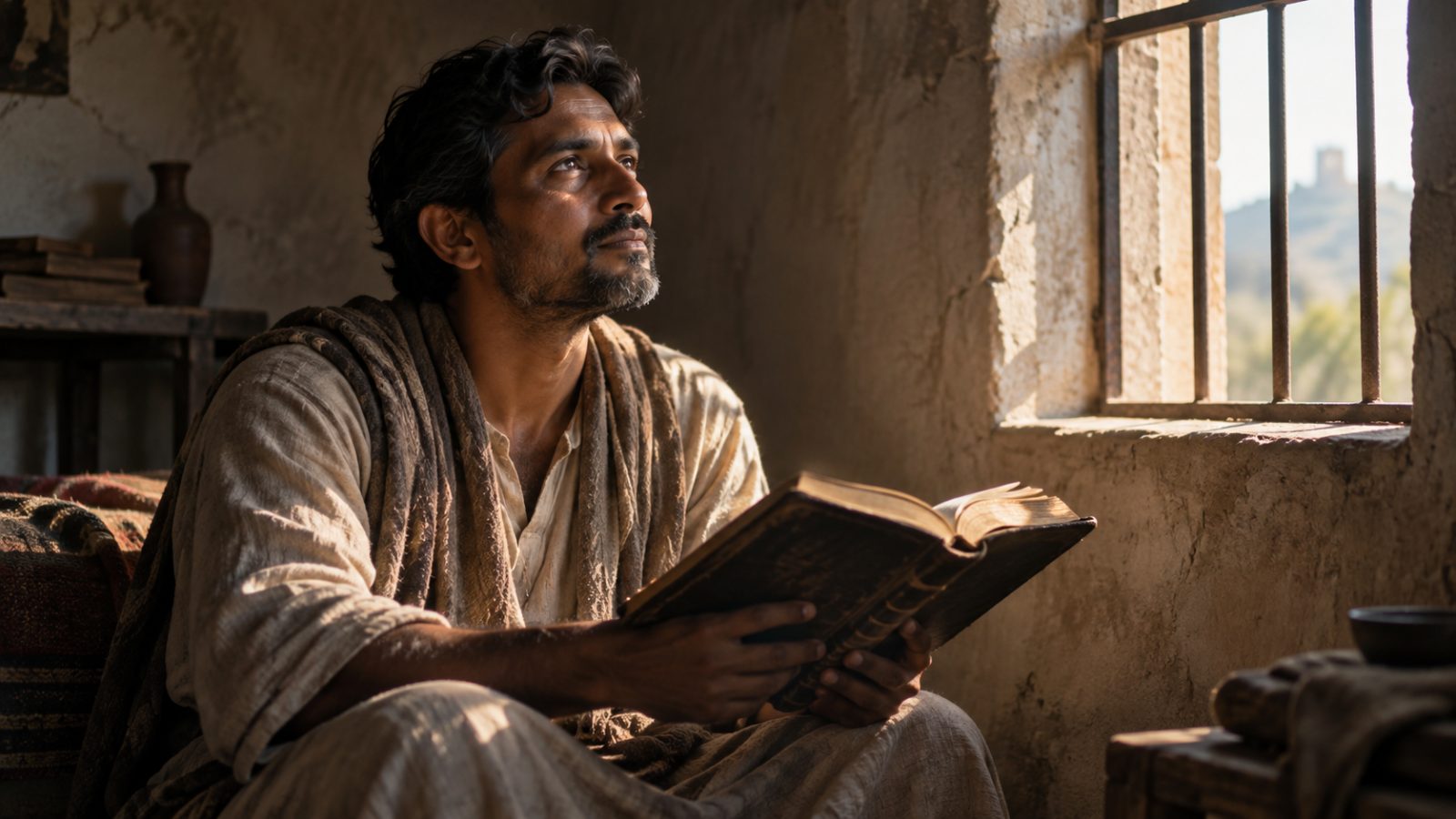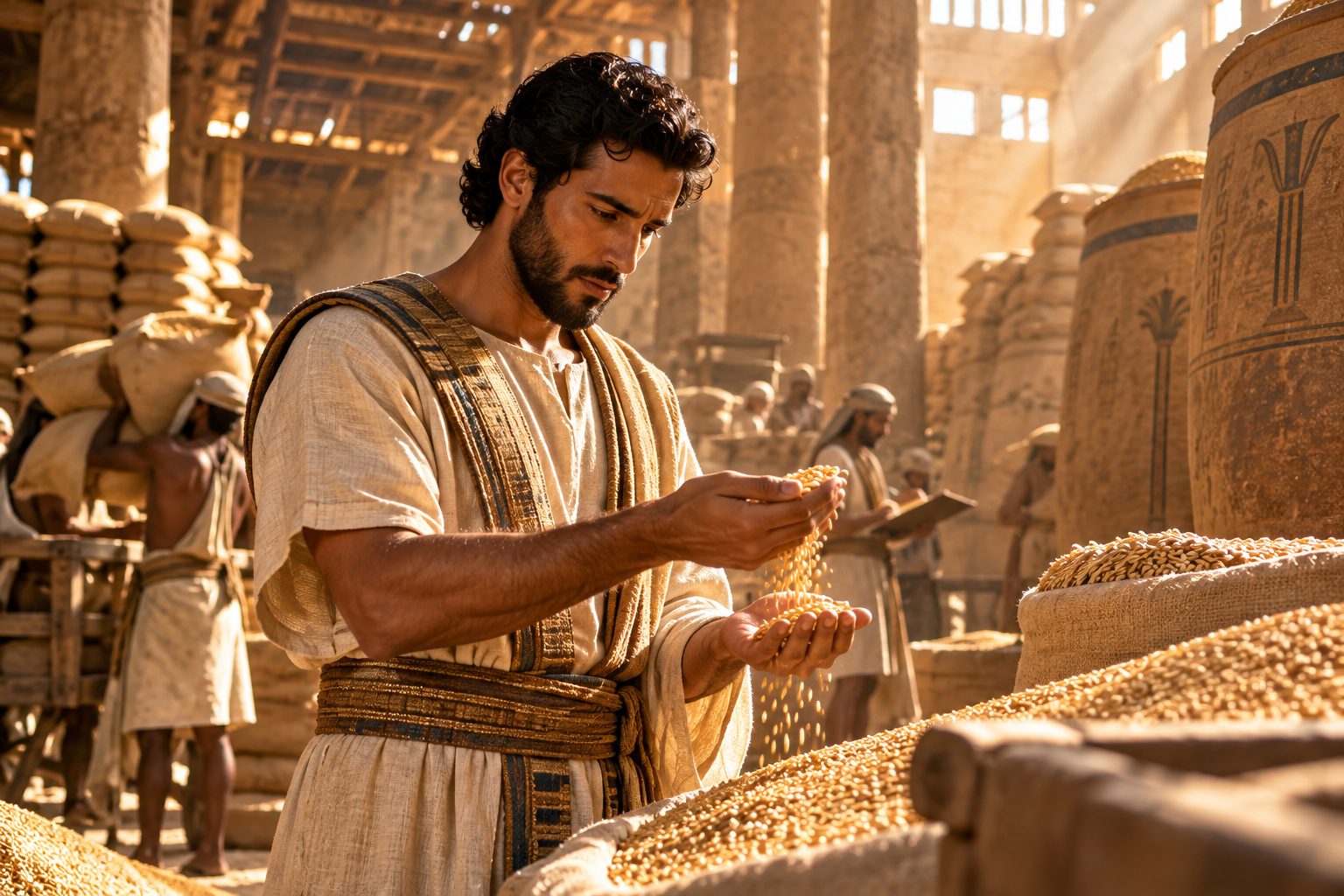
This study follows Joseph through Genesis 39:7-20 and pays close attention to the way he responds when temptation becomes repeated, private and costly. The aim is to let the text train our conscience: to recognise sin before God, honour what has been entrusted to us, establish wise distance from repeated temptation, flee when necessary and remain truthful when obedience carries an immediate cost.
Lesson 2 ended with Potiphar placing almost everything in Joseph's hand. Genesis 39:6 also tells us that Joseph was 'goodly' and 'well favoured.' Verse 7 begins 'after these things.' The responsibility, favour and visible progress of the earlier verses become the setting in which a new test appears.
Joseph is still a Hebrew servant in a foreign household. Potiphar's wife belongs to the powerful household in which Joseph has no equal social freedom. The text therefore carries both sexual temptation and a serious imbalance of power. Joseph's response is clear: he refuses, explains why, refuses continued nearness, and finally runs when she catches his garment.
As you study, notice that Joseph's conscience reaches higher than human supervision. In verse 11 no other men of the house are present, but verse 9 has already shown the Person who governs Joseph's private decision: God. Character is revealed when the audience disappears but the fear of God remains.
Temptation Entered a Place of Trust
The temptation comes after Joseph has been trusted with Potiphar's household. Responsibility did not remove the possibility of temptation. Joseph is serving faithfully, and in that same environment his master's wife casts her eyes upon him and speaks directly.
This matters for our own lives. Growth in responsibility requires deeper watchfulness, because influence gives us access to people, places and decisions that can expose character. Scripture teaches us to remain sober when life is going well. A favourable season is still a season in which the heart must remain under God.
Joseph's Refusal Was Governed by God
Verse 8 begins with a strong action: 'But he refused.' Joseph does not first ask whether anyone will discover the act. He remembers what Potiphar has entrusted to him. Everything in the house has been committed into Joseph's hand, and the one boundary Potiphar has kept is his wife.
Joseph then reaches the deepest reason in verse 9: 'how then can I do this great wickedness, and sin against God?' His integrity has both a human and a divine direction. He will not betray his master's trust, and he will not treat sin as though secrecy makes it acceptable before God.
The Hebrew verb translated 'refused' is ma'en (מָאֵן), a verb meaning to refuse. The Hebrew word behind 'wickedness' is ra' (רָע), carrying the sense of evil or wickedness, and the verb chata (חָטָא) is used for sinning. Joseph therefore names the proposal morally before he responds practically: it is wickedness, and it is sin against God.
Repeated Pressure Required Repeated Boundaries

Genesis says she spoke to Joseph 'day by day.' The test was repeated. Joseph's refusal also became repeated. The verse says he did not hearken unto her 'to lie by her, or to be with her.' He guarded more than the final act; he also refused the continued nearness that could keep feeding the temptation.
There is wisdom here for every believer. When a particular conversation, message thread, private meeting, relationship or environment repeatedly pulls the heart towards sin, faith does not require us to prove how close we can stand without falling. Joseph teaches us to take temptation seriously enough to create distance.
When Faithfulness Means Leaving Immediately
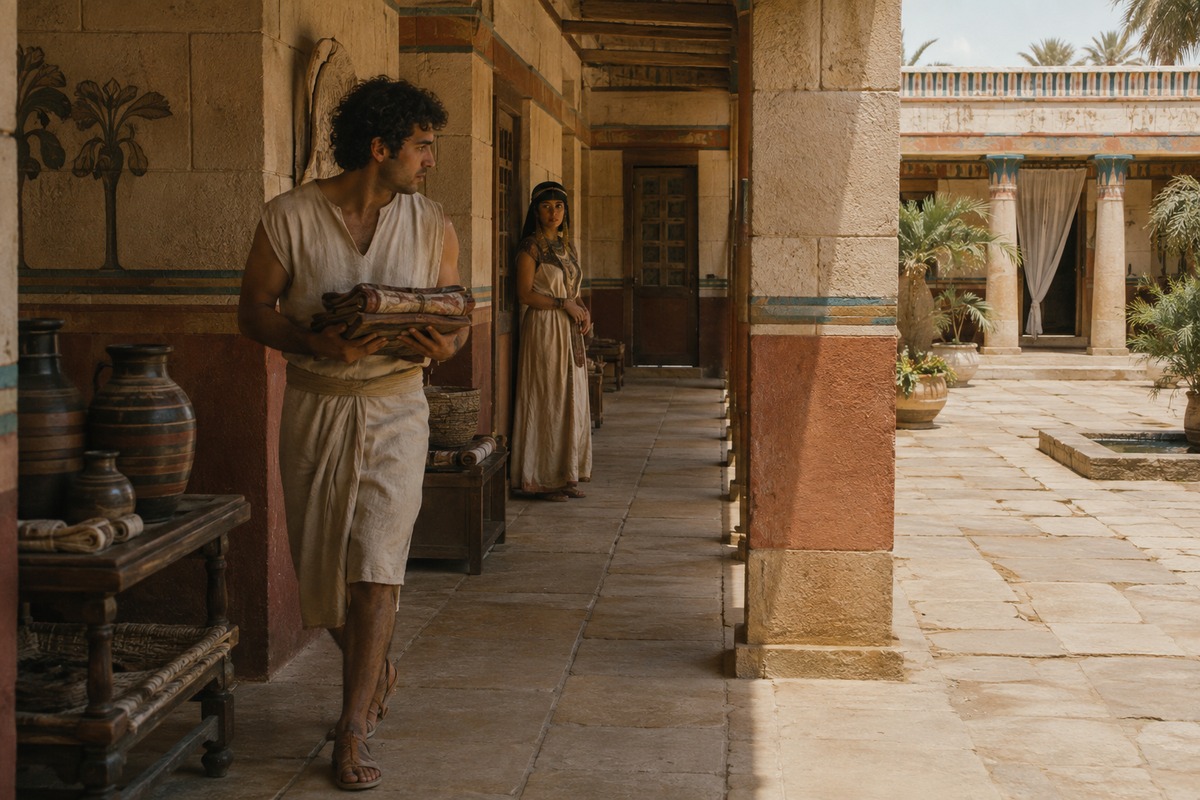
Verse 11 creates the most private moment in the passage: Joseph enters the house to do his business, and none of the men of the house are there. Potiphar's wife catches him by his garment and repeats the demand. Joseph leaves the garment in her hand, flees and gets out.
The Hebrew verb nus (נוּס), translated 'fled,' means to flee or escape. Joseph does not stay to debate, explain himself again or demonstrate how strong he is. The situation has changed from repeated words to physical restraint, and his response is immediate movement away from it.
The New Testament gives the same kind of direct command in 1 Corinthians 6:18: 'Flee fornication.' There are moments when obedience has feet. Prayer, conviction and wisdom lead us away from the place where compromise is trying to close its hand around us.
A Garment Became Part of a False Story
Joseph has left the room, but the garment remains. Verses 13-18 repeat the accusation twice: first to the men of the house and then to Potiphar. The wording repeatedly identifies Joseph as a Hebrew and as a servant. To Potiphar she adds, 'The Hebrew servant, which thou hast brought unto us.' The accusation does more than describe an event; it places Joseph's ethnicity, status and Potiphar's own decision inside the story she tells.
The passage gives us a painful truth about integrity: doing right does not always give us control over what other people will say. Joseph controls his own refusal and his own flight. He cannot control the way the garment will be used once it is left behind.
This is also the second time in Joseph's life that a garment becomes part of a lie told about him. In Genesis 37 his brothers used his coat to support a false conclusion about his death. Here the garment he left while fleeing is used within another false accusation. People may control a piece of evidence or tell a convincing story, yet they still do not become the final authority over a life that belongs to God.
Integrity Can Carry an Immediate Cost
Potiphar hears his wife's account, his wrath is kindled, and Joseph is placed in the prison where the king's prisoners are bound. The chapter gives Joseph no immediate public vindication before verse 20. The man who refused sin loses the position he had carried faithfully in Potiphar's house.
This is where integrity becomes more than a slogan. Joseph chose what was right before God without first receiving a guarantee that the next day would become easier. Obedience cost him his place in the house and his freedom. Yet the wider chapter immediately continues by saying, 'But the LORD was with Joseph' (Genesis 39:21). The house has changed to a prison, but the presence of God continues with him.
Lesson 4 will study that forgotten place in detail. For now, verse 20 leaves us with a searching question: if doing right appears to cost us something before it rewards us, will God still be enough reason to remain faithful?
Word Study: Four Actions in the Passage
MA'EN - REFUSE Genesis 39:8 opens Joseph's response with this Hebrew verb. The word means to refuse. In this passage the refusal is deliberate and immediate: Joseph answers the proposal with a settled no before he explains his reasons.
RA' - EVIL / WICKEDNESS Genesis 39:9 uses this word in the phrase translated 'great wickedness.' Joseph recognises the moral nature of the act before God and names it accordingly.
CHATA - SIN The verb in Joseph's question, 'and sin against God,' belongs to this Hebrew root. His conscience is God-centred: the act would be a violation before God even in a private room.
NUS - FLEE / ESCAPE Genesis 39:12 uses this verb when Joseph leaves his garment and flees. His physical movement matches the moral decision he has already made in verses 8-10.
How To Apply This Passage
Begin with your private life before you think about anybody else's failures. What changes when no one is checking? Integrity is seen in the messages we delete, the websites we visit, the conversations we hide, the money we handle, the promises we keep and the way we use access that has been entrusted to us. Joseph's question brings every hidden area back before God.
Next, identify repeated pressure. Verse 10 gives us the phrase 'day by day.' Some temptations become powerful because we keep returning to the same door. A serious boundary may involve changing a routine, ending a private conversation, blocking access, refusing to meet alone, moving accountability closer or walking away from an opportunity that keeps demanding compromise.
Finally, settle what matters most before the moment becomes emotional. Joseph had already decided that sin against God was too high a price. Convictions formed in the Word give the heart something solid to stand on when desire, fear, favour or pressure tries to rewrite the decision.
Genesis 39:7-20 brings Joseph into a private and repeated test. He refuses because he remembers the trust placed in his hands and because he sees the act as sin against God. When the pressure continues, he refuses continued nearness. When the situation becomes physical, he flees. When a false accusation follows, he loses his position and is placed in prison.
The chapter teaches us that integrity is more than looking clean in public. It is a life governed by God in private. It remembers boundaries, names sin honestly, refuses repeated compromise and moves away when danger closes in. The immediate cost can be painful, but compromise would cost something deeper: the faithfulness Joseph had chosen to keep before God.
Further Reading
- The Story of Joseph in the Bible: 10 Powerful Lessons From His Life
- Wealth With a Kingdom Purpose: A Bible Study on Saving, Stewardship and Preparing Resources to Serve Future Need
- The Gift That Makes Room Bible Study on Preparation, Humility and Turning God Given Understanding Into Wise Action
Frequently Asked Questions
Joseph's obedience leads into a place where recognition disappears and diligence must survive without applause. The next part of that formation appears in Diligence in the Forgotten Place: A Genesis 39:21–40:23 Bible Study on Faithfulness, Service and Waiting When People Forget You.
Where to Read Next
Facing the Past Bible Study on Forgiveness, Discernment, Rebuilding Trust and Recognising Genuine Change — Worth reading next.
You Meant Evil, God Meant Good: A Genesis 45 and 50 Bible Study on Forgiveness, Mercy and God's Purpose After Betrayal — Worth reading next.
Legacy and Blessing: A Genesis 48 To 50 Bible Study on Generational Faith, God's Promise and Finishing Well — Worth reading next.
The Story of Joseph in the Bible: 10 Powerful Lessons From His Life
Found this helpful? Share it with someone who needs it.