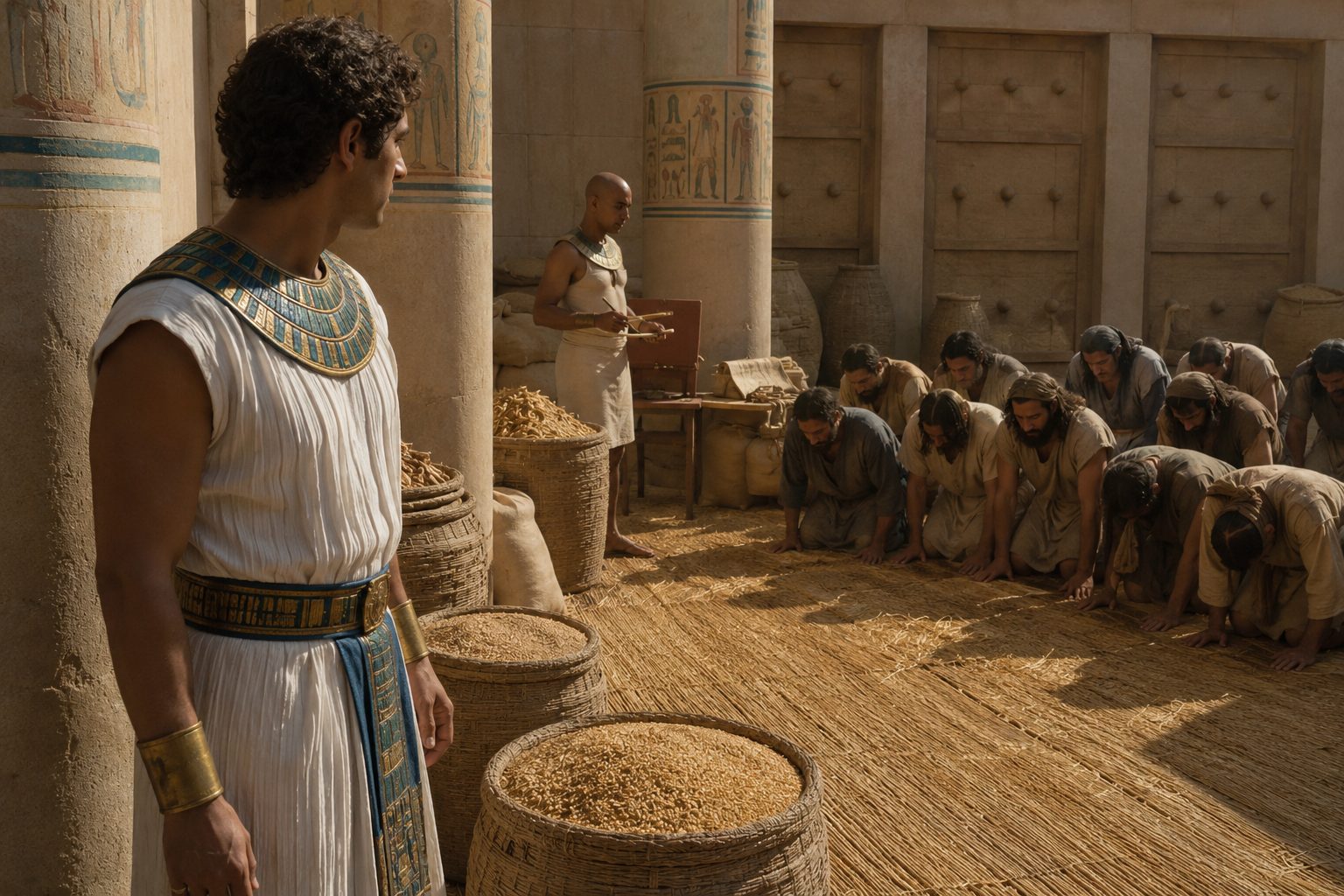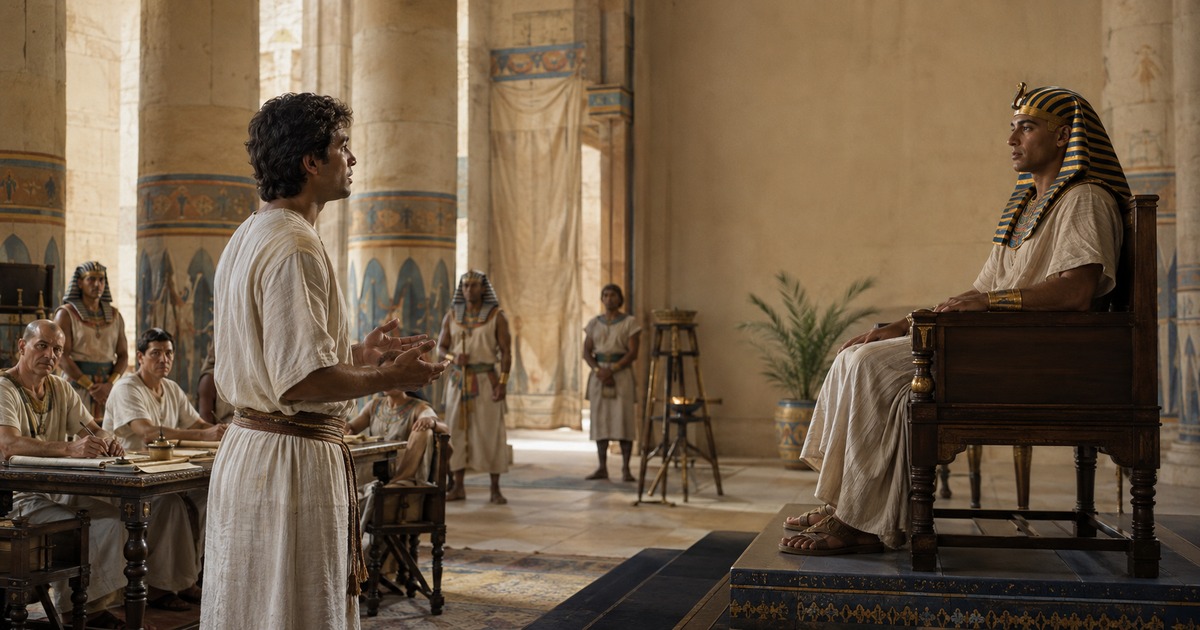
This study follows Joseph from the slave market into Potiphar's house and pays close attention to what Genesis says about the presence of God, prosperity, service, favour, trust and stewardship. The aim is to learn from the text how a child of God can handle responsibility faithfully even when the resources, organisation or assignment belong to someone else.
Genesis 39 continues the movement that began in Genesis 37. Joseph has been separated from his father, carried into Egypt and sold. The opening verse gives him very little control over his circumstances: Potiphar buys him. Yet the next sentence changes the way the entire scene must be read: 'And the LORD was with Joseph.' The chapter will repeat that truth again when Joseph later enters prison (Genesis 39:21, 23).
For this lesson, stay with verses 1–6 before moving to the temptation that begins in verse 7. Watch the verbs. Joseph is brought down, bought, serves, finds favour, is appointed, receives responsibility and becomes the person into whose hand Potiphar places what he owns. Alongside Joseph's actions, the passage repeatedly names what the LORD is doing: He is with Joseph, He causes his work to prosper, and He blesses the Egyptian's house for Joseph's sake.
The study therefore holds two realities together. Joseph is genuinely in an unwanted condition, and God is genuinely present with him there. The circumstances have not yet caught up with the future we already know from the wider story, but God's hand is not absent while Joseph is serving in somebody else's house.
A New House, but the Same God
Verse 1 deliberately reminds us that Joseph has been bought. He did not arrive in Egypt as a businessman looking for a fresh opportunity. He arrived without the freedom to choose his master. Potiphar is identified as an Egyptian officer of Pharaoh and captain of the guard, so Joseph is now serving inside the household of a man connected to Pharaoh's administration.
That change of place is important. Joseph has moved from his father's house to an Egyptian master's house, but the God who was working in his life has not been left behind in Canaan. The next verse makes God's presence the controlling truth of the new season.
Prosperous Before He Owned Anything
Genesis 39:2 contains one of the most important descriptions in Joseph's story: 'the LORD was with Joseph, and he was a prosperous man.' At that moment Joseph is still in the house of 'his master the Egyptian.' He has not yet reached the palace, he does not own Potiphar's estate, and his social condition has not suddenly become easy. Yet Scripture calls him prosperous.
The Hebrew verb behind 'prosper' is tsalach (צָלַח). In this context it carries the idea of succeeding or prospering in what is being done. Verse 3 is even more direct about the source: Potiphar saw 'that the LORD made all that he did to prosper in his hand.' The text will use the same idea again in verse 23 when Joseph is in prison.
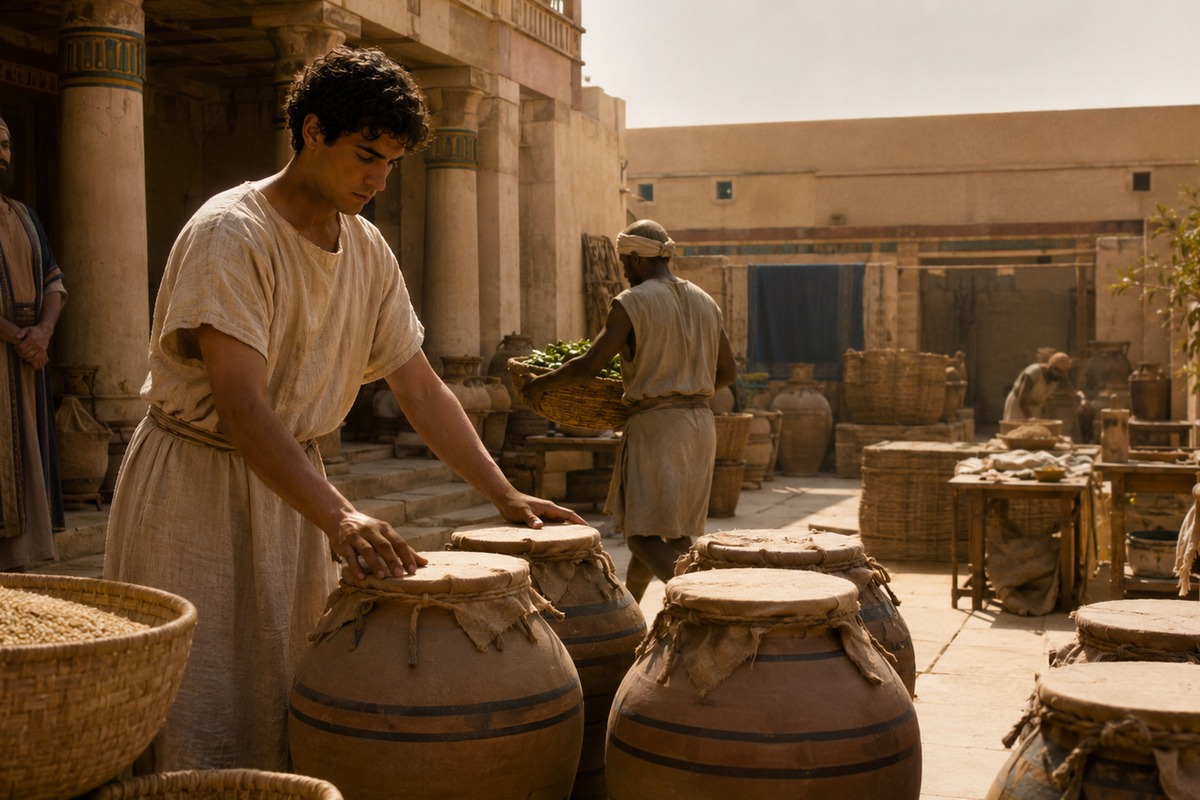
This gives us a rich biblical picture of prosperity. Material provision is one way Scripture can speak about blessing, but Genesis 39 shows us something deeper than possession alone. Joseph can be called prosperous before he possesses the house because the LORD is with him and the work committed to his hand is being caused to succeed. Prosperity in this passage begins with God's presence and becomes visible in what happens through Joseph's hands.
Verse 3 also says Potiphar 'saw' that the LORD was with Joseph. Something about Joseph's life and the results of his service became observable. The unseen relationship with God was producing a visible difference in the way responsibility was carried.
Favour Did Not Remove Service
Joseph 'found grace' in Potiphar's sight. The Hebrew noun chen (חֵן) carries the sense of favour or grace. Notice what follows immediately: 'and he served him.' Favour and service are not placed against one another in this verse. Joseph receives favour, continues to serve, and is then made overseer of the house.
The verb translated 'served' comes from sharath (שָׁרַת), a word used for serving or attending. The appointment that follows is connected with the Hebrew root paqad (פָּקַד), a broad verb that can include appointing, attending to or placing responsibility over something. The movement of the verse is therefore practical: favour, service, appointment and entrusted responsibility.
This is a strong lesson for anyone who wants responsibility. Joseph did not need to own the house in order to care about what happened inside it. He became trustworthy with another man's resources before he ever managed the resources of a nation. Scripture later gives a direct principle in the words of Jesus: 'And if ye have not been faithful in that which is another man's, who shall give you that which is your own?' (Luke 16:12).
Faithfulness That Became a Blessing Around Him
When Potiphar put Joseph over his house, the blessing described in the passage spread beyond Joseph personally. Genesis 39:5 says the LORD blessed the Egyptian's house 'for Joseph's sake,' and that the blessing was upon what Potiphar had in the house and in the field. Joseph's life was becoming a channel through which another household benefited.
This pattern appears elsewhere in Genesis. Laban recognised that the LORD had blessed him for Jacob's sake (Genesis 30:27). God had also told Abraham, 'thou shalt be a blessing' (Genesis 12:2). A person walking with God should not think only about what can come into his own hand; Scripture repeatedly gives us pictures of blessing that reaches other people through a life God is using.
By verse 6 Potiphar's confidence is remarkable. He leaves what he has in Joseph's hand and concerns himself with little beyond his own food. The passage has moved from a purchased servant to an entrusted overseer without ever suggesting that Joseph stopped belonging to God. Human ownership described his legal condition in Egypt; God's presence was shaping the man who carried the responsibility.
Word Study: The Movement of Genesis 39:2–5
TSALACH PROSPER / SUCCEED Genesis 39:2–3 uses the root to describe Joseph as prosperous and to say that the LORD made what he did prosper. The emphasis in the narrative is active: God's presence is connected with what succeeds in Joseph's hand.

CHEN FAVOUR / GRACE Genesis 39:4 says Joseph found grace in Potiphar's sight. Favour is relational here; Joseph becomes accepted and trusted in the eyes of the man over the household.
SHARATH SERVE / ATTEND Genesis 39:4 places service immediately after favour. Joseph's growing influence passes through service rather than bypassing it.
PAQAD APPOINT / ATTEND TO / ENTRUST OVERSIGHT The wording behind Potiphar making Joseph overseer belongs to a root with a broad range that includes appointing and attending to responsibility. In this verse the narrative meaning is clear: Joseph is placed over the house and its resources are put into his hand.
How I Apply This Passage
The first place to apply Genesis 39 is not somebody else's behaviour; it is our own hands. What has been entrusted to you right now? It may be a church responsibility, an employer's time and equipment, a customer's money, a family duty, borrowed property, confidential information, a team project or a small assignment that nobody applauds. Faithfulness begins by recognising that responsibility matters before God even when your name is not written on the thing you are managing.
There is also a heart question. Some people serve carelessly because they believe they deserve something bigger. Joseph's story challenges that attitude. The dream of Genesis 37 did not make the work of Genesis 39 beneath him. The future did not excuse negligence in the present. What God had shown concerning Joseph's future and what Joseph had to do in Potiphar's house could exist in the same life.
Faithfulness also remains under obedience to God. Serving another person's vision never means surrendering your conscience or joining them in sin. The very next part of Genesis 39 will show Joseph refusing what violated God's standard even though the request came from inside the house where he served. Biblical stewardship is loyal, diligent and trustworthy, but God remains the highest authority over the steward.
Genesis 39:1–6 takes Joseph into a house he does not own and teaches us to watch what God can do through a faithful person before public promotion ever arrives. The LORD is with Joseph. What he does prospers. Potiphar sees it. Joseph finds favour, serves, receives greater responsibility, and eventually becomes trusted with the household. The blessing then reaches Potiphar's house and field.
The lesson is simple enough to remember but deep enough to examine our lives: the fact that something belongs to somebody else does not make faithfulness optional. God can use another person's house, business, ministry or responsibility as a place where our stewardship becomes visible and our character becomes stronger. The question for this week is not first, 'When will I have my own?' It is, 'How am I handling what is already in my hand?'
Further Reading
- The Story of Joseph in the Bible: 10 Powerful Lessons From His Life
- The Gift That Makes Room Bible Study on Preparation, Humility and Turning God Given Understanding Into Wise Action
Frequently Asked Questions
Trust in Potiphar's house creates the setting for a harder test: what Joseph will do when private pressure threatens both his integrity and his work. I examine that cost in Character When No One Is Watching: A Genesis 39:7–20 Bible Study on Integrity, Temptation and the Cost of Obedience.
Where to Read Next
Facing the Past Bible Study on Forgiveness, Discernment, Rebuilding Trust and Recognising Genuine Change — Worth reading next.
You Meant Evil, God Meant Good: A Genesis 45 and 50 Bible Study on Forgiveness, Mercy and God's Purpose After Betrayal — Worth reading next.
Legacy and Blessing: A Genesis 48 To 50 Bible Study on Generational Faith, God's Promise and Finishing Well — Worth reading next.
The Story of Joseph in the Bible: 10 Powerful Lessons From His Life
Found this helpful? Share it with someone who needs it.