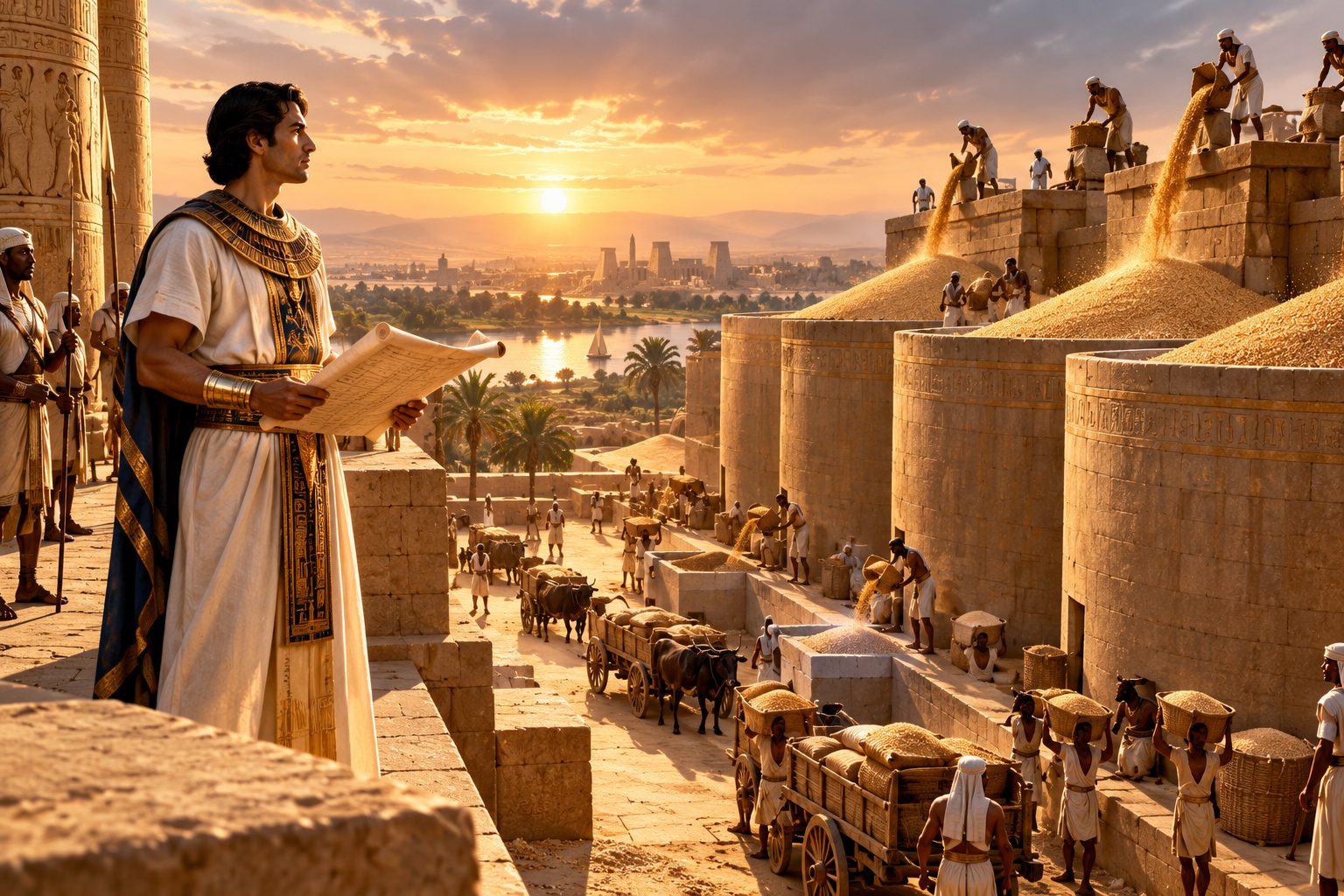
Genesis 41:37-57 shows what happens after Pharaoh accepts Joseph's counsel. Joseph receives authority, but the passage does not leave him standing beside the throne admiring his new position. He goes out through Egypt, gathers during the years of plenty, prepares for the famine and becomes the man to whom people are sent when bread is needed. This study follows that movement carefully so that we learn to see promotion as enlarged responsibility, abundance as a season to steward, and public honour as a place where dependence on God must remain alive.
I understand the longing for a changed season, because waiting can wear the soul down. Yet Joseph's story asks us to look beyond the moment when the door opens. The question becomes: what will we do with the authority, opportunity and resources placed in our hands once we are standing on the other side of that door?
Lesson 5 ended with Joseph giving Pharaoh a plan. Lesson 6 begins with the plan being accepted. The change is immediate: Pharaoh moves Joseph from prisoner to ruler, gives him visible symbols of authority and places the administration of Egypt beneath him. But Scripture quickly moves our attention from the ceremony to Joseph's work.
That movement matters. Many people pray for increase, influence, resources or a wider opportunity. Genesis 41:37-57 helps us ask what increase is for. Joseph's new authority is connected to a coming need. The years of plenty are connected to a future famine. His wisdom, position and access become useful because they are carried into disciplined action.
Watch also how often Joseph still speaks of God after the palace doors open. Pharaoh gives him an Egyptian name, a wife and public authority, yet when Joseph names his sons he says, 'God hath made me forget' and 'God hath caused me to be fruitful.' His surroundings have changed, but God has not disappeared from the way Joseph understands his life.
Genesis 41:37-41 - Wisdom Was Recognised and Responsibility Was Entrusted
Pharaoh and his servants judge Joseph's counsel to be good. Pharaoh then asks, 'Can we find such a one as this is, a man in whom the Spirit of God is?' This is a remarkable moment. Joseph had already told Pharaoh in verse 16 that the answer was not in himself. Now Pharaoh's own words recognise that something beyond ordinary court wisdom is present in Joseph.
Pharaoh does not stop at admiration. He entrusts Joseph with his house, his people and the land of Egypt. Verse 40 makes the order clear: Pharaoh retains the throne, while Joseph receives authority beneath it. Promotion in this passage therefore has substance. Joseph is not simply honoured; he is made responsible for carrying out the plan that will affect the survival of many people.
This is where public recognition becomes a spiritual test. A title can tell people where you stand, but responsibility reveals what you will do there. Joseph's next actions show that he understands authority as work to be carried, not an image to be enjoyed.
Genesis 41:42-46 - The Symbols of Authority Were Followed by Movement
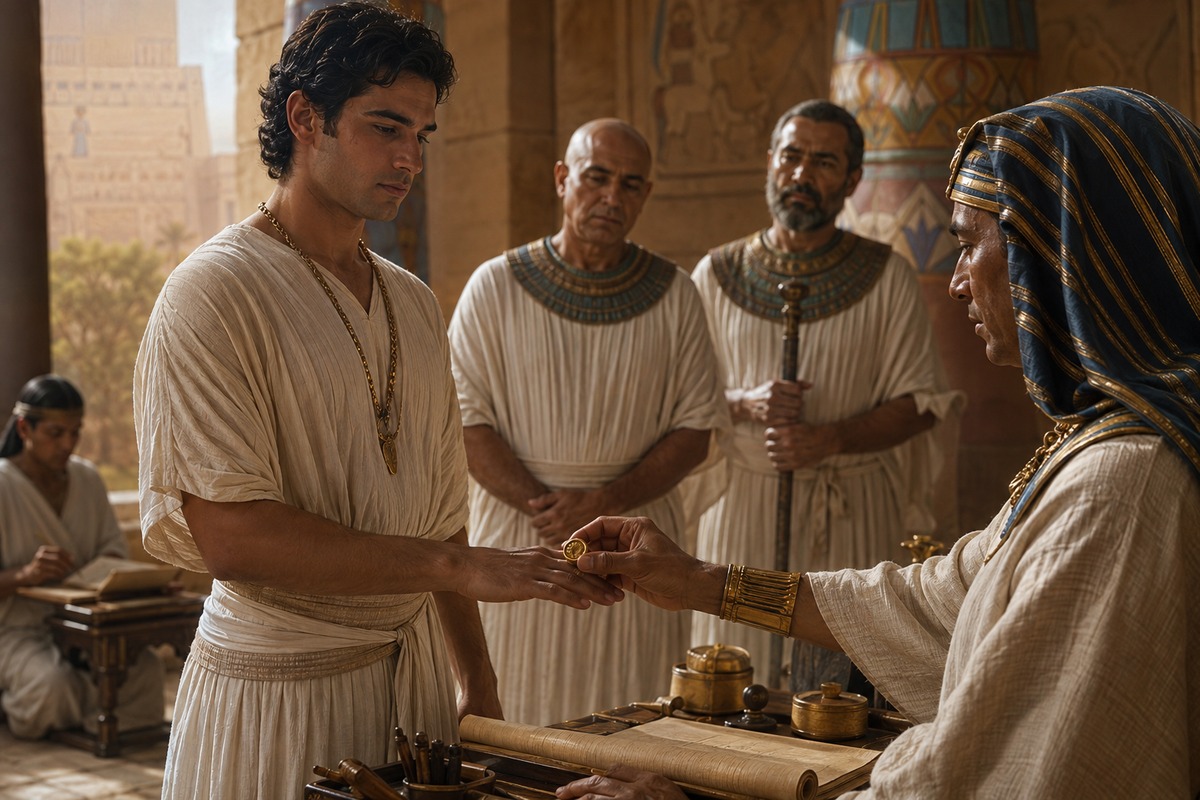
Pharaoh places his ring on Joseph's hand, arrays him in fine linen, puts a gold chain around his neck and gives him the second chariot. These signs publicly communicate that Joseph now acts with Pharaoh's delegated authority. The man who was brought from the dungeon is now recognised across Egypt.
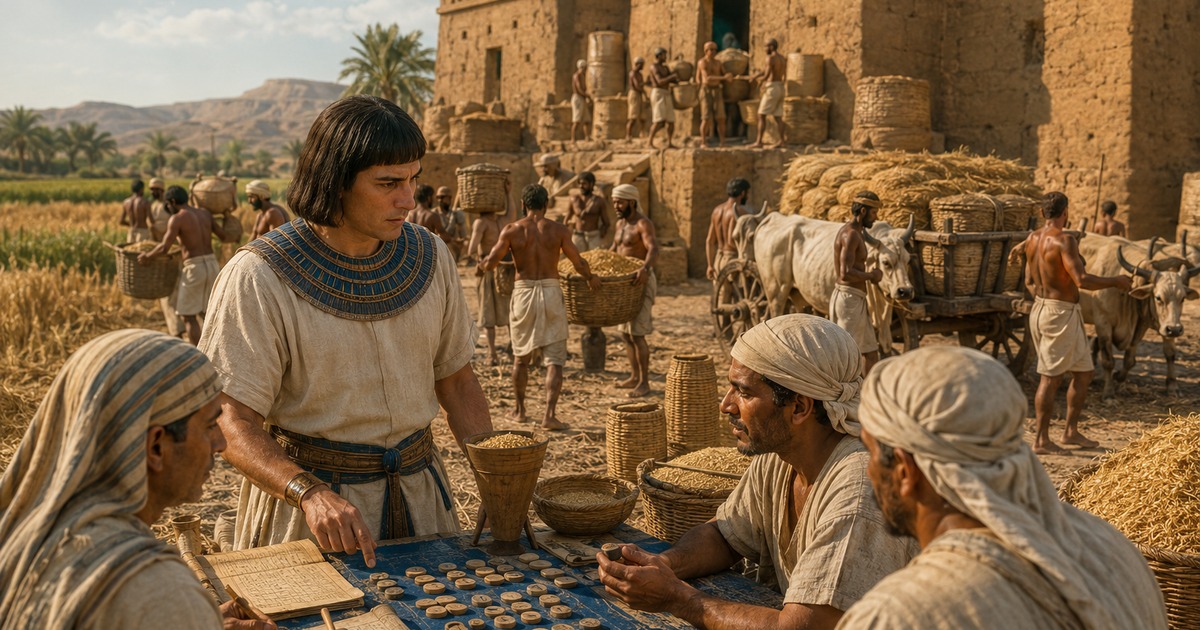
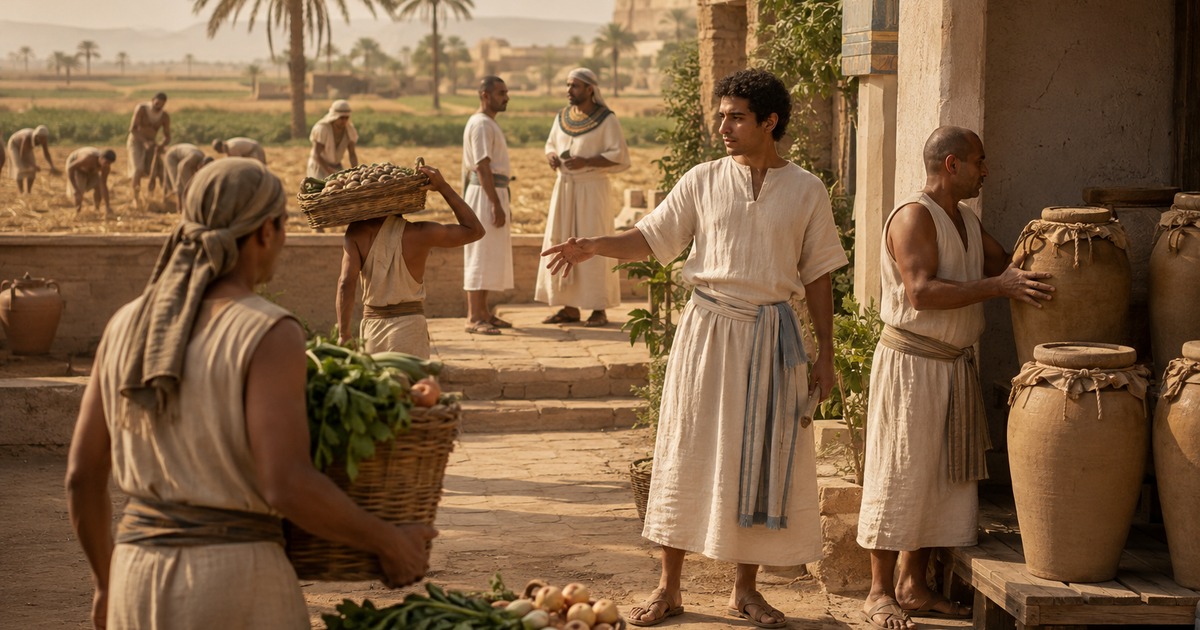
Yet two phrases deserve equal attention: 'Joseph went out over all the land of Egypt' in verse 45 and 'went throughout all the land of Egypt' in verse 46. He does not remain in the palace enjoying the symbols. He moves into the land connected to the responsibility he has received.
This challenges the way we sometimes imagine promotion. Greater influence can mean more people to consider, more decisions to make, more systems to build and more consequences attached to our choices. Joseph receives honour, but he also receives a larger field in which to serve faithfully.
Genesis 41:47-49 - Abundance Became a Season of Preparation
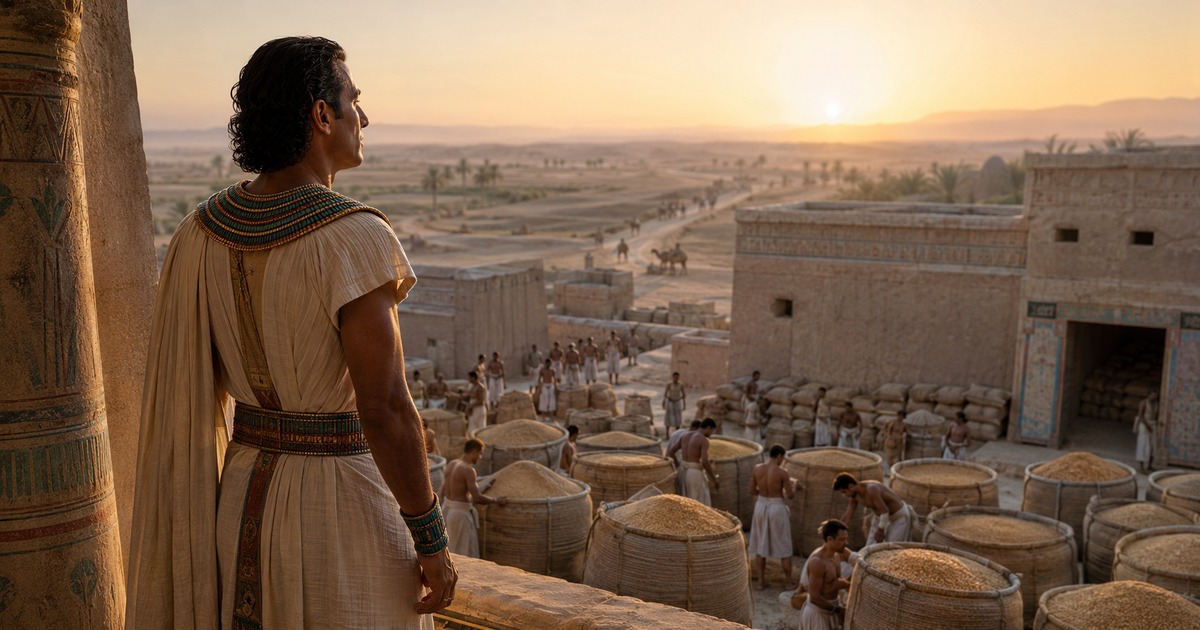
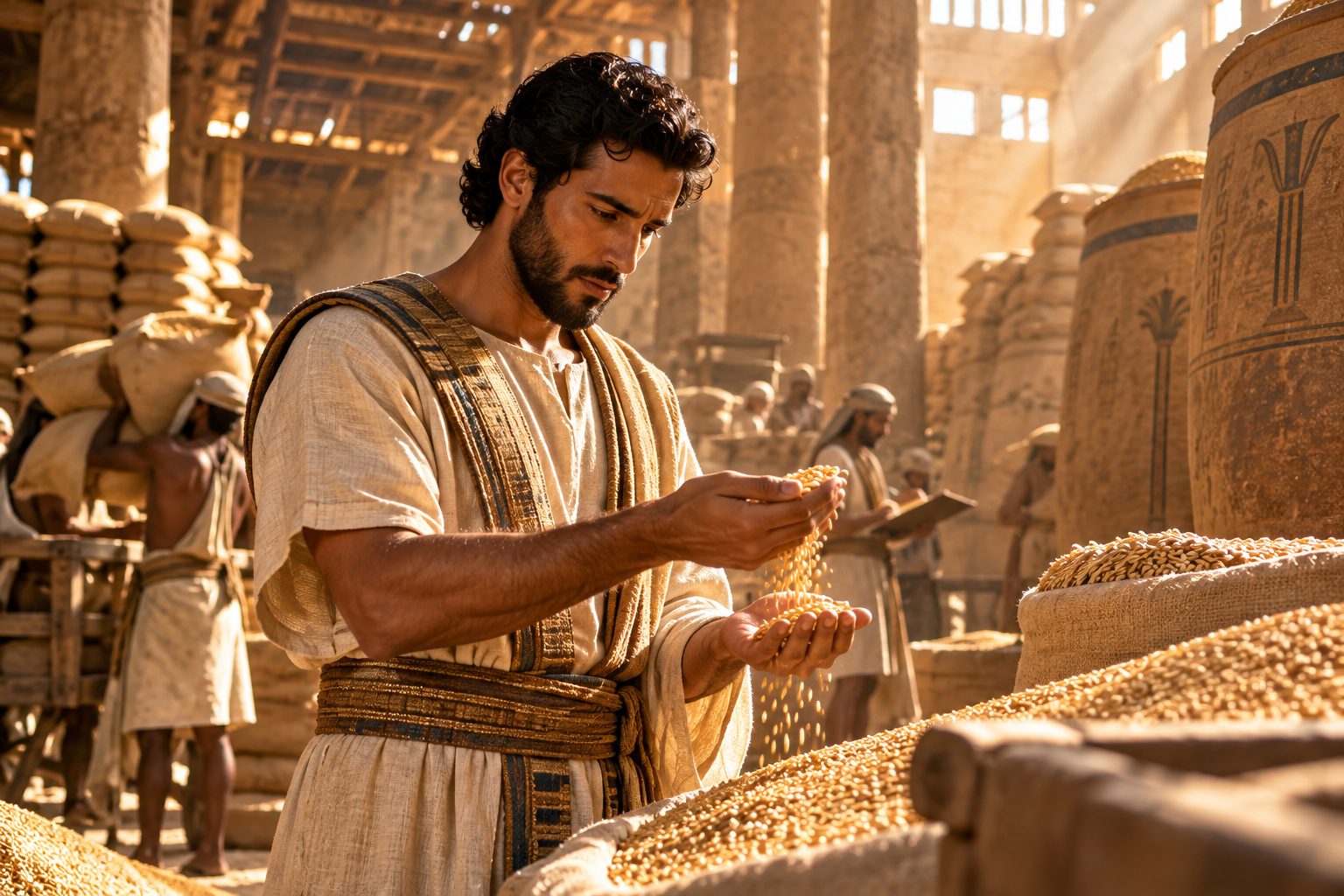
The earth produces abundantly during the seven plenteous years. Joseph responds by gathering food and laying it up in the cities. The scale becomes so great that the corn is compared with the sand of the sea. The important point is not merely that Egypt has much; it is that Joseph knows what the plenty is for.
Abundance can create a false feeling that the present condition will continue forever. Joseph acts with the future in view. He gathers while gathering is possible. He organises while resources are available. He builds reserves before the pressure arrives. The plan from verses 33-36 becomes disciplined work in verses 47-49.
This speaks directly to stewardship. When we have extra money, time, strength, food, opportunity or capacity, wisdom asks more than, 'What can I enjoy now?' It also asks, 'What should I preserve, prepare, build or strengthen while I have the ability to do it?' A rainy-day fund, sensible savings, learning a skill and building reliable systems can all express the same principle of preparing during a season when preparation is possible.
Genesis 41:50-52 - Joseph Kept Naming God's Work in His Changed Life
Before the famine begins, Joseph becomes a father. He calls his firstborn Manasseh and explains the name with the words, 'For God ... hath made me forget all my toil, and all my father's house.' He calls the second Ephraim and says, 'For God hath caused me to be fruitful in the land of my affliction.' Scripture lets us hear how Joseph himself describes this new season.
Notice the subject of both explanations: God. Pharaoh changed Joseph's position, clothing and public name, but Joseph still speaks about what God has done. He can acknowledge toil and affliction while also acknowledging that God has brought him into fruitfulness. His language of progress remains God-centred.
There is something deeply human here. A better season does not require us to pretend the painful season never existed. Joseph still calls Egypt 'the land of my affliction,' yet in that same sentence he says God has made him fruitful there. Pain and fruitfulness can both belong to the honest telling of a life God is carrying forward.
Genesis 41:53-57 - Preparation Became Provision When the Need Arrived
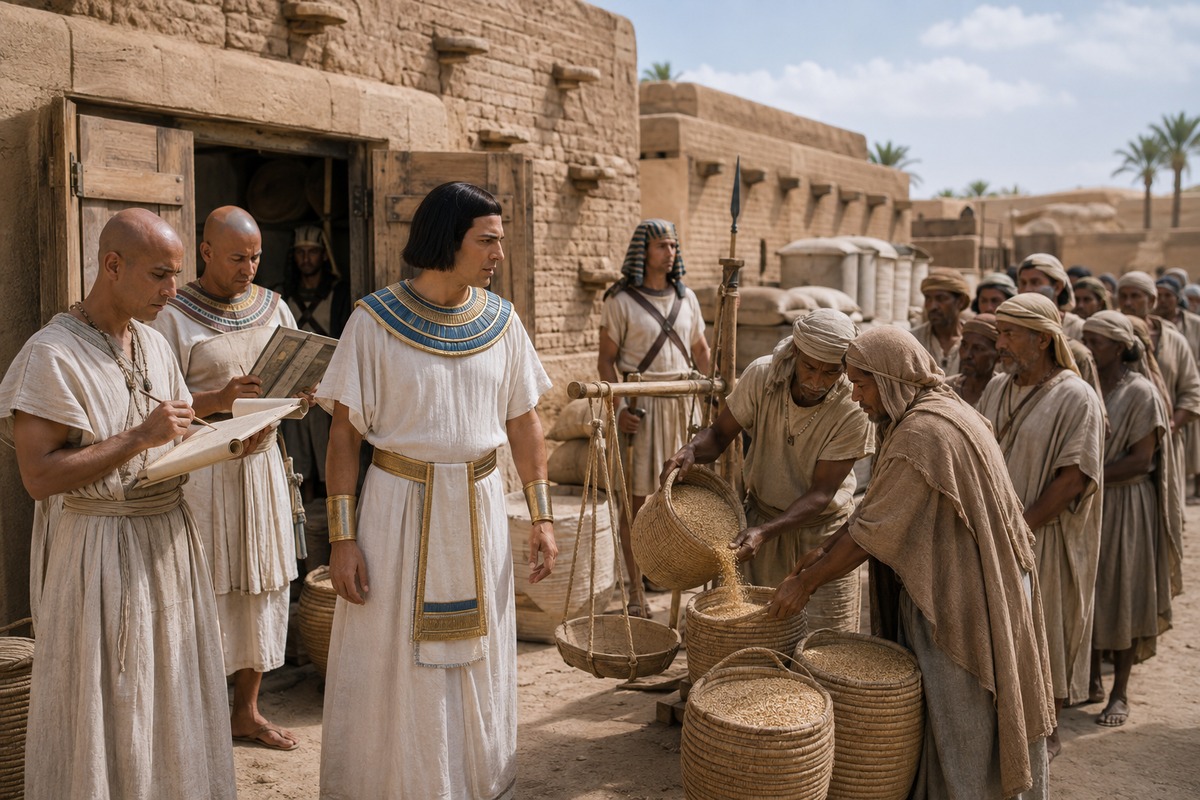
The seven years of plenty end. The famine begins exactly as Joseph had said, and the contrast is severe: dearth reaches the surrounding lands, yet in Egypt there is bread. When the people cry to Pharaoh, he sends them to Joseph. The responsibility given in the palace has now reached the moment for which the years of preparation were necessary.
Joseph opens the storehouses and sells to the Egyptians. People from other countries also come to Egypt for corn. What was stored quietly during abundance becomes visible provision during scarcity. The usefulness of Joseph's leadership is therefore measured in more than status; people can eat because preparation happened before the crisis.
This gives a powerful shape to stewardship. A reserve is not merely something we keep because we fear tomorrow. Wise preparation can make us steadier and more useful when tomorrow places a real need in front of us. The purpose of discipline is not simply accumulation. Joseph's stored grain eventually moves outward to meet hunger.
How To Apply This Passage
When you pray for a wider door, also prepare for the responsibility attached to it. A promotion at work may require better judgement, clearer communication and care for people whose work now depends on your decisions. A growing ministry may require stronger study habits, follow-up and accountability. More customers in a business may require better records, systems and service. Joseph's palace came with work attached to it.
Do not wait for scarcity before learning how to manage plenty. Build margin when you can. Save something when income allows it. Use quieter seasons to learn, repair, organise and prepare. A rainy-day fund is not an announcement that you expect disaster; it can be a practical way of admitting that seasons change and that tomorrow may bring responsibilities today's money can help you carry.
Watch what happens inside your heart when people begin to recognise you. Joseph receives public honour, but the passage soon shows him serving across the land. Let recognition deepen your sense of responsibility rather than your need to appear important.
Keep God present in the way you tell the story of your progress. Joseph says, 'God hath made me forget' and 'God hath caused me to be fruitful.' Gratitude protects the heart from quietly rewriting a God-carried journey as a self-made achievement.
Genesis 41:37-57 moves Joseph from counsel to authority and from authority to action. Pharaoh recognises the Spirit of God in him, places him over Egypt and gives him public signs of delegated authority. Joseph then goes throughout the land and carries out the work required by the coming famine.
The years of plenty become years of gathering and storage. Joseph continues to speak of God's work in his own life when he names Manasseh and Ephraim. When the famine arrives, the preparation already made becomes bread for Egypt and brings people from other lands to the storehouses. The palace matters in Joseph's story because the responsibility carried there becomes useful to people.
Further Reading
Frequently Asked Questions
Joseph's authority becomes meaningful through what he does with abundance before famine arrives. I follow that stewardship more closely in Wealth With a Kingdom Purpose: A Genesis 41:46–49, 53–57 Bible Study on Saving, Stewardship and Preparing Resources to Serve Future Need.
Where to Read Next
Joseph the Dreamer and the Pit A Genesis 37 Bible Study on Envy, Familiarity, Discernment and What God Has Shown You — Worth reading next.
The Story of Joseph in the Bible: 10 Powerful Lessons From His Life
Found this helpful? Share it with someone who needs it.