"Joseph, being seventeen years old, was feeding the flock with his brethren" (Genesis 37:2, KJV). You have probably read that verse dozens of times, perhaps skipping over the age or the setting to get to the "good part" with the coat of many colours. But that single sentence is the formal starting gate for one of the most detailed biographies in the entire Word of God. If you are looking for exactly where Joseph’s life start and end in Genesis, the answer is that his story spans fourteen chapters, beginning in Genesis 37 and concluding with his death in Genesis 50.
I find that many believers treat the story of Joseph like a collection of disconnected Sunday school lessons. We talk about the pit one week, the prison the next, and the palace a month later. But when you see the architectural structure of his life across these specific chapters, you begin to see a pattern of stewardship that God wants to apply to your own career and finances. Joseph's life is not just a story of survival; it is a blueprint for Kingdom advancement in a secular world.
To understand the full scope, you need to know that while his narrative "career" begins in chapter 37, his actual entrance into the world happens earlier. His birth is recorded in Genesis 30:22-24, during the time his father Jacob was working for Laban. However, the Bible waits until he is a young man of seventeen to begin the detailed account of his character, his trials, and his eventual promotion to the second most powerful position on earth.
The name Joseph is more than a label; it is a prophecy of how God handles a faithful steward. In Hebrew, the name is Yosef , which is the future tense of the root yasaph. It means "to add", "to increase", or "to do again". When Rachel bore him, she said, "The LORD shall add to me another son" (Genesis 30:24, KJV). This root yasaph is the engine behind Joseph’s entire journey. Whether he was in a pit, a prison, or a palace, the yasaph of God was at work. God was constantly adding favour, adding wisdom, and adding responsibility. The word is used in the context of increasing something that already exists. It suggests that God did not just give Joseph a random promotion; He "added" to the faithfulness Joseph was already showing in the small, dark places. "The LORD shall increase you more and more, you and your children" (Psalm 115:14, KJV). The word "increase" there is that same root yasaph. When you understand this, you stop looking for a "lucky break" in your finances and start looking for the God who adds to the diligent.
I have seen so many people in the church waiting for a "suddenly" without preparing for the "additionally". They want the palace result without the yasaph process. But God is a God of order. He adds to what you manage well. If you are not managing your current small salary with excellence, why would He add the wealth of Egypt to your hands? Joseph's life shows us that the addition happens in the middle of the struggle, not just at the end of it.
The Starting Point: Genesis 37
The formal narrative of Joseph’s life begins in Genesis 37. This is the chapter that introduces us to the tension of his household. He is seventeen years old. He is the favourite son. And he is a dreamer. But I want you to notice that chapter 37 does not start with the dreams; it starts with Joseph working. He was "feeding the flock" (Genesis 37:2, KJV). Promotion in the Kingdom always finds you at work, not on the couch.
This chapter is where we see the "coat of many colours" and the subsequent betrayal by his brothers. It is a heavy chapter because it marks the end of his comfort and the beginning of his preparation. By the end of Genesis 37, Joseph has been stripped of his coat, thrown into a pit, and sold to Ishmeelite merchants for twenty pieces of silver. If you are wondering where the "wealth" part of his story begins, it starts here,with a transaction that valued him as a slave. He was sold as a commodity before he was positioned as a governor.
In my own walk, I have had seasons that felt like Genesis 37. I have had moments where it felt like the people I trusted most were the ones who "sold" my reputation or my efforts for their own gain. It is easy to get bitter in chapter 37. But Joseph shows us that you cannot get to chapter 41 (the palace) if you refuse to survive chapter 37. This chapter is the foundation of his resilience. It is where he learns that his identity is not in the coat his father gave him, but in the God who goes with him into the pit.
The Training Ground: Genesis 39 and 40
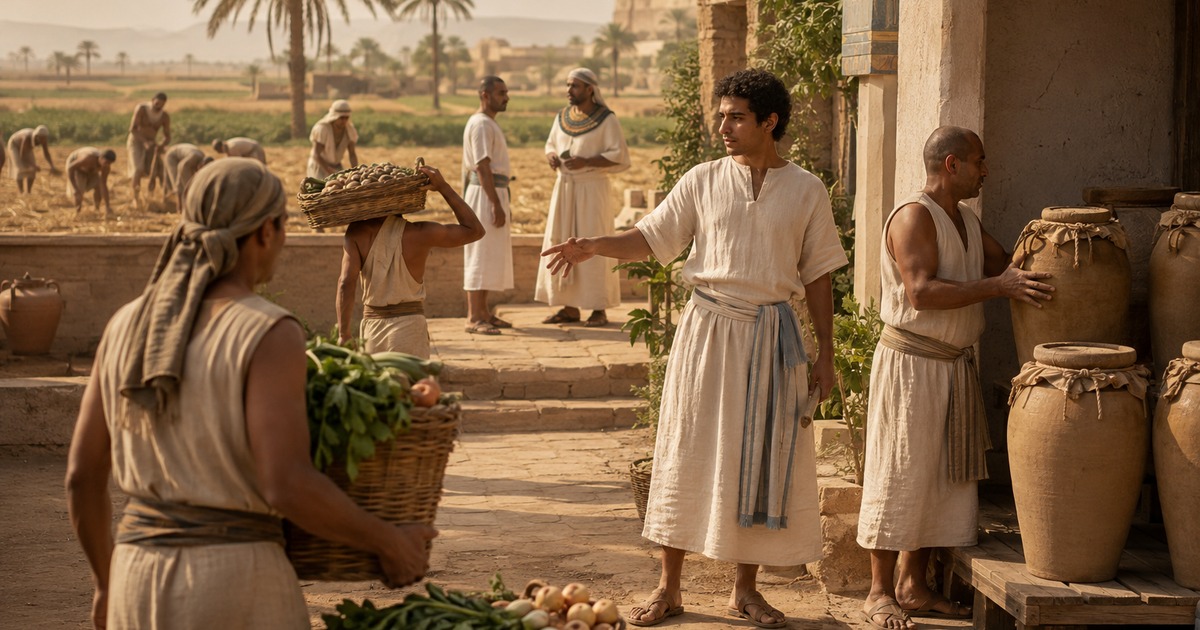
Many people skip chapter 38 because it focuses on Judah and Tamar, but chapter 39 brings us right back to Joseph in Egypt. This is where he enters the house of Potiphar. If you want to know how to be faithful in someone else's house, these are the chapters you must study. Genesis 39 is the chapter of integrity. It covers his rise to head steward in Potiphar’s house and his refusal to sin with Potiphar’s wife.
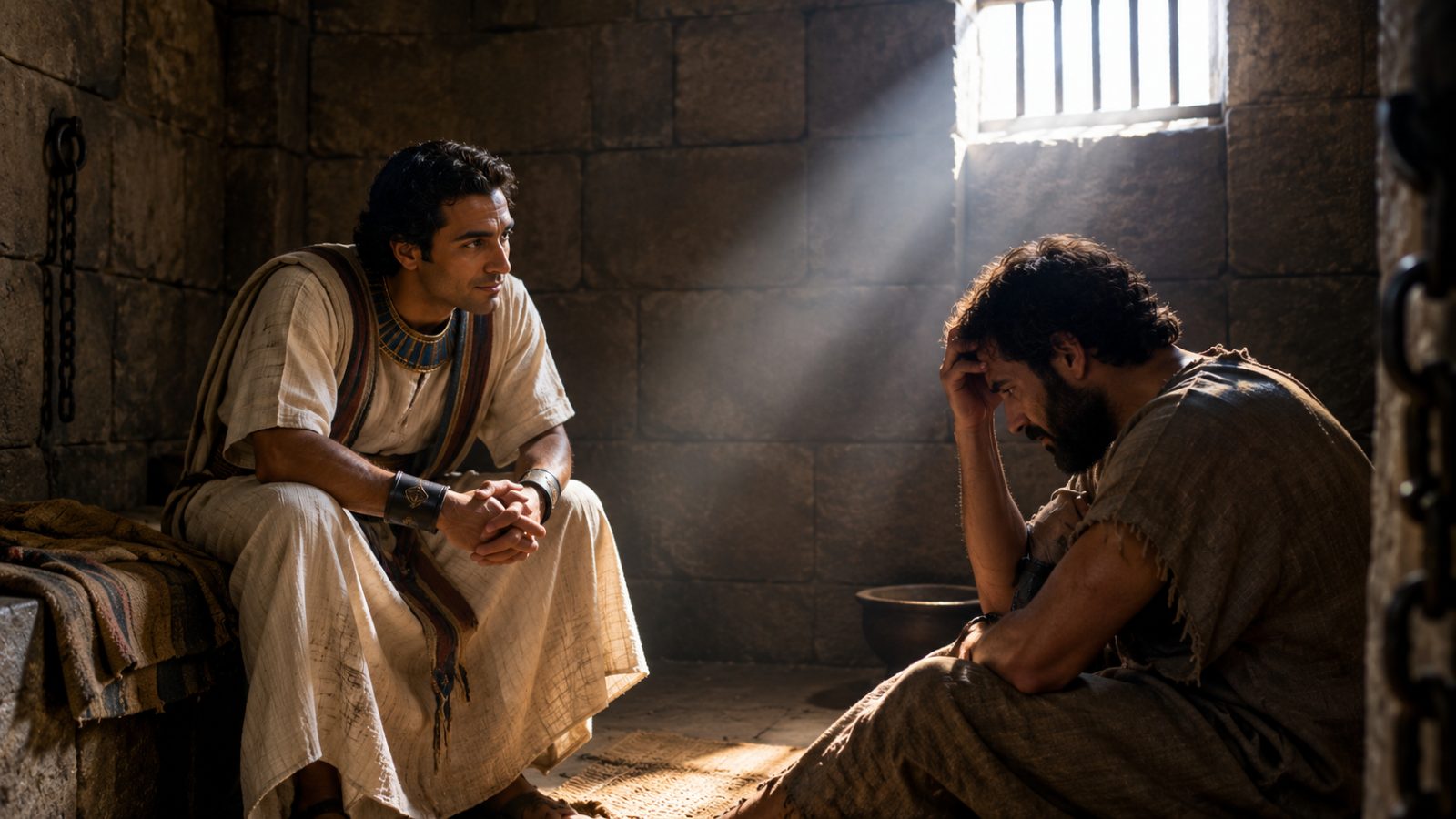
But look at the cost of that integrity. By the end of chapter 39, Joseph is in prison. He did the right thing and got the "wrong" result. Or so it seemed. Genesis 40 then covers his time in the "king's prison". This is where he meets the chief butler and the chief baker. This chapter is vital because it shows Joseph’s willingness to use his gifts (interpreting dreams) even when he was in a place of personal suffering. He was "diligently" serving other prisoners while his own situation looked hopeless.
I believe Genesis 40 is the most difficult chapter in Joseph's life. It ends with a heartbreaking sentence: "Yet did not the chief butler remember Joseph, but forgat him" (Genesis 40:23, KJV). Two more years of silence followed. If you feel forgotten in your career or your business right now, you are in your Genesis 40 season. But remember, the butler forgetting was part of God’s timing. If the butler had remembered him then, Joseph might have just been released to go back to Canaan. God wanted him released to rule Egypt. Timing is everything in the Kingdom.
The Promotion: Genesis 41
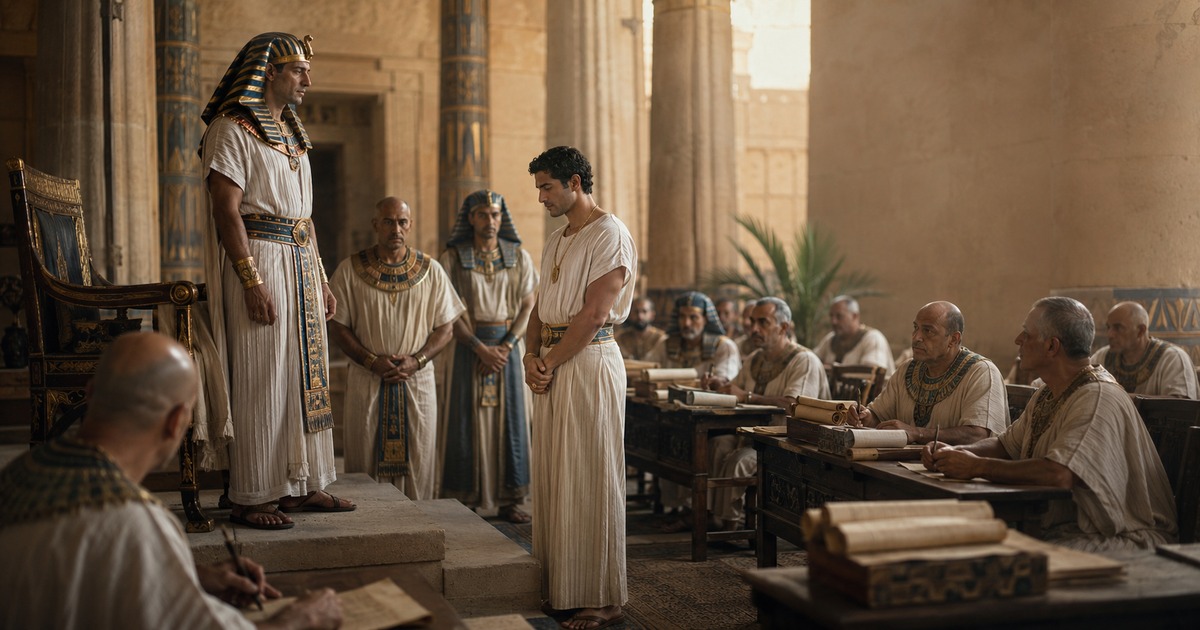
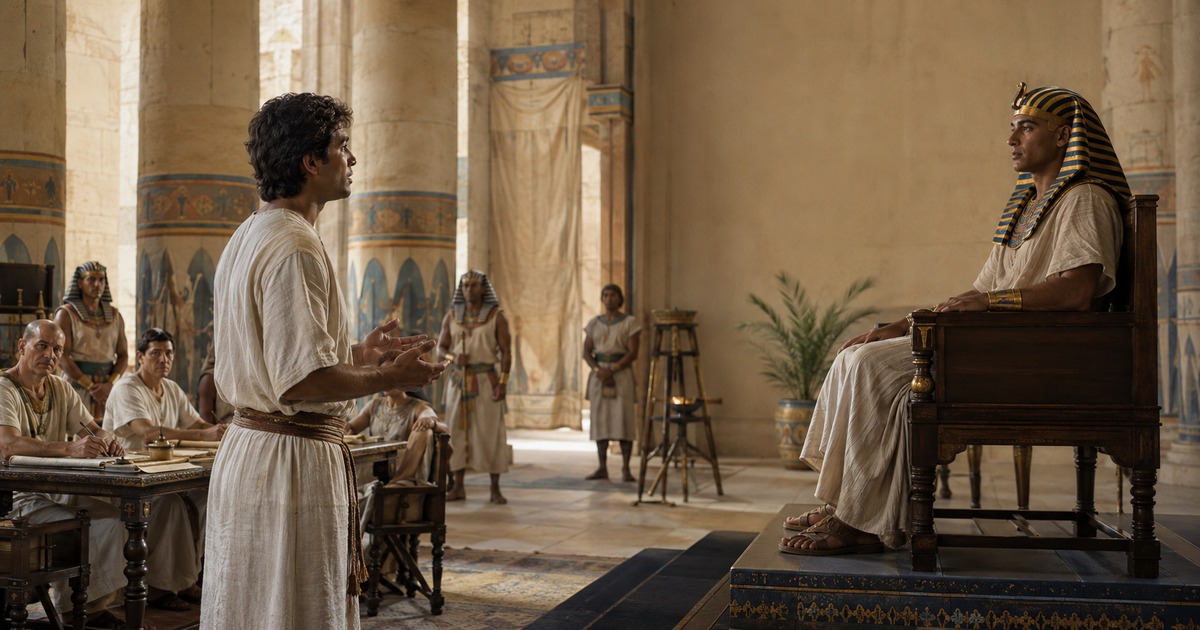
Genesis 41 is the turning point. It is the chapter every Christian professional wants to experience. This is the "From Prison to Palace" chapter. It begins with Pharaoh’s dreams of the fat and lean kine (cows) and ends with Joseph being made ruler over all the land of Egypt. This is where we see the character to carry greater responsibility being put to the test.
In this chapter, Joseph is thirty years old (Genesis 41:46, KJV). This means thirteen years have passed since the pit of chapter 37. Thirteen years of being a slave and a prisoner. Many of us want the promotion of chapter 41 after thirteen days of being faithful. But God waited until the "word of the LORD tried him" (Psalm 105:19, KJV). Joseph was not just promoted because he could interpret dreams; he was promoted because he had a plan. He was a man of action.
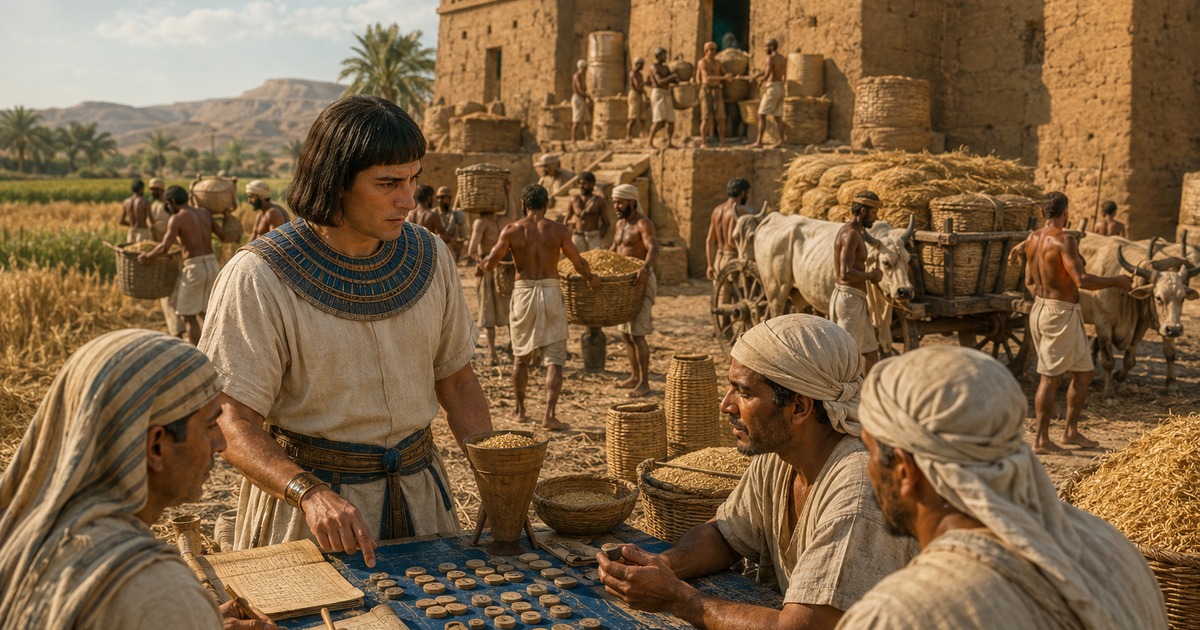
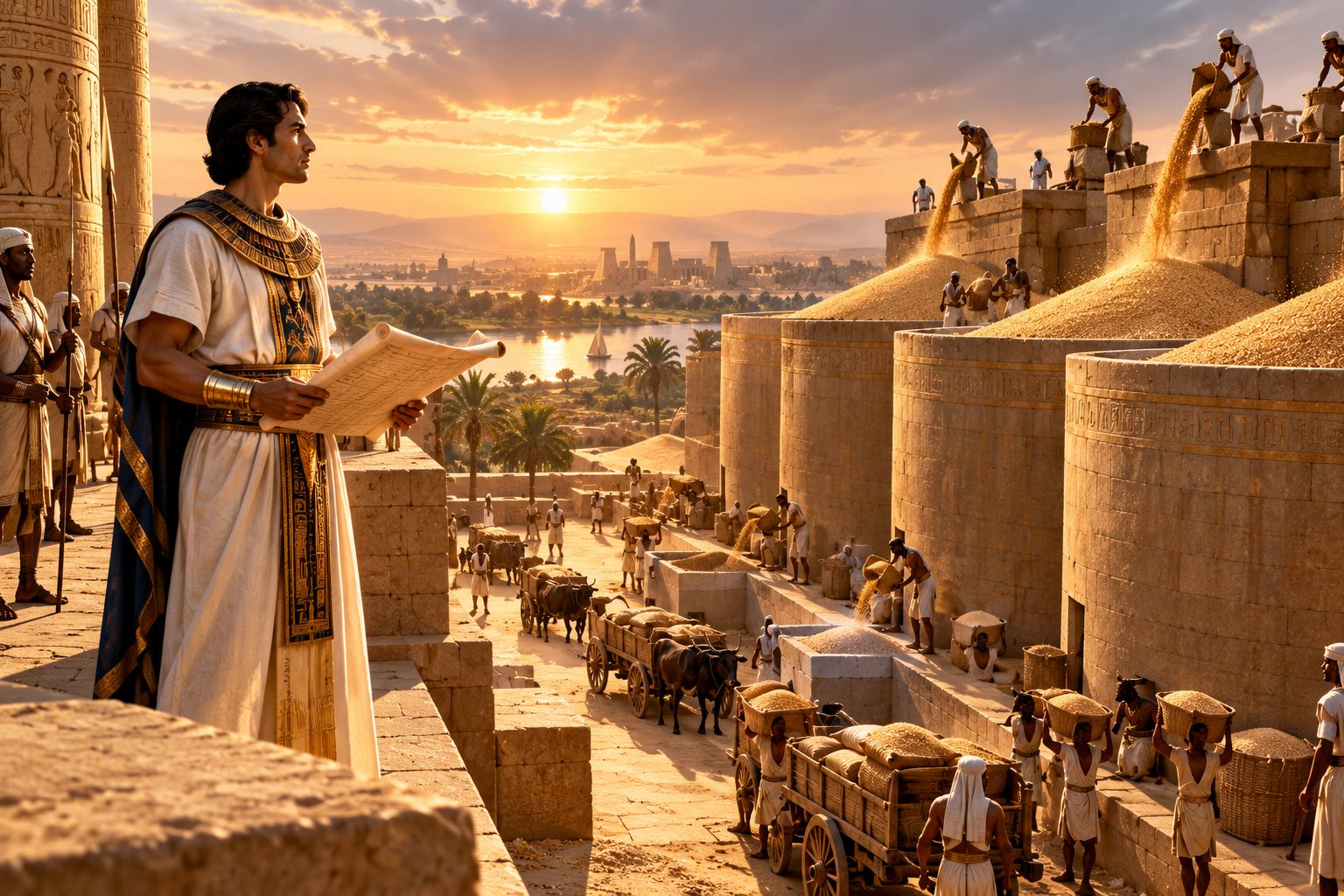
If you study the second half of Genesis 41, you see the most sophisticated economic strategy in the ancient world. Joseph did not just tell Pharaoh there would be a famine; he told him how to survive it. He implemented a 20% tax during the years of plenty to store up grain. This is a massive lesson for us this year. We must be a people who know how to manage resources during the "plenty" seasons so we are not begging during the "famine" seasons. Joseph’s wealth was built on his ability to solve a problem that no one else could solve.
Genesis 42 to 45
These four chapters comprise the "testing" phase of Joseph’s brothers. When the famine hits, Jacob sends his sons to Egypt to buy corn. They do not recognise Joseph, but he recognises them. These chapters are a masterclass in discernment and emotional intelligence. Joseph does not immediately reveal himself. He tests their hearts to see if they have changed since they threw him in the pit.
Genesis 45 is the emotional peak of the entire story. This is where Joseph finally says, "I am Joseph; doth my father yet live?" (Genesis 45:3, KJV). This is also the chapter where he gives us the theological key to his entire life: "Now therefore be not grieved, nor angry with yourselves, that ye sold me hither: for God did send me before you to preserve life" (Genesis 45:5, KJV). He understood that his suffering had a social and spiritual purpose. His wealth and power were not for his own comfort, but for the preservation of the covenant family.
I have often had to ask myself: "Is my desire for wealth about my comfort, or is it about preserving life?" Joseph had the "Kingdom citizen" perspective. He saw his high ranking job as a mission field. He saw his salary as a tool for the Kingdom. When you read the study on Genesis 45 and 50, you realise that forgiveness is the fuel for sustained success. If Joseph had remained bitter, he would have been a tyrant, not a saviour.
The Settlement and Legacy In Genesis 46 to 49
The story then moves to the relocation of the entire family of Israel to Egypt. Genesis 46 and 47 cover the logistics of this move and how Joseph settled them in the land of Goshen. It is interesting to note that even in his success, Joseph was careful about how his family presented themselves to Pharaoh. He knew the culture he was in, and he managed the relationships with wisdom. He was not ashamed of his shepherd roots, but he was wise about the Egyptian's "abomination" of shepherds (Genesis 46:34, KJV).
Genesis 48 and 49 focus on the end of Jacob’s life and the blessings he spoke over his sons, particularly Joseph’s two sons, Ephraim and Manasseh. These chapters are about generational wealth,not just money, but the transfer of the blessing and the covenant promise. Joseph brought his sons to his father to ensure they were connected to their spiritual heritage. He did not want them to just be "successful Egyptians"; he wanted them to be "blessed Israelites".
In our time today the pursuit of career success, we often neglect this. We work so hard to give our children a "better life" that we forget to give them a "better faith". Joseph ensured his children knew where they came from. He understood that legacy is about more than an inheritance; it is about an identity. He used his position to secure their future in the promise of God, not just in the economy of Egypt.
The life of Joseph ends in Genesis 50. This final chapter covers two major events: the burial of Jacob and the death of Joseph. After Jacob dies, the brothers are terrified that Joseph will finally take his revenge. But Joseph responds with those famous words: "But as for you, ye thought evil against me; but God meant it unto good, to bring to pass, as it is this day, to save much people alive" (Genesis 50:20, KJV).
Joseph died at the age of one hundred and ten. But before he died, he made the children of Israel swear an oath: "God will surely visit you, and ye shall carry up my bones from hence" (Genesis 50:25, KJV). Even in death, Joseph’s heart was not in Egypt. He knew Egypt was a temporary assignment. He knew the Promised Land was the true goal. He lived in the palace, but he died with his eyes on the promise.
This is where the story of Joseph ends in the Bible,with a coffin in Egypt, waiting for the Exodus. It is a powerful reminder that no matter how much wealth we accumulate or how high we rise in our careers, we are "strangers and pilgrims" on the earth. Our ultimate "end" is not the retirement fund or the corporate title. Our end is the fulfilment of God’s promise. Joseph finished well because he never let the "palace" become his "god".

Summary of Chapters Covering Joseph's Life
If you are looking for a quick reference guide to Joseph's life in the Bible, here is the chronological breakdown of the chapters in Genesis:
Genesis 30:22-24: The birth of Joseph to Rachel and Jacob in Padan-aram.
Genesis 37: Joseph at age 17, his dreams, the coat of many colours, and being sold into slavery.
Genesis 39: Joseph in Potiphar’s house, his rise to power, the temptation, and his imprisonment.
Genesis 40: Joseph in prison, interpreting the dreams of the butler and the baker.
Genesis 41: Joseph at age 30, interpreting Pharaoh’s dreams, and his promotion to Governor of Egypt.
Genesis 42-44: The years of famine and the three visits of Joseph’s brothers to Egypt.
Genesis 45: Joseph reveals his identity to his brothers and invites his family to Egypt.
Genesis 46-47: The migration of Jacob’s family and their settlement in the land of Goshen.
Genesis 48-49: Joseph receives the blessing for his sons and witnesses Jacob’s final prophecies.
Genesis 50: The death of Joseph at age 110 and his instructions concerning his burial.
This fourteen chapter span (predominantly chapters 37-50) represents one of the most cohesive and detailed character studies in the Old Testament. It covers approximately 93 years of his life in detail, showing us every stage of the journey from a teenager with a dream to an elder with a legacy.
Practical Lessons for Kingdom Citizens
Why does it matter where Joseph's story starts and ends? Because it shows us that God is the God of the whole "arc". He is not just with you when you get the job; He was with you when you were applying and getting rejected. He is not just with you when the business is profitable; He was with you when you were counting pennies in the "prison" phase of your startup.
Joseph’s life teaches us that stewardship is a constant. He was a good steward of his father’s sheep, a good steward of Potiphar’s house, a good steward of the prison’s resources, and finally a good steward of Egypt’s grain. If you want to see the yasaph (increase) of God in your life, you must be faithful in whatever chapter you are currently reading. Don't try to flip the page to chapter 41 if you haven't finished the lessons in chapter 39.
I also want you to see that Joseph’s "success" was deeply tied to his ability to solve a secular problem with spiritual wisdom. He didn't just pray about the famine; he organised the grain. He didn't just interpret the dream; he created a tax system. As Kingdom citizens, we are called to be the most excellent, most organised, and most resourceful people in our industries. That is how we "save much people alive" in our generation.
May you find the strength to be faithful in your "pit" chapters, the integrity to stand in your "Potiphar" chapters, and the wisdom to lead in your "palace" chapters. Remember that the God who started the story in chapter 37 is the same God who will bring it to a glorious conclusion in chapter 50. Trust the Author of your story.
"And the LORD was with Joseph, and he was a prosperous man; and he was in the house of his master the Egyptian." (Genesis 39:2, KJV)
Where To Read Next
If you want to go deeper into the specific strategies and lessons from Joseph's life, I highly recommend these studies:
The Story of Joseph in the Bible: 10 Powerful Lessons From His Life
You Meant Evil, God Meant Good: A Study on Genesis 45 and 50
Frequently Asked Questions
Where does Joseph's life start and end in the Bible?
Joseph's life story in the Bible starts in Genesis 30 with his birth and his narrative begins in earnest in Genesis 37. His life ends in Genesis 50:26 when he dies at the age of 110. Most of the focus is on his life from age 17 to his death, covering his time in Egypt.
What chapters in Genesis cover Joseph's life?
The life of Joseph is covered primarily in Genesis chapters 37 through 50. While his birth is mentioned in Genesis 30, the continuous narrative of his journey to Egypt, his rise to power, and his reconciliation with his family spans the final 14 chapters of the book of Genesis.
How old was Joseph when he was sold into slavery?
Joseph was seventeen years old when his brothers sold him into slavery. The Bible specifically notes this age in Genesis 37:2, marking the beginning of his thirteen-year period of testing before he was promoted by Pharaoh. "Joseph, being seventeen years old, was feeding the flock with his brethren" (Genesis 37:2, KJV).
How long was Joseph in prison in the Bible?
The Bible does not give a specific number of years for his prison stay, but we know he was thirty years old when he stood before Pharaoh (Genesis 41:46). Since he was sold at seventeen, his total time as a slave and prisoner was thirteen years, with at least two of those years spent in prison after interpreting the butler's dream (Genesis 41:1).
Is it a sin to want to be successful like Joseph?
No, it is not a sin to desire success, provided that your success is rooted in stewardship and God's purpose. Joseph’s success was a tool used by God to "save much people alive" (Genesis 50:20, KJV). As Kingdom citizens, we should seek excellence and promotion so that we can have a greater impact for the Gospel.
What does the Bible say about Joseph's death?
The Bible says that Joseph died at the age of 110 and was embalmed and put in a coffin in Egypt. Before he died, he expressed his faith that God would return the Israelites to the Promised Land. "And Joseph said unto his brethren, I die: and God will surely visit you, and bring you out of this land" (Genesis 50:24, KJV).
Found this helpful? Share it with someone who needs it.