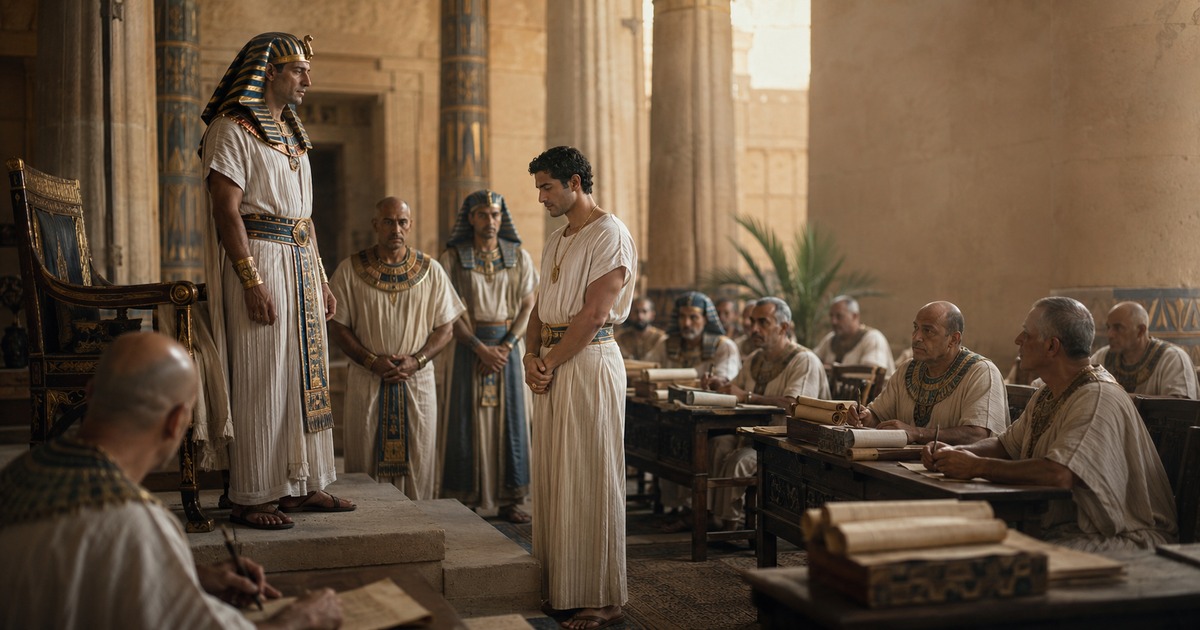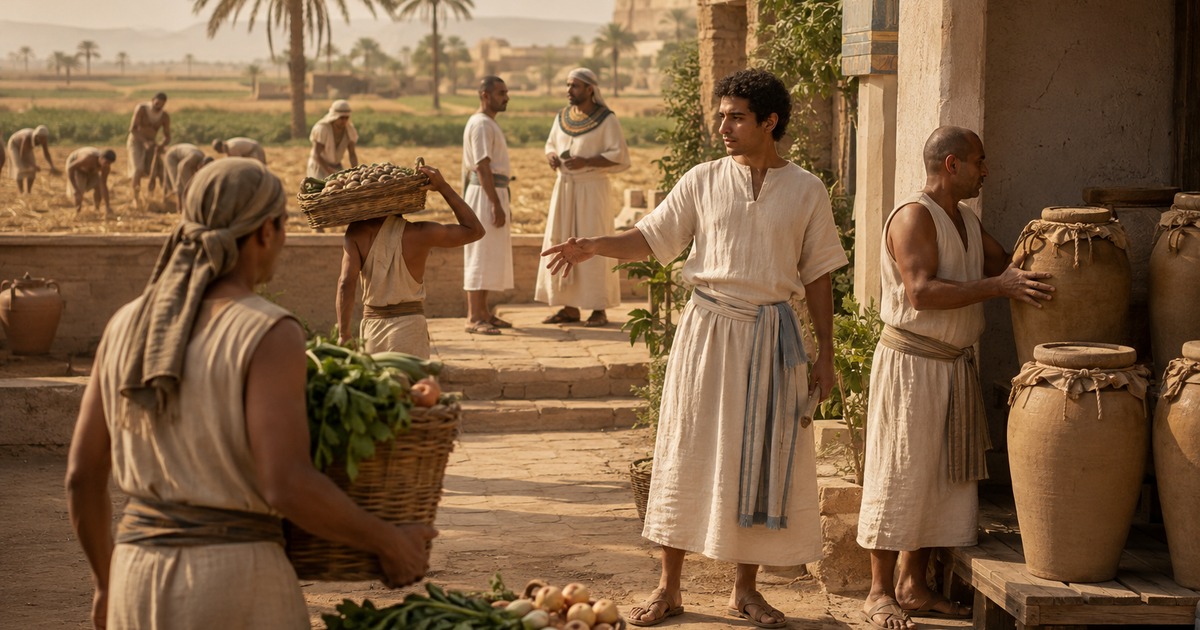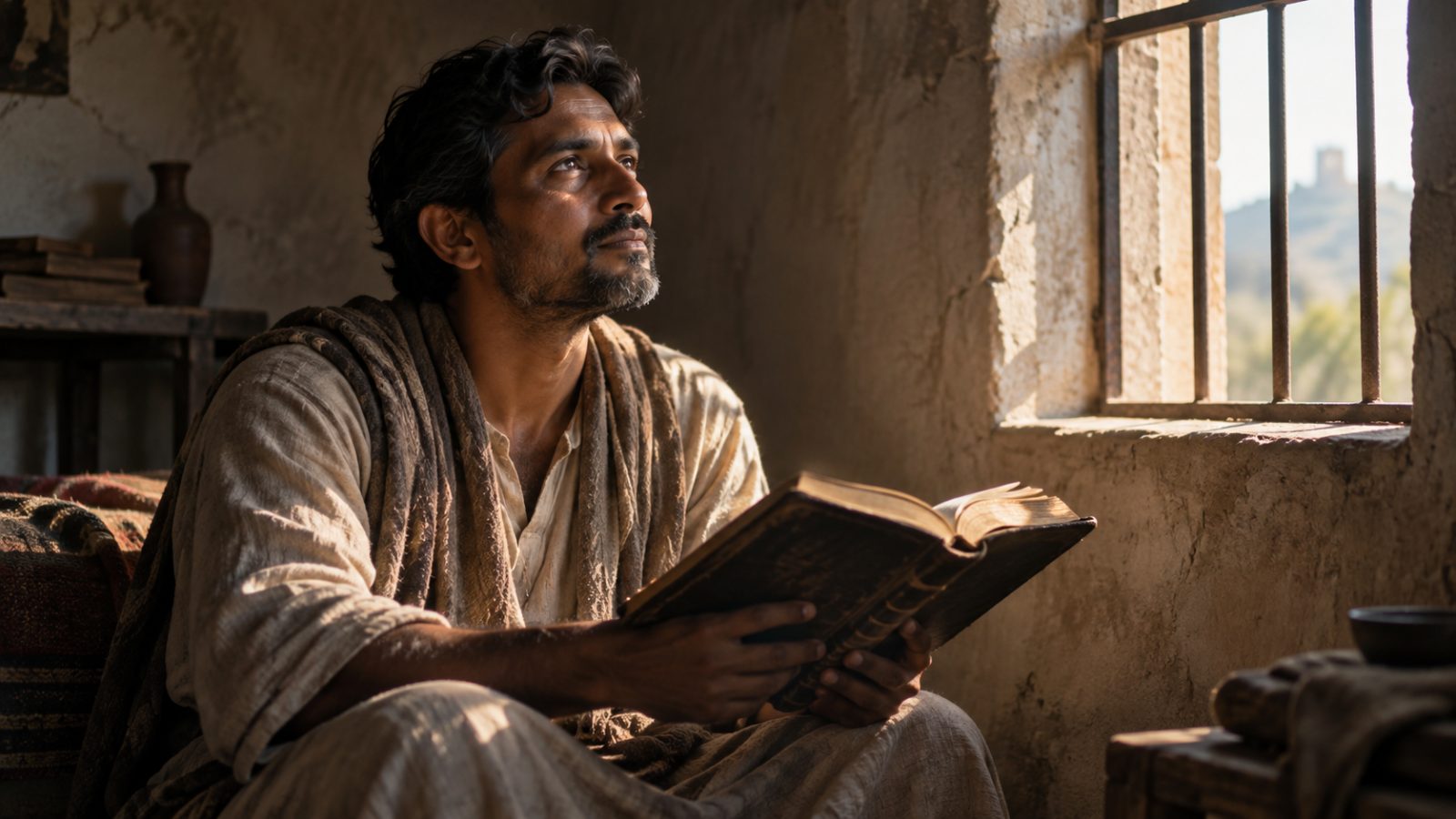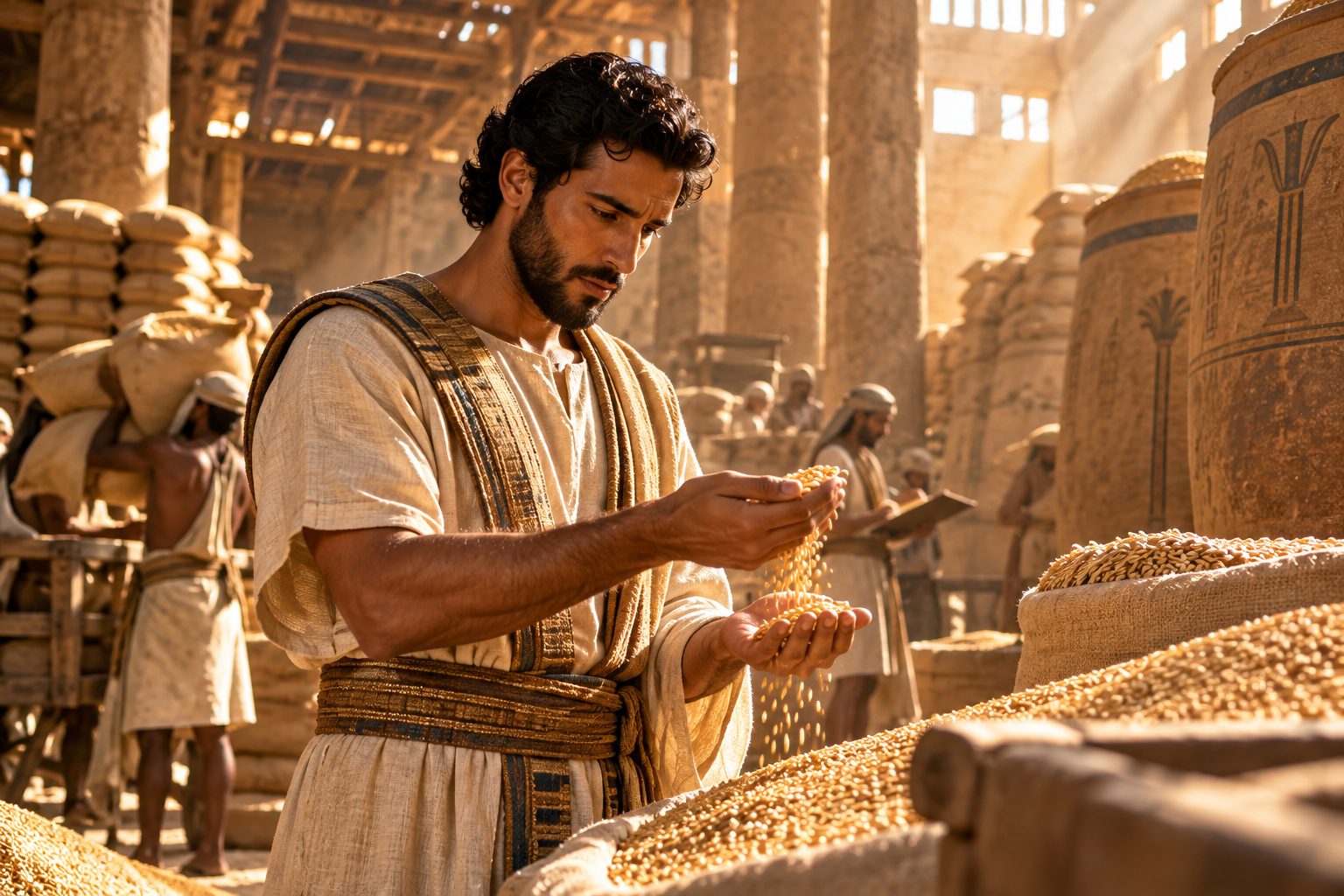
Some lessons in Joseph's story become uncomfortable when they move from Sunday-school pictures into real family life. Genesis 37 is not only a story about a coat, two dreams and a pit. It shows us what envy can become when it is allowed to grow in people who know your name, your history and the version of you they have become comfortable with.
I understand that from a different kind of experience. I was never thrown into a pit, and I am not trying to make my story equal to Joseph's. But I come from a family background, especially on my mother's side, where success has often been surrounded by painful spiritual and relational battles. I grew up seeing situations where somebody would begin to do well and jealousy would rise around that progress. I have also grown up in an environment where witchcraft is not treated as a joke or a story from a film. I believe spiritual opposition is real, and I have seen enough in life to know that a believer needs the Holy Spirit's discernment rather than living as though everything is only what the natural eye can see.
There was also a season when I told family members and a few close friends about a vision I had for a platform I wanted to build. It was still at the seed stage. There was no visible proof yet, only the picture I was carrying. Instead of everybody celebrating with me, I heard laughter and comments about why I could not simply settle for a normal job. That experience taught me something I have since noticed more than once: people who are familiar with your background can struggle to see what you are becoming because they are still looking at what they have always known.
I have also had plans that seemed to move differently after I announced them too early. I cannot turn that experience into a rule that every failed plan was sabotaged by the person who heard it; that would move from discernment into suspicion. But it taught me to respect timing. Not everything God puts in my heart needs an audience while it is still being formed. Sometimes wisdom speaks, and sometimes wisdom quietly works.
This is where Genesis 37 meets me. I cannot say Joseph sinned or made a mistake simply because he told his brothers the dreams. Scripture records that he told them, records their reaction and lets us see what envy did in their hearts. Like most of us, Joseph was speaking to his own family. Why would a young man naturally expect that his brothers would become his enemies because he told them what he had seen? The lesson for me is not to condemn Joseph for speaking. It is to become wiser about the condition of human hearts, the danger of envy and the need for the Spirit of God to guide what I share, when I share it and with whom.
This study is one part of The Story of Joseph in the Bible: 10 Powerful Lessons From His Life, where I follow the whole movement from the pit to faithful work, responsibility, reconciliation and legacy.
The Conflict Started Before the Pit
When people retell Joseph's story, it is easy to jump straight to the pit. Genesis does not. The chapter first makes us sit inside a divided household. Jacob loved Joseph in a way the other brothers could see, and the visible sign of that preference was the garment he gave him. Genesis 37:4 says that when the brothers saw their father loved Joseph more, they hated him and could not speak peaceably to him. The dream came into an environment where resentment was already alive.

The familiar expression 'coat of many colours' comes from the Hebrew phrase ketonet passim. The precise appearance of the garment is debated in translation. You will find versions that speak of many colours, a richly ornamented robe, or a long robe with sleeves. I do not need to force the Hebrew to tell me that the coat made Joseph the official heir or household manager. Genesis gives us the point that matters for this study: the garment made Jacob's special treatment of Joseph visible to his brothers. What had been felt in the family could now be seen.
Then Joseph dreamed. His first dream placed his brothers' sheaves around his sheaf and bowing down. Their own question shows that they understood the implication: 'Shalt thou indeed reign over us?' The second dream widened the picture to the sun, moon and eleven stars. Jacob rebuked Joseph, yet he also kept the saying in mind. The brothers reacted differently. Verse 11 names envy.
This matters because the pit was not born in one afternoon. Hatred was fed, envy was allowed room, contempt found language, and eventually language became a plot. One of the warnings I see in Joseph's family is that what we refuse to deal with inside can eventually decide how we treat people outside. Envy that is entertained does not remain a harmless private feeling forever.
Envy Has a Spiritual Temperature
The Hebrew verb used in Genesis 37:11 is qana. Depending on context, the root can speak of jealousy, envy or zeal. In this verse it describes the brothers' envy towards Joseph. I find that helpful because envy is not merely noticing that another person has something I do not have. It is what happens when another person's progress begins disturbing my peace because some part of me feels that their place should have been mine.
That is why I said earlier that it is human to feel uncomfortable when somebody else receives the thing we wanted for ourselves. Scripture is honest about that condition, but the Word never leaves us there as though jealousy must rule us. James 3:16 warns that where envying and strife are allowed to live, confusion and evil work follow. Romans 12:15 gives us another way: 'Rejoice with them that do rejoice.' The Spirit of God can form a believer until somebody else's testimony becomes a reason to thank God rather than a reason to compete.
This lesson therefore turns in two directions. It teaches me how to recognise envy around me, but it also makes me ask whether envy is living in me. It is very easy to read Genesis 37 and imagine that we are always Joseph. Sometimes the Word may be asking whether we are behaving like the brothers—quietly disturbed because God has allowed somebody close to us to move ahead in an area where we expected our own life to be further.
Maturity is revealed when I can celebrate what God is doing in another person's life without reducing my own value. Their success has not cancelled my purpose. Their opportunity has not emptied God of another opportunity. When the Holy Spirit heals the need to be above everybody else, it becomes possible to clap for another person honestly while continuing faithfully with what God has given me.
Discernment Is Not Suspicion
Because of the spiritual environment I come from, discernment is not theoretical to me. Ephesians 6:12 reminds us that our wrestling is not merely against flesh and blood. First Corinthians 12:10 also names 'discerning of spirits' among the manifestations of the Spirit. The Greek word diakrisis speaks of distinguishing or discerning. Even the English word discern comes through the Latin discernere, carrying the idea of separating or distinguishing. At its heart, discernment helps us tell one thing from another.

That is why discernment is not the same as suspecting everybody. Suspicion begins with a conclusion and then looks for evidence to justify it. Discernment listens to God, tests what is happening, watches fruit and remains willing to be corrected. First John 4:1 tells believers to test the spirits. A discerning Christian can recognise spiritual danger without becoming controlled by fear.
This distinction matters when we speak about witchcraft, jealousy and spiritual opposition. I believe these things are real, but I do not need to accuse a relative, friend or neighbour every time something goes wrong. My battle is not helped by becoming bitter towards people. I can pray, obey what the Spirit shows me, establish wise boundaries where necessary, refuse to expose every plan, and still keep my heart from hatred.
Discernment should also lead us closer to Christ, not deeper into obsession with darkness. First John 4:4 gives the believer a greater centre of confidence: 'greater is he that is in you, than he that is in the world.' The goal is not to become an expert in fear. The goal is to become sensitive to the Spirit of God and difficult for envy, intimidation, manipulation or bitterness to move away from obedience.
The Pit Did Not Cancel the Dream
The brothers stripped Joseph of the garment, put him in the empty pit and eventually sold him for twenty pieces of silver. From the natural view, almost every visible sign pointed in the opposite direction from the dreams. The young man who had seen others bow was now being carried away as a slave. Yet the story was not finished.
Further Reading
- The Story of Joseph in the Bible: 10 Powerful Lessons From His Life
- The Gift That Makes Room Bible Study on Preparation, Humility and Turning God Given Understanding Into Wise Action
Frequently Asked Questions
Did Joseph make a mistake by telling his brothers his dreams?
Genesis 37 records that Joseph told the dreams and that his brothers' hatred intensified, but it does not label his act a sin. I therefore would not build the lesson on condemning Joseph. I take from the passage a call to understand envy and combine it with the wider biblical wisdom that there is a time to speak and a time to keep silence.
What did Joseph's coat of many colours mean?
The Hebrew phrase is ketonet passim, and English translations render it in different ways. The clearest point in Genesis 37 is that Jacob's gift visibly expressed his special treatment of Joseph, which contributed to the brothers' hostility. Claims that the garment certainly made Joseph the official heir go beyond what the chapter explicitly states.
Why were Joseph's brothers jealous of him?
Genesis presents more than one pressure inside the family: Jacob's preferential love, the distinctive garment, Joseph's dreams and the brothers' understanding that those dreams pointed towards Joseph's future elevation. Genesis 37:11 directly names their envy.
Joseph's circumstances soon change, but the next test is whether he can serve faithfully without owning the house he manages. That movement continues in Faithful in Someone Else's House: A Genesis 39:1–6 Bible Study on God's Presence, Stewardship and Trust.
Where to Read Next
From Prison to Palace Bible Study on Promotion, Stewardship and the Character to Carry Greater Responsibility — Worth reading next.
Wealth With a Kingdom Purpose: A Bible Study on Saving, Stewardship and Preparing Resources to Serve Future Need — Worth reading next.
Legacy and Blessing: A Genesis 48 To 50 Bible Study on Generational Faith, God's Promise and Finishing Well — Worth reading next.
The Story of Joseph in the Bible: 10 Powerful Lessons From His Life
Found this helpful? Share it with someone who needs it.