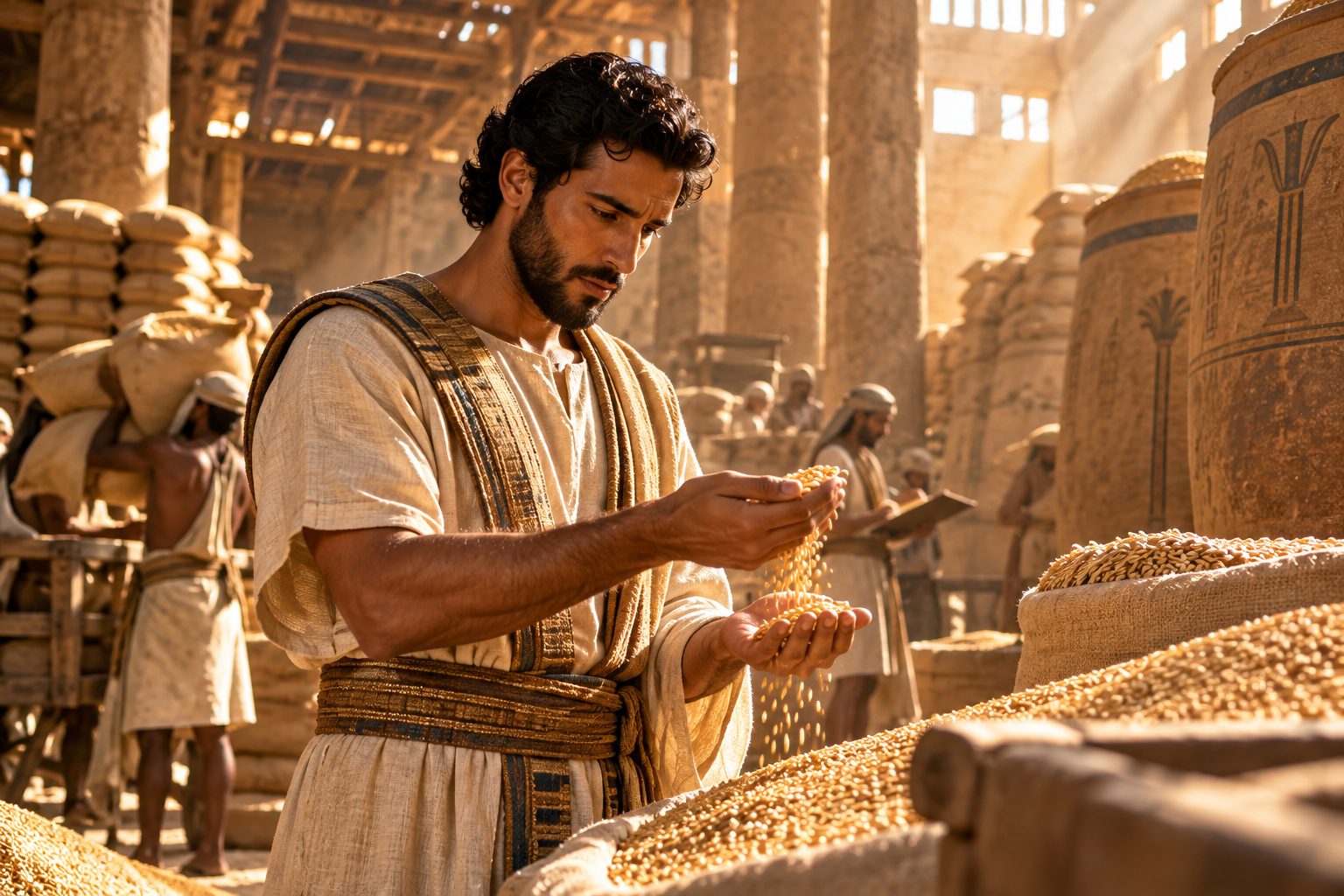
Genesis 42-44 brings Joseph face to face with the brothers who sold him. He recognises them before they recognise him. He has authority, food and power, yet he does not allow the shock of the encounter to decide his response. Across these chapters, buried guilt comes into speech, Joseph's compassion is visible in his tears, Benjamin becomes the brother whose welfare exposes present character, and Judah moves from words of responsibility to an offer of personal sacrifice.
This study follows that movement carefully and brings it into the places where old wounds, family history, betrayal and questions of trust meet us. The Word of God teaches us that forgiveness, love, discernment, truth, responsibility and wise boundaries can all belong in the same obedient life.
There are encounters we can imagine long before they happen. We wonder what we would say if a person who wounded us suddenly stood in front of us again. Would anger speak first? Would fear return? Would we rush to prove that we are now doing well? Joseph reaches that moment without warning. The brothers who threw him into the pit and sold him are now bowing before him because they need food.
The balance of power has completely changed. Years earlier Joseph was the one crying out while his brothers controlled what happened to him. Now Joseph is governor, his brothers are vulnerable in a foreign land, and they do not even know who is standing before them. Scripture lets us watch what happens when memory, authority, compassion and discernment meet.
I have come to understand that closeness alone does not remove the need for discernment. People can be familiar with us and still carry attitudes we do not see. The Spirit of God helps us respond wisely instead of being led only by pain, fear, pressure or familiarity. Joseph's story makes room for that wisdom. He recognises his brothers, he listens, he watches, he weeps and he allows their present choices to become visible.
This matters when we face our own past. Forgiveness belongs to the Christian heart, and discernment belongs there too. Love does not require blindness. Peace does not require pretending. Trust grows strongest where truth, responsibility and consistent fruit are allowed to speak.
Genesis 42:6-9 - Recognition Was Followed by Restraint
Joseph's brothers bow with their faces to the earth, and verse 7 says Joseph sees them and knows them. Verse 8 repeats the contrast: Joseph knows his brothers, but they do not know him. Then verse 9 tells us Joseph remembers the dreams. The past has entered the room, but Joseph is seeing it from a position he never had before.
Recognition can awaken many emotions at once. Joseph has memory, authority and information that his brothers lack. Yet he does not reveal everything in the first moment. He asks questions. He listens to their account of the family. Benjamin is still with Jacob, and the brothers refer to Joseph as the one who 'is not.' The governor they believe to be a stranger knows the truth behind those words.
There is wisdom here for us. When the past returns, we can slow down enough to discern what is actually before us. We can pray before responding, listen before granting trust and let the fear of God govern what power or opportunity has placed in our hands. A painful memory may be real, and the Spirit of God can still give us self-control in the present moment.
Genesis 42:18-24 - The Fear of God Governs Joseph's Power

After three days, Joseph speaks words that tell us something about the centre of his response: 'This do, and live; for I fear God.' He changes the arrangement so that one brother remains while the others take grain home to feed their households. His authority is real, but the fear of God stands above his authority.
Then the brothers begin talking among themselves. They say, 'We are verily guilty concerning our brother.' They remember the anguish of Joseph's soul, how he besought them and how they refused to hear. Years have passed, yet the wrong has never disappeared from their conscience. Distress brings the memory into words.
Joseph understands every word even though they think the interpreter stands between them. Verse 24 says he turns away and weeps. His tears matter. Strength does not erase what happened to him. Authority has not made his heart stone. Joseph can feel the weight of what he is hearing and still return to the responsibilities of the moment.
When someone who hurt us begins to acknowledge truth, we do not have to deny our own emotions in order to be spiritual. We can bring grief, anger and confusion before God. At the same time, we can listen carefully for responsibility rather than allowing emotion alone to decide how trust should move forward.
Genesis 43:26-31 - Compassion and Self-Control Remain Together
When the brothers return, they bow again. Joseph asks about his father and then sees Benjamin, his mother's son. He speaks a blessing over him: 'God be gracious unto thee, my son.' The text then tells us that Joseph is deeply moved. He hurries away, enters his chamber and weeps there.
Joseph washes his face, comes out and restrains himself before directing that bread be served. The scene is tender and controlled at the same time. He feels deeply, and he continues to move wisely through what is unfolding. Compassion has remained alive in him after betrayal, slavery, false accusation, prison and years away from home.
Sometimes we think discernment must make us cold or that compassion must make us immediately open every door. Joseph shows a fuller picture. A heart can remain tender while a person still pays attention. We can love, pray, forgive and care while allowing truth and present character to guide the pace at which trust is rebuilt.
Genesis 44:1-17 - Pressure Brings Present Character Into View
Genesis 44 places the brothers under severe pressure. Joseph has his silver cup placed in Benjamin's sack. When the sacks are searched, the cup is found with Benjamin. The brothers tear their clothes, load their animals and return to the city together. That response deserves our attention.
Years earlier, the brothers allowed Joseph to disappear while they returned to their father with a false story. Now they have a path by which they could leave Benjamin behind and go home, yet they return with him. The situation has reached the very relationship where their former jealousy and self-interest caused destruction, and their present conduct is different.
Time can change circumstances, but fruit helps us recognise what has changed in a person. Jesus says, 'by their fruits ye shall know them' (Matthew 7:20). Apologies have value, and the fruit of responsibility gives those words weight. When trust has been badly damaged, consistency under real conditions helps us see what words alone cannot show.
Genesis 44:18-34 - Judah's Change Becomes Costly

Judah now comes near to Joseph and speaks at length. His concern is centred on his father, on Benjamin and on the promise he made. He explains that his father's life is bound up with the lad's life and says that returning without Benjamin would bring terrible sorrow upon Jacob.
Then Judah reaches the point that shows how far his responsibility is prepared to go: 'let thy servant abide instead of the lad a bondman to my lord; and let the lad go up with his brethren.' The man who once helped send a brother into slavery now offers himself as the one who will remain so that his younger brother can go free.
This is more than emotional language. Judah is prepared to carry a personal cost. His surety has become action. The story allows Joseph to hear what Judah values now and to see what the brothers do when Benjamin is in danger. Their conduct gives visible evidence that the old pattern is being confronted by a different character.
When we are discerning whether trust can grow again, we can pay attention to this kind of fruit: truth without excuses, responsibility for harm, care for the people affected, changed conduct in the area where the wrong occurred and willingness to carry the cost of doing right. The Holy Spirit gives us wisdom to see beyond pressure, familiarity and words.
Name the harm truthfully before God. Joseph's brothers eventually use the language of guilt and remember the anguish they ignored. Healing grows in truth. You can acknowledge what happened without allowing the wound to become your identity, and you can refuse the pressure to make a painful history sound smaller than it was.
Release personal revenge into God's hands. Romans 12 calls us away from repaying evil for evil. Forgiveness is an act of obedience that protects the heart from becoming governed by bitterness. It can be repeated in prayer when memories return and emotions rise again.
Ask the Holy Spirit for discernment about present character. Familiarity can make us assume that a person is either exactly the same or completely different. Look at present fruit. Listen for truth. Watch how responsibility is handled. Give time enough for conduct to speak.
Let trust grow at a pace that agrees with truth. Trust becomes stronger when apologies and behaviour begin to agree. Small responsibilities can reveal consistency before larger access is restored. Boundaries can protect the work God is doing in both people while relationship grows in wisdom.
Genesis 42-44 allows us to watch Joseph face the people connected to one of the deepest wounds of his life. He recognises them before they recognise him. He remembers. He listens. He says that he fears God. He hears his brothers name their guilt, and he turns away to weep. When Benjamin arrives, Joseph's compassion is again visible, yet he continues to watch what unfolds.
Further Reading
Frequently Asked Questions
Judah's costly willingness to protect Benjamin gives Joseph evidence of change, making truthful reconciliation possible. That next movement is explored in You Meant Evil, God Meant Good: A Genesis 45 and 50 Bible Study on Forgiveness, Mercy and God's Purpose After Betrayal.
Where to Read Next
Faithful in Someone Else's House: A Bible Study on God's Presence, Stewardship and Trust — Worth reading next.
The Story of Joseph in the Bible: 10 Powerful Lessons From His Life
Found this helpful? Share it with someone who needs it.