There is a terrifying moment in every significant project when the initial excitement fades and you are left staring at raw devastation. You have the vision, but the budget is non existent. You have the desire, but the road ahead looks completely impassable. You possess nothing except the quiet conviction that something must change and that God has placed the burden squarely on your shoulders. That precise moment is where most people quit. It is also exactly where Nehemiah began.
When you look closely at scripture, what Nehemiah accomplished in Jerusalem is not just a Sunday school story about bricklaying. It is one of the most practical masterclasses on project management, team mobilization, and financial foresight ever recorded. Understanding what Nehemiah teaches about planning and leadership gives us a battle tested roadmap for building anything meaningful today, whether you are trying to turn around a struggling business, pay off thousands in debt, lead a family through financial crisis, or build a ministry from scratch.
I used to think that faith meant stepping out with zero structure and expecting God to perform a miracle at the end of the month. I was wrong. True biblical faith does not eliminate planning; it demands it. When you understand the foundational principles of Kingdom money principles from the Bible, you realize that spiritual vision without practical execution is just a holy daydream. Nehemiah shows us how to connect deep prayer with ruthless strategic clarity.
The Root of Biblical Strategy: What the Hebrew Word Machashabah Teaches Us
To really grasp how Nehemiah operated, we have to look at how God views planning in the Old Testament. We often quote verses about God's plans for us, but we miss the actual mechanics behind the words. In Hebrew, the word most frequently translated as plan or thought is machashabah, derived from the root chashab.
This is not a casual idea or a vague wish. Machashabah literally means to weave threads together, to calculate, to invent with intricate design, or to devise a skilled craft. It is the exact same word used in Exodus to describe the master craftsmen who wove the detailed fabrics of the tabernacle. When the Proverbs writer tells us about the plans of the diligent, he is talking about this kind of intentional weaving.
"The thoughts of the diligent tend only to plenteousness; but of every one that is hasty only to want." (Proverbs 21:5, KJV)
Nehemiah did not just float an idea into the air and hope for the best. He was a master weaver of strategy. He calculated the timber, assessed the transit permits, mapped out the work shifts, and evaluated the security risks long before a single stone was lifted. God provided the breakthrough because Nehemiah provided the framework. If you want God to bless your build, you must give Him a structure He can actually fill.
The Step Most Leaders Skip: Sitting With What Is Broken Before Fixing It
When Nehemiah received the report about Jerusalem in Nehemiah 1:4, his immediate response was not to draft a proposal or launch a fundraising campaign. He did not pull out a notepad or start calculating labour costs. He sat down and wept. For days he mourned, fasted, and prayed before he took a single step toward action.
Look, this response looks like weakness to a modern corporate mind that values fast action over deep discernment. It is actually the bedrock of spiritual authority. A leader who rushes to solve a problem before they have felt the full weight of it will almost always build the wrong solution. Nehemiah allowed the broken reality of his people to land heavily on his heart. That emotional and spiritual processing produced a fierce clarity of purpose that no motivational speech could ever imitate.
He was not rebuilding a wall because it seemed like a good career move or a nice civic improvement. He was rebuilding it because he understood what its brokenness was costing the people he cared about. The insult to God's name, the vulnerability of the poor, and the shame of perpetual ruin were unbearable to him.
Before you launch that new business, start that debt-payoff plan, or step into a high-stakes leadership role, you must ask yourself a hard question: Have you allowed yourself to see the true cost of staying broken? Until the pain of your present chaos outweighs the discomfort of strategic discipline, you will keep making excuses instead of building walls.
The Art of Waiting Without Wasting Time

Four full months passed between Nehemiah's prayer in chapter one and his direct conversation with King Artaxerxes in chapter two. Four months. Scripture gives us zero indication that Nehemiah received any special revelation during that period. What the text does reveal, through the sheer precision of his words when the opportunity arose, is that he did not waste those days sitting on his hands.
He was silently doing his homework. He was calculating transit times, estimating material volumes, identifying risk factors, and working out logistical dependencies while serving the king's cup every single day. So when the king finally asked him, "What is thy request?", Nehemiah did not stammer. He did not ask for a week to go gather thoughts or put together a committee.
He prayed a brief, silent prayer to God, and then he delivered a crisp, precise project plan:
The Vision: A specific request for leave to travel and rebuild his ancestors' city.
The Timeline: A clear, defined duration for his absence.
The Security Strategy: Official letters of safe passage from the king to cross through hostile provincial territories.
The Resource Procurement: A specific requisition letter to Asaph, keeper of the royal forest, for timber for the gates, the city walls, and his own residence.
That level of detail only comes from intentional homework during seasons of waiting. So many believers confuse waiting on God with sitting in lazy passivity. I have seen people pray for financial breakthrough for five years, yet if you ask them for a simple line-item breakdown of their monthly living expenses, they cannot give you one. They want God to shower them with increase while refusing to do the elementary arithmetic required to steward what they currently have.
I shared this dynamic when writing about why God cannot bless a plan you never made, because spiritual desire can never compensate for structural laziness. Nehemiah showed us that prayer and practical preparation are twin pillars. You pray as if everything depends on God, but you prepare with the rigor of someone who knows they must manage every detail committed to their care.
Why He Walked the Ruins Alone Before Speaking to Anyone
When Nehemiah finally arrived in Jerusalem after a treacherous journey, he did something that highlights his exceptional emotional intelligence and strategic wisdom. He did not stage a high-profile press conference. He did not rally the local officials or start giving bold speeches about his vision for the city. For three days, he kept his mouth shut.
Then, under the cover of night, accompanied by only a few trusted aides, he mounted his animal and rode out to inspect the destroyed perimeter personally. Nehemiah 2:13-15 records him picking his way through the rubble, gate by gate, inspecting the charred timbers and fallen stone blocks. At one point, the debris was so thick that his animal could not even pass through.
Why did he do this in complete secret?
Because Nehemiah understood that leadership requires personal contact with reality before public communication of vision. He needed to compare the reports he heard in Persia with the actual physical conditions on the ground. He had to know the full extent of the damage without having his judgment clouded by the political spin, fear, or local interests of the existing leadership.
Private inspection protects a leader from building a strategy on comfortable assumptions that have never touched the actual ruins. In your own life, this night ride is what an honest financial audit looks like. It is sitting down at midnight, opening every bank app, pulling up every debt balance, and staring directly at the raw truth without lying to yourself. It is looking at the ruins of your calendar, your budget, or your organization and taking account of every broken section before you try to pitch a fancy revival plan to your family or team.
Two Executive Systems: Nehemiah's Governance vs. Joseph's Administration in Egypt
When you examine governance in Scripture, two towering figures demonstrate how Kingdom principles operate at the highest levels of administrative power: Joseph in Egypt and Nehemiah in Jerusalem. While both saved their nations from total destruction through extraordinary foresight, their operating environments and managerial methods offer two distinct blueprints for modern leaders.
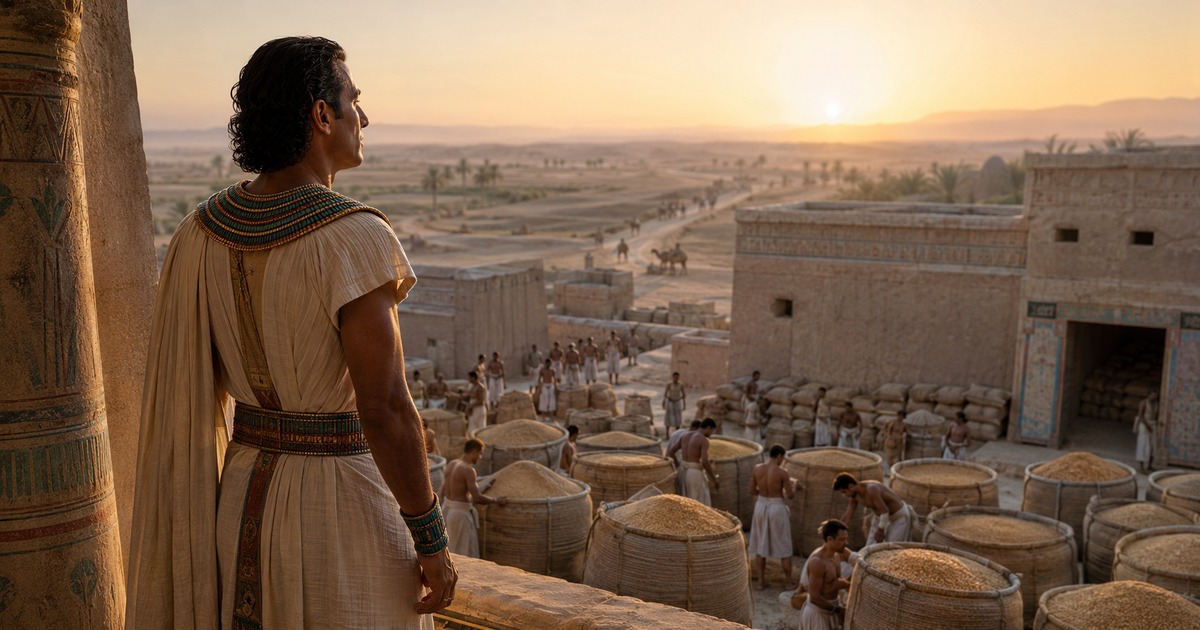
Joseph operated within a centralized macro-economy. As Prime Minister under Pharaoh, he built a massive state reserve system across seven years of abundance to withstand seven years of national famine. Joseph's genius was administrative centralization, supply chain forecasting, and commodity taxation. He collected twenty percent of Egypt's agricultural yield during surplus years, built regional grain silos, and instituted state-controlled distribution channels when crisis struck.
Nehemiah, on the other hand, operated within a decentralized micro-economy under foreign imperial oversight. He was not managing a vast empire at its peak; he was rebuilding a shattered city state from zero. He had no national treasury, no state grain reserves, and no civil army. While Joseph led through top-down state planning, Nehemiah led through civic mobilization, volunteer deployment, and personal financial sacrifice.
Look at the contrast in their executive styles:
Resource Allocation: Joseph managed national commodities by expanding Pharaoh's state treasury. Nehemiah managed local reconstruction by requisitioning targeted imperial grants and personally financing his own governorship to reduce the tax burden on the poor.
Team Structure: Joseph governed through appointed regional officers and state bureaucrats across Egypt. Nehemiah governed by organizing household units, family clans, and trade guilds to repair the section of the wall right outside their own front doors.
Crisis Management: Joseph used crisis to consolidate national power and land ownership under Pharaoh (Genesis 47). Nehemiah used crisis to dismantle internal exploitation, abolish high-interest loans, and restore foreclosed land back to impoverished families (Nehemiah 5).
Both models are biblically valid, but they apply to different seasons of your life and career. When you are operating in a corporate environment or managing large institutional capital, Joseph's administrative model of systematic reserves and centralized forecasting is essential. I explored this deeply in my breakdown of the story of Joseph in the Bible and its leadership lessons.
However, when you are in a season of personal turnaround, starting a new business venture with zero capital, or rebuilding a broken household budget, Nehemiah's model is what you need. You do not need a massive bureaucracy; you need localized ownership, tight communication, personal sacrifice, and hands-on operational focus.
Managing Family Money Dynamics in Seasons of Financial Crisis
One of the most dangerous moments in any enterprise or family is not the external opposition; it is the internal financial friction that bubbles up when resources get tight. Nehemiah chapter 5 reveals a dark, painful reality: while the wall was going up, Jewish families were quietly tearing each other apart over money.
A severe famine hit the land, compounded by heavy imperial taxes. Poorer families were forced to mortgage their fields, vineyards, and homes just to buy grain to survive. When cash ran out completely, wealthy relatives and civic leaders began charging exorbitant interest rates, taking land foreclosures, and forcing the children of debtors into domestic servitude. The people were working side by side on the scaffolding by day, while at night, their families were being devoured by financial exploitation from their own brethren.
When the cries of the mothers and fathers reached Nehemiah, he did not ignore the problem to protect an artificial image of unity. Scripture says he was deeply angry, yet he took time to consult with himself before speaking. He called a public assembly, confronted the wealthy nobles directly, and demanded three immediate financial reforms:
An immediate halt to usury (interest): He ordered lenders to stop charging high interest on family members who were struggling to survive a national crisis.
Complete asset restitution: He commanded that foreclosed fields, oliveyards, and homes be returned to the families immediately so they could regain their economic footing.
Personal sacrifice from leadership: Nehemiah publicly forgave the debts owed to him and waived his legal right as governor to collect food taxes for twelve consecutive years, feeding one hundred and fifty workers out of his own private pocket instead.
If you are leading a family or business through a severe financial crisis today, Nehemiah chapter 5 gives you a clear survival protocol. When income drops or debt threatens your household, you cannot treat your family members like financial adversaries. You must deal with internal money friction swiftly, transparently, and with deep grace.
First, stop the bleeding by halting unnecessary financial drains and high-interest consumer credit. Second, sit down with your spouse and older children to communicate transparently about the state of the household budget. Hiding debt or pretending everything is fine while the house is burning down only breeds panic and resentment later. Third, as the head of the home or leader of the business, you must be the first person to sacrifice personal luxuries before asking others to trim their expenses.
When a family sees that their leadership is cutting personal spending first, serving selflessly, and fighting to protect the household's long-term security, friction gives way to unity. If your marriage is currently under strain because of financial pressure, look at what Scripture teaches on how to talk about money with your spouse biblically before small financial disagreements turn into catastrophic relational walls.
The Principle of Localized Ownership: How to Organize Massive Projects
Nehemiah chapter 3 is a text that many readers breeze through because it reads like an endless registry of obscure ancient names. Do not make that mistake. Chapter 3 is arguably the most brilliant breakdown of project management and workflow delegation in all of scripture.
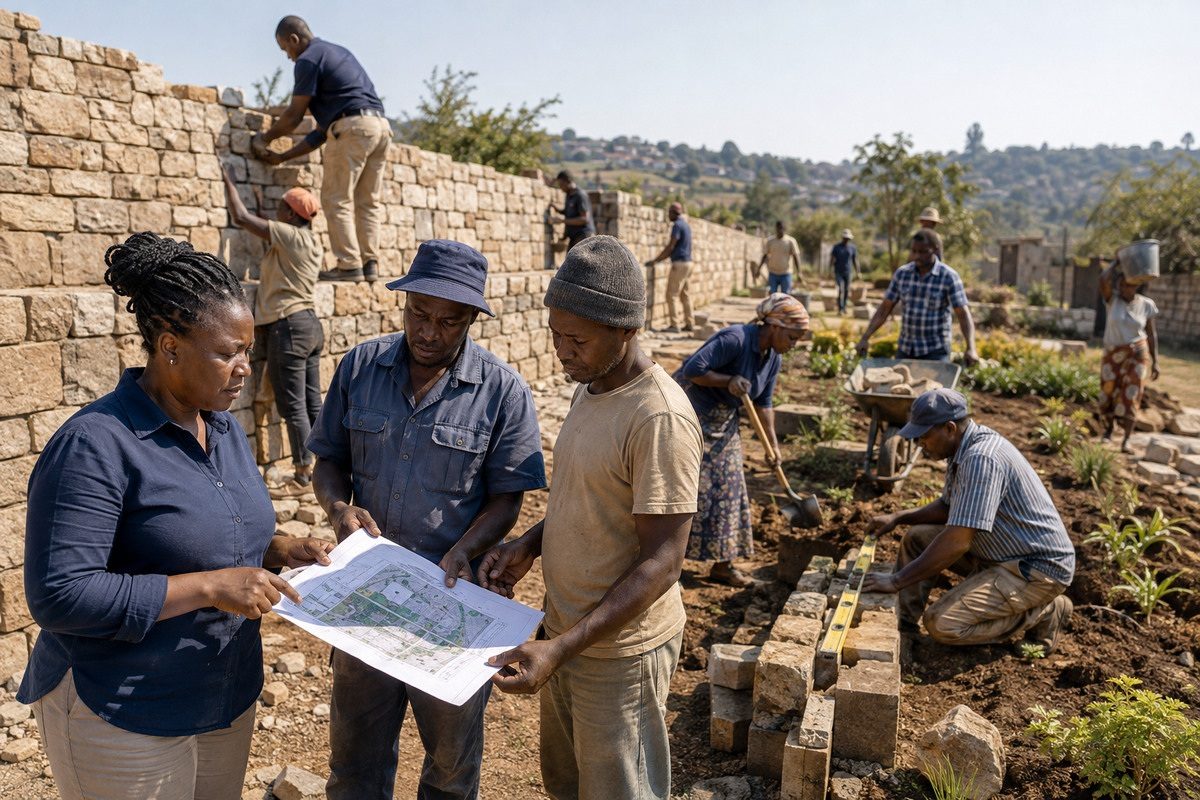
If you pay attention, you will notice a distinct pattern repeated over thirty times: every family, trade guild, and regional group was assigned to repair the specific section of wall directly across from their own homes or workplaces.
The priests rebuilt the Sheep Gate right next to the temple where they served.
The goldsmiths and merchants repaired sections nearest to their trading posts.
Benjamin and Hasshub worked on the wall directly opposite their personal houses.
The ruler of half the district of Jerusalem repaired his section right where his family lived.
This organizational design is absolute genius. Think about the human psychology behind it. A man who is building a wall right outside his bedroom window is not working for a distant, abstract corporate goal. He is building the wall that keeps a foreign army from breaking in and hurting his wife and children at night.
If he slights his workmanship or uses cheap mortar, his own family pays the price first. The motivation is immediate, personal, and urgent. Nehemiah aligned personal self-interest with the overarching mission of the Kingdom.
This is where so many visionary leaders make fatal mistakes. They try to inspire people with massive, airy abstractions while failing to connect the daily work to what those people actually care about. If you want your team to care about the company's financial targets, you must show them how achieving those targets protects their jobs, builds their skills, and provides for their families.
If you want your spouse to engage in a household budget, you cannot just lecture them about vague long-term goals. You must link the budget directly to the peace of mind, freedom from stress, and security of your actual home. When people see that their section of the wall protects their personal home, they build with speed and conviction.
When Opposition Comes: The Strategic Response That Protects the Vision
The moment you step out of passive compliance and start building anything that matters, opposition will show up at your door. Satan does not waste ammunition on ruined walls; he fires at active builders. As soon as Nehemiah started putting stones back together, Sanballat and Tobiah appeared on the horizon to launch attacks.
Their first tactic was mockery and verbal intimidation. In Nehemiah 4:3, Tobiah sneered: "Even that which they build, if a fox go up, he shall even break down their stone wall." They wanted to make the project look absurd, fragile, and doomed to fail.
How did Nehemiah handle public mockery? He did not stop the project to draft a press release. He did not engage in endless debates in the comment section or hold a meeting to answer his critics. He took the mockery straight to God in aggressive prayer, recorded in Nehemiah 4:4, and then immediately went back to work.
"Hear, O our God; for we are despised: and turn their reproach upon their own head... So built we the wall; and all the wall was joined together unto the half thereof: for the people had a mind to work." (Nehemiah 4:4-6, KJV)
That sentence contains deep wisdom: "So built we the wall." The best answer to intense opposition is visible, undeniable progress. The most effective way to quiet those who doubt your business, your debt recovery, or your leadership is to keep placing solid stones on top of solid stones until the wall is halfway up.
When psychological mockery failed, the enemy changed tactics and escalated to physical threats. Nehemiah 4:11 records the enemy plotting stealth attacks to murder the workers and put an end to the construction. Notice how Nehemiah handled this heightened threat level:
He balanced spiritual defense with practical security: "Nevertheless we made our prayer unto our God, and set a watch against them day and night" (Nehemiah 4:9). He prayed, but he also posted armed guards on the perimeter. That is biblical balance.
He armed his labor force: Every builder worked with a trowel in one hand and a sword strapped to their side. The men carrying heavy loads held their burdens with one hand while keeping their weapon drawn in the other.
He set up a fast communication network: Because the wall was extensive and workers were spread far apart, Nehemiah kept a trumpeter right beside him. He instructed the workers: "In what place therefore ye hear the sound of the trumpet, resort ye thither unto us: our God shall fight for us" (Nehemiah 4:20).
Look at that balance. He did not say, "God will fight for us, so put down your swords and go back to sleep." He said, "Grab your weapons, stay alert, assemble at the trumpet sound, and our God shall fight for us!" God's supernatural power operates through your practical preparation, not as a substitute for it. You keep one hand on your tool (building your skill, executing your business plan) and one hand on your sword (standing firm in Scripture, guarding your mind against spiritual warfare).
How to Finish Strong When Distractions Try to Summon You Away
By Nehemiah chapter 6, the wall was completely built. The gaps were closed, and the gates were the only elements left to hang. Seeing that violence and mockery had failed, Sanballat, Tobiah, and Geshem tried a subtle strategy: distraction and deceptive negotiation.
They sent repeated messages inviting Nehemiah to meet them at neutral ground in the plain of Ono, claiming they wanted to talk strategy and reach an agreement. Nehemiah saw straight through their trick. They were trying to lure him away from the city to assassinate him or delay the final stages of the build.
His response is one of the greatest battle cries for any focused builder:
"And I sent messengers unto them, saying, I am doing a great work, so that I cannot come down: why should the work cease, whilst I leave it, and come down to you?" (Nehemiah 6:3, KJV)
They sent that same message four times. Four times, Nehemiah gave them the exact same crisp response: "I am doing a great work, so that I cannot come down."
Listen to me carefully: Not every conversation deserves your presence. Not every invitation deserves a spot on your calendar. Not every critic deserves a reply. When you are putting the final touches on your financial freedom, your career growth, or your family's spiritual health, the enemy will manufacture minor emergencies and polite distractions just to pull you off the scaffolding.
They will offer you shiny side projects that dilute your core business focus. They will pull you into unnecessary debates that burn up your mental energy. You must learn to look those elegant distractions in the eye and say: "I am doing a great work, and I cannot come down." Focus is not simply deciding what to do; it is courageously choosing what to ignore.
Because Nehemiah refused to come down, the wall was completed in fifty-two days. Read that again. Fifty-two days! A project that sat broken for over seventy years was finished in less than two months once a real leader aligned prayer, strategy, delegation, and unwavering focus.
When the surrounding nations saw it, Nehemiah 6:16 records that they were cast down in their own eyes, "for they perceived that this work was wrought of our God." The speed and quality of the execution became an undeniable witness to the power of God.
How Do We Apply Nehemiah's Model to Personal Life and Money Today?
This historical narrative is not just ancient history; it is an active operational manual for our daily lives. If you are serious about applying Nehemiah's planning and leadership principles to your personal finances, career, and household, you need to execute these specific steps:
Conduct your private night inspection: Stop hiding from your bank statements, debt balances, and business reality. Sit down this week with zero distractions, open every account, write down every single number, and assess the real damage. You cannot rebuild what you refuse to evaluate.
Do the four months of homework: Stop launching financial projects on emotional impulse. Spend time weaving your strategic plan (machashabah). Calculate your costs, write out line-item budgets, research the skills required for your next career step, and build an intentional structure. If you are struggling with debt, build a strategic exit plan rather than praying for a sudden windfall. Look at how we outline how to get out of debt as a Christian without stopping giving to ensure your strategy keeps God first.
Implement localized ownership in your household: If you are leading a family, assign clear, personal responsibilities to everyone. Give every family member or team member a specific section of the wall to guard. Connect daily budget choices to tangible outcomes that matter directly to them.
Work with a tool in one hand and a sword in the other: Balance practical skill with spiritual authority. Upgrade your professional value, study practical financial principles, and sharpen your work skills while maintaining a deep life of prayer, scripture, and giving. When you trace how Daniel demonstrated excellence, skill, and value at work, you see the exact same blend of practical mastery and prayer.
Refuse to leave the wall for minor distractions: Identify the three biggest time wasters and focus-stealers currently draining your creative energy. Draw a firm boundary around your core mission and give yourself permission to say no to good opportunities so you can say yes to God's main assignment.
Building something durable is never easy, brethren. It will cost you sleep, sweat, and focused effort. But when you build using Kingdom strategy, the results will outlast you and bring genuine glory to God's name.
Where To Read Next
If you want to deepen your understanding of how biblical stewardship, leadership, and planning work together to produce lasting fruit, I strongly encourage you to read these foundational studies next:
The Story of Joseph in the Bible: 10 Powerful Lessons From His Life
What Does Proverbs Say About Money And The Financial Wisdom Most Believers Never Apply?
Biblical Stewardship Versus Ownership: The Truth That Frees You From the Fear of Loss
- Kingdom Economics Versus World Economics: The Biblical Financial System — Another piece in this series.
- How Sabbath Rest Is a Biblical Wealth Principle That Most Believers Have Never Applied — Another piece in this series.
- How Did Abraham, Isaac, and Jacob Build Generational Wealth? What the Bible Teaches — Another piece in this series.
- Tithes, Offerings and Firstfruits: What Is the Difference?
- What Does the Bible Say About Saving Money?
- What Does the Year of Jubilee Mean for Christians in Debt?
- How to Develop a Kingdom Financial Mindset for Successful Living
- When Wealth Becomes an Idol: Biblical Warnings and Protection
- Biblical Investment Principles: What Scripture Teaches and What It Does Not
- Does the Bible Support Multiple Income Streams? What Scripture Says About Financial Diversification
- What Did Jesus Say About Money and Wealth? The Teaching Most People Miss
Frequently Asked Questions
What is the main financial lesson from the book of Nehemiah?
The main financial lesson from Nehemiah is that spiritual vision must be supported by detailed administrative planning, transparent accounting, and ethical stewardship. Nehemiah demonstrated that true godly leaders protect the vulnerable from financial oppression, refuse unfair exploitation, and plan out resource procurement months before starting construction.
How does Nehemiah's leadership style compare to Joseph's in Egypt?
Joseph governed a national macro-economy through centralized administrative planning, commodity reserves, and state bureaucracy to survive a nationwide famine. Nehemiah governed a localized micro-economy through decentralized civic mobilization, localized household ownership, personal financial sacrifice, and hands-on crisis management. Both models are biblically valid for different seasons of scale and organizational maturity.
How long did it take Nehemiah to rebuild the wall, and why was it so fast?
Nehemiah and the people of Jerusalem rebuilt the wall in just fifty-two days (Nehemiah 6:15). The project moved rapidly because Nehemiah organized the work through localized ownership,assigning families to fix the sections directly next to their homes,and maintained firm security measures while refusing to be drawn away by external distractions.
What does Nehemiah teach us about handling family financial crisis?
Nehemiah chapter 5 teaches us that leaders must stop internal exploitation during crisis by halting high-interest debt, being transparent about resources, and making personal financial sacrifices first. In a family setting, this means communicating openly about money, stopping consumer debt, and prioritizing household unity over individual luxury.
Why did Nehemiah conduct his inspection of the wall at night?
Nehemiah inspected the ruined walls at night in secret (Nehemiah 2:12-15) so he could personally verify the true extent of the destruction without being influenced by public opinion, panic, or local political motives. He wanted an accurate, unvarnished evaluation of reality before presenting his strategic plan to the community.
How do you balance prayer and practical planning according to Nehemiah?
Nehemiah balances prayer and planning by using them simultaneously rather than treating them as opposites. In Nehemiah 4:9, the people made their prayer unto God AND set a watch against the enemy day and night. Biblical faith involves trusting God completely while diligently preparing systems, schedules, and defenses to steward the work He has assigned.
Found this helpful? Share it with someone who needs it.