You have probably stood in a shop aisle, phone in hand, looking at a price tag and feeling that small, nagging tug in your spirit. It is not always a loud "no" from the Holy Spirit, but rather a quiet question: "Is this the best use of what I have been given?" Most of us wait for a prophetic word or a thunderclap from heaven before we make big moves like buying a house or changing careers, but we treat our daily transactions as if God has no opinion on them. I have spent years realising that the strength of your spiritual life is not found in the one big decision you make every decade, but in the five small financial decisions you make every single day. If you are looking for bible verses for making daily financial decisions, you are not just looking for a checklist; you are looking for a way to align your pulse with the heart of the Father.
I used to think that the Bible was only for "spiritual" problems, while my bank app was for "real world tangible" problems. That divide is a lie that keeps many Kingdom citizens living in a state of constant financial anxiety. When we separate our faith from our finances, our grocery budgets, and our subscription services, we are essentially telling God that He is not invited into the most practical parts of our lives. But the truth is that Jesus spoke about stewardship with such frequency because He knew our hearts are tied directly to our purses. To walk in true financial peace, you must have the Word of God ready on your tongue before you tap your card or sign a contract. This is a core part of understanding the Kingdom Money Principles From the Bible that govern our lives as believers.
The English word "wisdom" often feels like something high and lofty, perhaps a bit detached from the grit of daily life. But the Greek word Jesus uses in Matthew 7:24 when describing the man who builds his house upon the rock is phronimos. It is a fascinating word because it does not just mean "intelligent" or "knowledgeable." It means "prudent" or "mindful." It describes a person who has the "mind" (phren) to see the practical consequences of their actions before they take them. "Therefore whosoever heareth these sayings of mine, and doeth them, I will liken him unto a wise (phronimos) man, which built his house upon a rock" (Matthew 7:24, KJV). In the original context, being phronimos was the opposite of being impulsive. It was the ability to apply a timeless principle to a temporary moment. When you search for bible verses for making daily financial decisions, you are actually asking God for phronimos , the practical prudence to build a financial house that can withstand the storms of inflation, job loss, or economic shifts.
I have found that when I lack this scriptural prudence, I make decisions based on "how I feel" in the moment. And honestly, my feelings are terrible financial advisors. They want comfort now and consequences later. But the phronimos man or woman looks at the Word and asks, "Does this decision build on the rock, or is it just more sand?" This reframes every purchase not as a loss of money, but as an act of construction. You are building your future with every pound, dollar, or shilling you spend.
Why Your Daily Choices Require Scriptural Authority
Most of us struggle with money not because we lack income, but because we lack a standard. Without a biblical standard, every sale becomes a temptation and every "limited time offer" becomes a crisis. I have seen so many believers pray for a financial breakthrough while simultaneously sabotaging their own progress through a hundred small, unscriptural choices. We ask God to bless our "bread" while we are busy throwing it away on things He never told us to buy. It is vital to realise that God’s provision is often tied to our obedience to His patterns.
If you want to experience the "more than enough" life, you have to stop making decisions based on your bank balance and start making them based on the Book. Your bank balance tells you what you can do; the Bible tells you what you should do. There is a massive difference between the two. One is about capacity; the other is about calling. I have learned that just because I have the money in my account to buy something does not mean I have the permission from the Master to own it. We are stewards, not owners, and a steward never spends the master's money without checking the master's manual.
This is why having a categorized list of verses is so powerful. It acts as a "sword of the Spirit" that you can draw in the heat of a transaction. When you are tempted to overspend to impress people you don't even know, you need a verse. When you are tempted to hoard money out of fear because the news says the economy is crashing, you need a verse. These are not just decorative words; they are the legal framework of the Kingdom of Heaven.
Bible Verses for Making Daily Financial Decisions About Budgeting
Budgeting is often seen as a chore, but in the Kingdom, it is an act of worship. It is telling God, "I value what You gave me enough to track it." If you cannot manage a small budget, why would God trust you with a large estate? I used to hate the word "budget" because it felt like a cage and too limiting. Then I realised that a budget is actually a key that unlocks the door to future opportunities. Without a plan, your money will always "grow wings" and fly away, as Proverbs warns us.
Luke 14:28 (KJV): "For which of you, intending to build a tower, sitteth not down first, and counteth the cost, whether he have sufficient to finish it?"
Proverbs 27:23 (KJV): "Be thou diligent to know the state of thy flocks, and look well to thy herds."
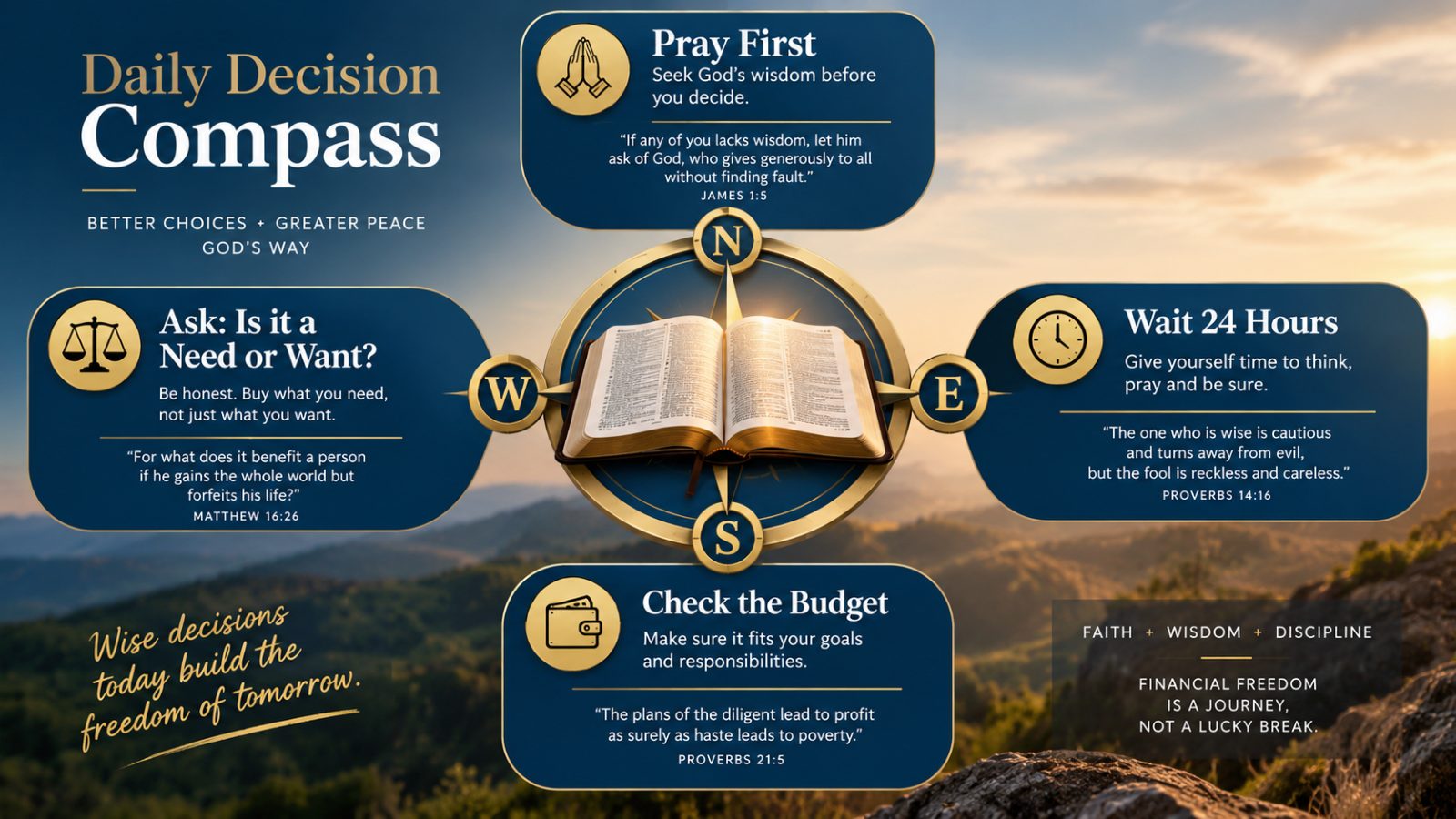
Proverbs 21:5 (KJV): "The thoughts of the diligent tend only to plenteousness; but of every one that is hasty only to want."
The application here is simple: Never make a significant purchase without "sitting down first." Haste is the enemy of Kingdom wealth. If a deal requires you to "act now or lose out," it is almost always a trap for the "hasty" soul. I have made it a rule in my own life to wait 24 hours for any purchase over a certain amount. This gives the Holy Spirit time to speak and gives my "hasty" flesh time to cool down. You might find it helpful to read about what the Bible says about saving money to see how planning and preservation go hand in hand.
What the Bible Says When You Are Tempted to Take on Debt
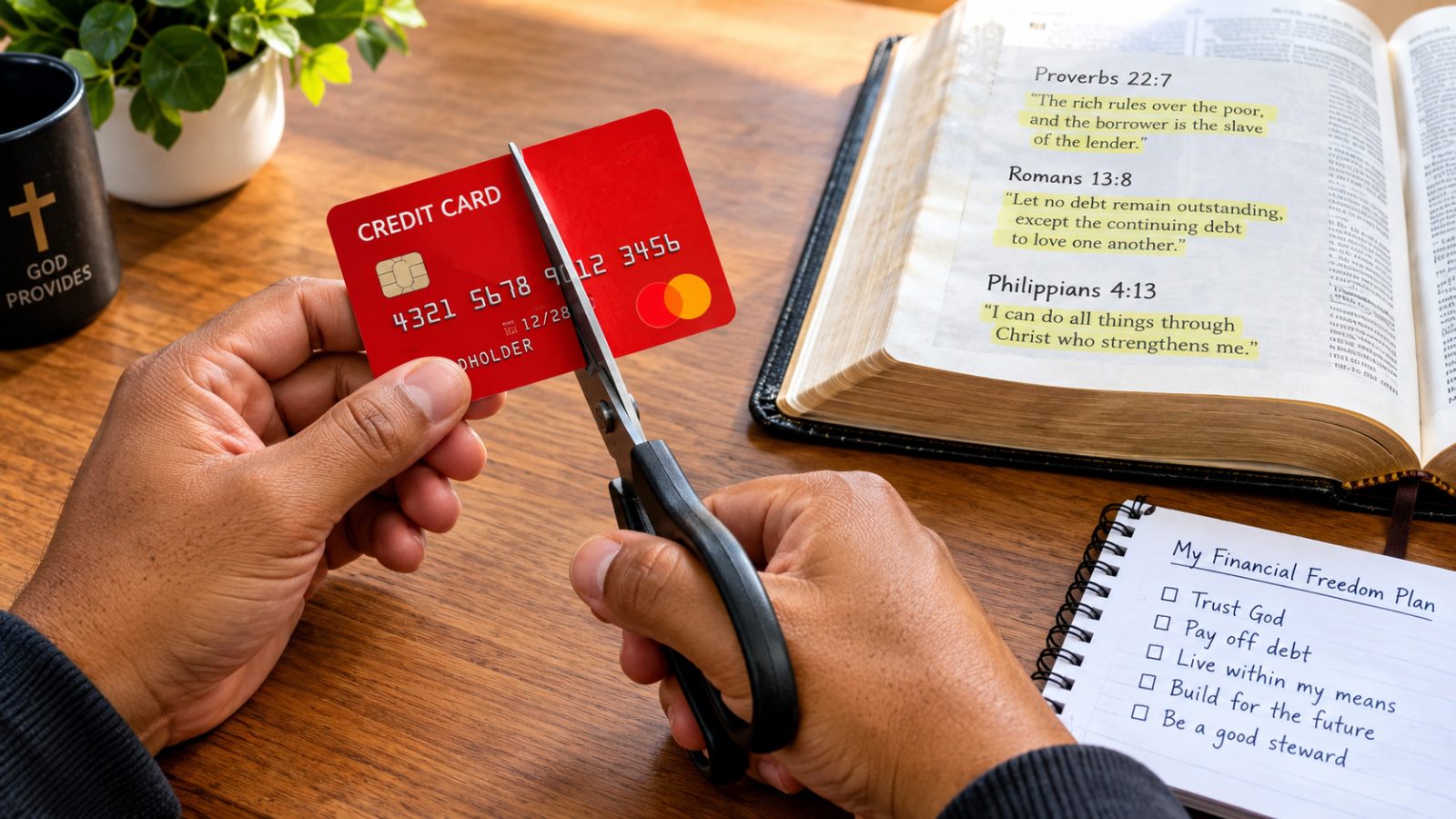
Debt is one of the most effective ways the enemy keeps believers from fulfilling their assignments. It is hard to go where God sends you when you are chained to a monthly payment. The Bible does not call debt a sin, but it certainly calls it a form of slavery. When you are making a daily decision to "buy now and pay later," you are essentially mortgaging your future freedom for a temporary feeling. I have found that most debt is simply a lack of patience wrapped in a shiny marketing campaign.
Proverbs 22:7 (KJV): "The rich ruleth over the poor, and the borrower is servant to the lender."
Romans 13:8 (KJV): "Owe no man any thing, but to love one another: for he that loveth another hath fulfilled the law."
Psalm 37:21 (KJV): "The wicked borroweth, and payeth not again: but the righteous sheweth mercy, and giveth."
When you are looking at a credit card offer or a "low interest" loan, ask yourself: "Am I willing to become a servant to this bank?" If the answer is no, then the purchase can wait. We often use debt to buy things we think will give us "status," but true status in the Kingdom comes from being a servant of Christ, not a servant of a finance company. If you are already struggling with this, you should look into what the Bible says about debt relief to find a path back to freedom.
Verses for Daily Decisions Regarding Giving and Generosity
The world tells you to get all you can and sit on all you get. The Kingdom tells you that you are a conduit, not a cul-de-sac. Giving is the only thing that breaks the spirit of Mammon over your life. If you can't give it away, you don't own it , it owns you. I have learned that the best time to give is not when I have an "excess," but when the Spirit prompts me. Daily financial decisions often involve choosing between a personal luxury and a brother's necessity.
Luke 6:38 (KJV): "Give, and it shall be given unto you; good measure, pressed down, and shaken together, and running over, shall men give into your bosom."
2 Corinthians 9:7 (KJV): "Every man according as he purposeth in his heart, so let him give; not grudgingly, or of necessity: for God loveth a cheerful giver."
Proverbs 11:24 (KJV): "There is that scattereth, and yet increaseth; and there is that withholdeth more than is meet, but it tendeth to poverty."
The "cheerfulness" mentioned in 2 Corinthians is vital. If you are giving because you feel "guilty" or "pressured," you aren't really giving; you are paying a religious tax because real generosity is a decision made in the heart before the plate ever passes you. I try to keep a "generosity fund" in my daily budget so that when I see a need, I don't have to check my balance; I just have to check my heart. This is how you begin to function as a Kingdom financier, even on a small scale.
Biblical Guidance for Daily Work and Earning
Your daily financial decisions aren't just about how you spend; they are about how you earn. How you conduct yourself at work is a direct reflection of your theology. If you are lazy on the clock, you are stealing from your employer. If you are excellent, you are advertising the Kingdom. I have realised that my paycheck is not my source , God is , but my work is the "seed" I sow into the marketplace this is why you need to understand that excellence is the currency of influence.
Colossians 3:23 (KJV): "And whatsoever ye do, do it heartily, as to the Lord, and not unto men."
Proverbs 10:4 (KJV): "He becometh poor that dealeth with a slack hand: but the hand of the diligent maketh rich."
2 Thessalonians 3:10 (KJV): "For even when we were with you, this we commanded you, that if any would not work, neither should he eat."
When you are deciding whether to put in the extra effort or to "cut corners" today, remember that you are working for King Jesus. Diligence is not just about working hard; it is about working with purpose. If you feel stuck in your career, you might need to reconsider how to balance career ambition and faith. God wants you to be the best at what you do, not for your own fame, but for His glory.
Daily Decisions on Contentment and Avoiding Covetousness
The biggest threat to your financial health is not a bad economy; it is a comparison spirit. We live in a world designed to make us feel inadequate so that we will buy things to feel whole. Social media is a 24/7 advertisement for "more." But the Bible teaches that contentment is actually a form of great gain. If you can be happy with what you have, you are richer than a billionaire who is miserable for want of more. Daily financial decisions are often battles for contentment.
Hebrews 13:5 (KJV): "Let your conversation be without covetousness; and be content with such things as ye have: for he hath said, I will never leave thee, nor forsake thee."
1 Timothy 6:6 (KJV): "But godliness with contentment is great gain."
Philippians 4:11 (KJV): "Not that I speak in respect of want: for I have learned, in whatsoever state I am, therewith to be content."
Contentment is not a feeling; it is a "learned" skill. Paul had to learn it, and so do we. When you are tempted to upgrade your car or your phone just because someone else did, remind yourself that your security does not come from your possessions, but from the promise: "I will never leave thee." If you find yourself constantly wanting what others have, you might be dealing with wealth as an idol without even knowing it.
How to Use These Verses in the Heat of the Moment
It is one thing to read these verses in your morning devotions; it is another thing to remember them when you are standing at the checkout. To make these bible verses for making daily financial decisions effective, you have to hide them in your heart. I suggest picking one verse for each category , Budgeting, Debt, Giving, Work, and Contentment , and memorising them this week. When a financial choice arises, don't just "think" about it. Speak the verse out loud or in your mind.
For example, if you are about to buy something on impulse, whisper: "The thoughts of the diligent tend only to plenteousness; but of every one that is hasty only to want." That simple act of speaking the Word shifts the atmosphere. It moves the decision from your "flesh" to your "spirit." You are no longer just a consumer; you are a steward of the King. This is how you develop a kingdom financial mindset that lasts.
Also, remember that it is okay to say "no" to yourself. In fact, it is necessary. Our culture hates the word "no," but the Bible calls it "self control," which is a fruit of the Spirit. Every time you say "no" to a worldly impulse based on a scriptural principle, you are strengthening your spiritual muscles. You are becoming a person who can handle the "true riches" that God wants to entrust to His faithful servants.
When You Make the Wrong Decision: The Scripture of Recovery
Look, we have all messed up. I have made financial decisions that I regretted five minutes after the receipt was printed. I have taken on debt I shouldn't have, and I have been stingy when I should have been generous. If you find yourself looking at your bank account with shame today, you need to know that God is the God of the second chance. His grace is bigger than your overdraft. The goal is not perfection; it is progress and repentance.
"If we confess our sins, he is faithful and just to forgive us our sins, and to cleanse us from all unrighteousness." (1 John 1:9, KJV)
If you have been a "slack hand" or a "hasty" spender, confess it. Then, ask God for the wisdom to make the next decision better. Don't let the enemy use your past mistakes to keep you from using the Word today. A "righteous man falleth seven times, and riseth up again" (Proverbs 24:16, KJV). Rising up means picking up your Bible, looking at your budget, and deciding that today, you will walk in obedience. You might find comfort in reading about how to save money on a small income as you rebuild your foundations.
I am praying for you as you take these steps. I believe that as you align your daily spending with these scriptures, you will see a shift in your peace, your provision, and your purpose. You are not just managing money; you are managing a miracle. Walk in faith. Steward with wisdom. Trust the One who owns it all.
Where To Read Next
If you want to deepen your understanding of how the Bible governs your wealth, I highly recommend exploring these articles next:
What Did Jesus Say About Money and Wealth? The Teaching Most People Miss
What Proverbs Says About Money And The Financial Wisdom Most Believers Never Apply?
Did Jesus Talk About Money More Than Anything Else in the Bible?
Biblical Stewardship Versus Ownership: The Truth That Frees You From the Fear of Loss
Frequently Asked Questions
How do I know if a financial decision is from God?
A financial decision from God will always align with the principles of Scripture and be accompanied by a sense of peace rather than pressure or haste. "For God is not the author of confusion, but of peace" (1 Corinthians 14:33, KJV). If a deal requires you to compromise your integrity or ignore your budget, it is not from Him.
Is it a sin to buy things I don't strictly need?
No, it is not a sin to enjoy the blessings God has given you, provided you are fulfilling your obligations and not making an idol of possessions. "Every man also to whom God hath given riches and wealth, and hath given him power to eat thereof... this is the gift of God" (Ecclesiastes 5:19, KJV). The key is to ensure your "needs" and "giving" are prioritised before "wants."
What is the best bible verse for financial breakthrough?
While many look for a "magic" verse, the most consistent principle for breakthrough is Malachi 3:10. "Bring ye all the tithes into the storehouse... and prove me now herewith, saith the Lord of hosts, if I will not open you the windows of heaven, and pour you out a blessing" (Malachi 3:10, KJV). Breakthrough usually follows a return to biblical foundations.
How do I choose between saving and giving?
Biblical stewardship involves both, but giving is often the "firstfruits" that sanctifies the rest of your increase. "Honour the Lord with thy substance, and with the firstfruits of all thine increase" (Proverbs 3:9, KJV). Once the tithe and offering are set aside, you can then prudently save for the future as Joseph did in Egypt.
Can I use bible verses for making daily financial decisions even if I'm in debt?
Absolutely, and you should use them even more urgently to stop the cycle of borrowing. Using the Word to say "no" to new debt is the first step toward freedom. "The borrower is servant to the lender" (Proverbs 22:7, KJV) should be your daily reminder that your future freedom is worth more than a current purchase.
Found this helpful? Share it with someone who needs it.