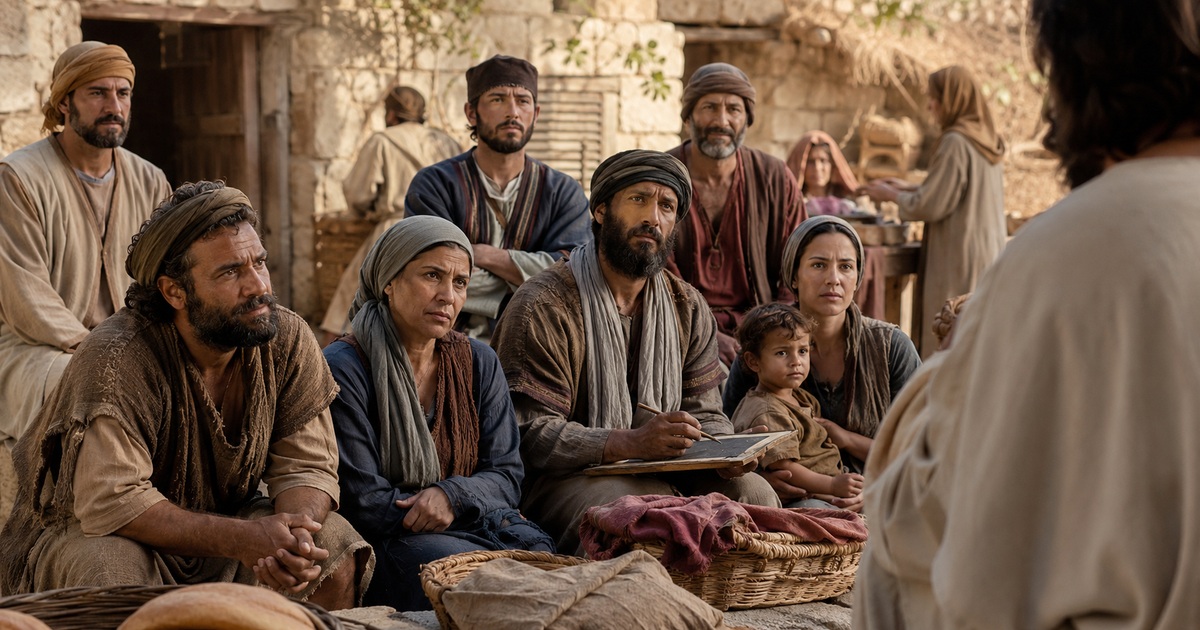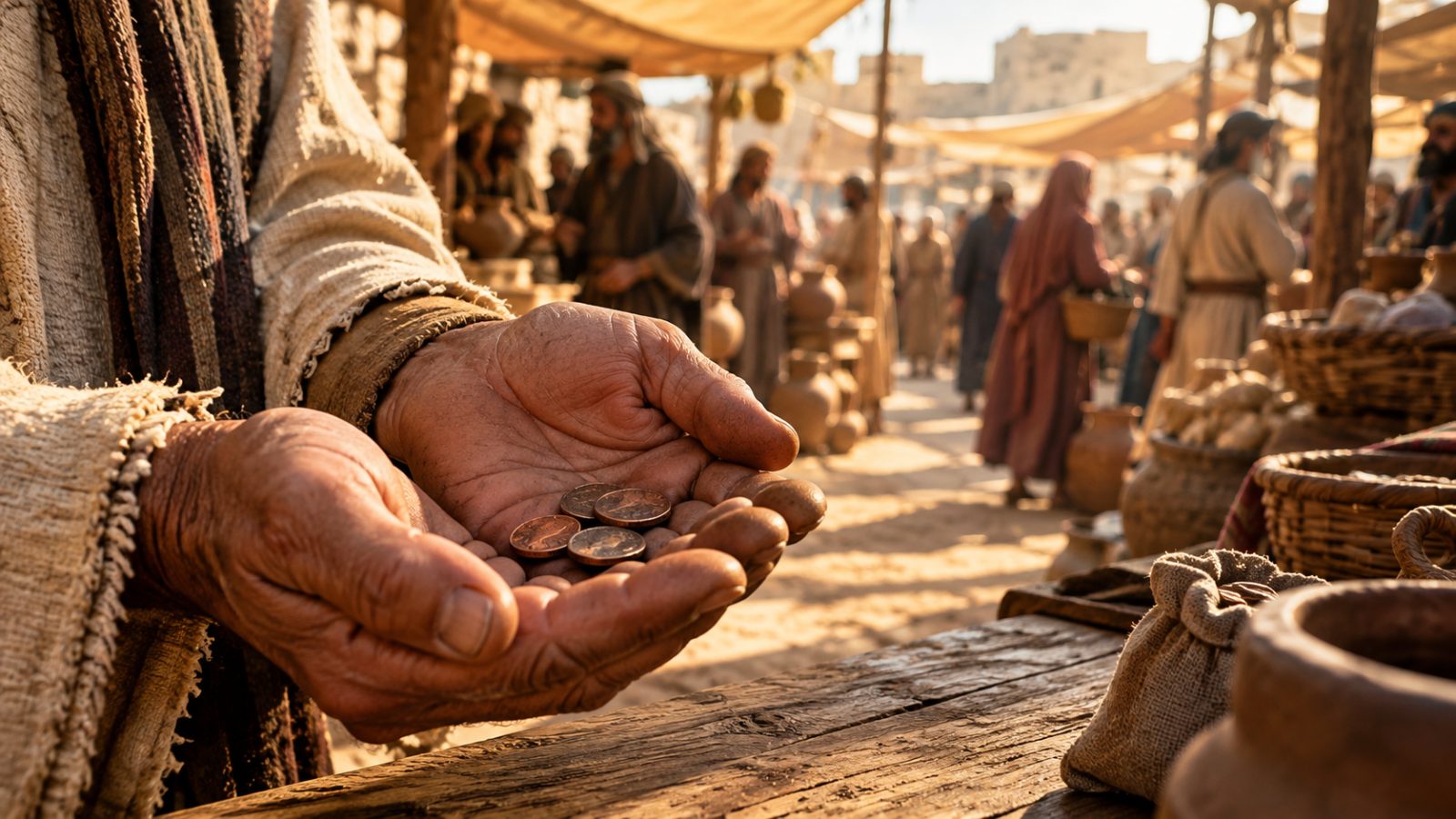
Jesus never told you to be poor. He told you not to be possessed by your possessions. There is a massive difference between the two, yet most high earning believers live in a state of constant, low level guilt because they cannot reconcile their rising stock portfolio with the Sermon on the Mount.
If you are struggling with balancing Jesus' teachings on riches with modern investing, you are likely caught between two extremes. On one side, you see the "prosperity gospel" which treats God like a vending machine; on the other, you see a "poverty gospel" that suggests any form of wealth accumulation is a sign of spiritual decay. Neither of these reflects the full counsel of God found in Kingdom Money Principles From the Bible.
I have spent years researching and exploring this tension in my own walk. I have sat in boardrooms where the goal was profit at any cost, and I have sat in pews where any mention of "investment" was met with suspicious glances. The truth is that Jesus spoke about money frequently because it is the primary competitor for our hearts, not because the currency itself is evil.
To truly master your finances as a Kingdom citizen, you must understand that your retirement account, your ISA, and your property investments are not "treasures" to be hoarded or be possessed by. They are tools to be managed for the Master's return. When you shift your perspective from ownership to stewardship, the guilt evaporates and is replaced by a heavy, holy responsibility. you can read more on Biblical Stewardship Versus Ownership: The Truth That Frees You From the Fear of Loss
The English word "wealth" is often used as a blanket term in our modern Bibles, but the Greek language of the New Testament offers a much sharper scalpel. One of the most significant words Jesus uses is ploutos. While we translate this as "riches," its root carries the idea of "fullness" or "abundance."
In Matthew 13:22, Jesus warns that the "deceitfulness of riches" (apate tou ploutou) chokes the Word. The word apate means a lure or a snare. It is not the ploutos (the abundance) that is the problem; it is the apate (the deception) that tells you the abundance is your security. "Charge them that are rich in this world, that they be not highminded, nor trust in uncertain riches, but in the living God, who giveth us richly all things to enjoy" (1 Timothy 6:17, KJV).
Paul uses the same root here to show that God is the source of the "rich" (plousios) supply. This reframes everything for the modern investor. You are not accumulating ploutos to build a fortress against the world. You are managing the ploutos that God has "richly" provided so that you can be "rich in good works." The abundance is the fuel, but the Kingdom is the destination.
Why You Feel Guilty About Your Portfolio
Most high earning Christians feel a sense of "spiritual friction" when their net worth increases. You read the story of the Rich Young Ruler and wonder if you should be selling everything, yet you know that without capital, you cannot fund the very ministries that spread the Gospel or help the poor, widows and orphans. This friction exists because we often confuse income with identity, and mist important of all the information we have been given about money.
I have first hand experienced and seen believers who are terrified of their own success. They keep their investments secret, fearing that "real" Christians wouldn't have a diversified portfolio or a robust retirement plan. But this secrecy is usually a sign that Mammon still has a foothold in the heart. If you cannot talk about your wealth with God, you are likely serving it.
Jesus' warnings were never meant to make you ineffective. They were meant to make you free. Free from money beingg your master and being controlled by it. When He said it is easier for a camel to go through the eye of a needle than for a rich man to enter the kingdom of God (Matthew 19:24, KJV), He was addressing the specific danger of self sufficiency. Wealth creates an illusion that you don't need God.
Modern investing, by its very nature, is a hedge against the future. We invest because we want to ensure we are not a burden to others and that we have resources to deploy later. The tension arises when the "hedge" becomes the "hope." Balancing Jesus' teachings on riches with modern investing requires you to constantly check if your portfolio is your provider or if God is.
Understanding the Spirit of Mammon in the Markets
You cannot talk about balancing Jesus' teachings on riches with modern investing without addressing the Greek word mammōnas. Jesus did not treat money as a neutral object; He treated it as a rival deity. "No man can serve two masters: for either he will hate the one, and love the other; or else he will hold to the one, and despise the other. Ye cannot serve God and mammon" (Matthew 6:24, KJV).
Mammon is the spirit that claims wealth has its own power, its own voice, and its own ability to protect you. In the context of modern investing, Mammon speaks through the "fear of missing out" (FOMO) and the "panic of the crash." It tells you that your life consists in the abundance of the things you possess, read Luke 12:15.
When you invest from a place of fear, you are serving Mammon. When you invest from a place of greed, you are serving Mammon. However, when you invest according to biblical principles of wisdom and stewardship, you are using Mammon (the "unrighteous mammon" mentioned in Luke 16:9) to achieve Kingdom ends.
The goal is not to avoid the markets, but to enter them with a different spirit. You are an oikonomos , a household manager. A manager is not emotionally attached to the assets; they are focused on the owner's objectives. This is a core part of biblical stewardship versus ownership.
What Jesus Actually Meant by "Laying Up Treasures"
"Lay not up for yourselves treasures upon earth, where moth and rust doth corrupt, and where thieves break through and steal" (Matthew 6:19, KJV). Many believers use this verse to argue against any form of long term investing. They believe it forbids savings accounts, pensions, or property portfolios.
But look closer at the Greek verb thesaurizo. It means to amass, to hoard, or to collect for one's own sake. The emphasis is on the phrase "for yourselves." Jesus is not condemning the act of storing resources; He is condemning the motive of hoarding resources for self protection and self aggrandisement.
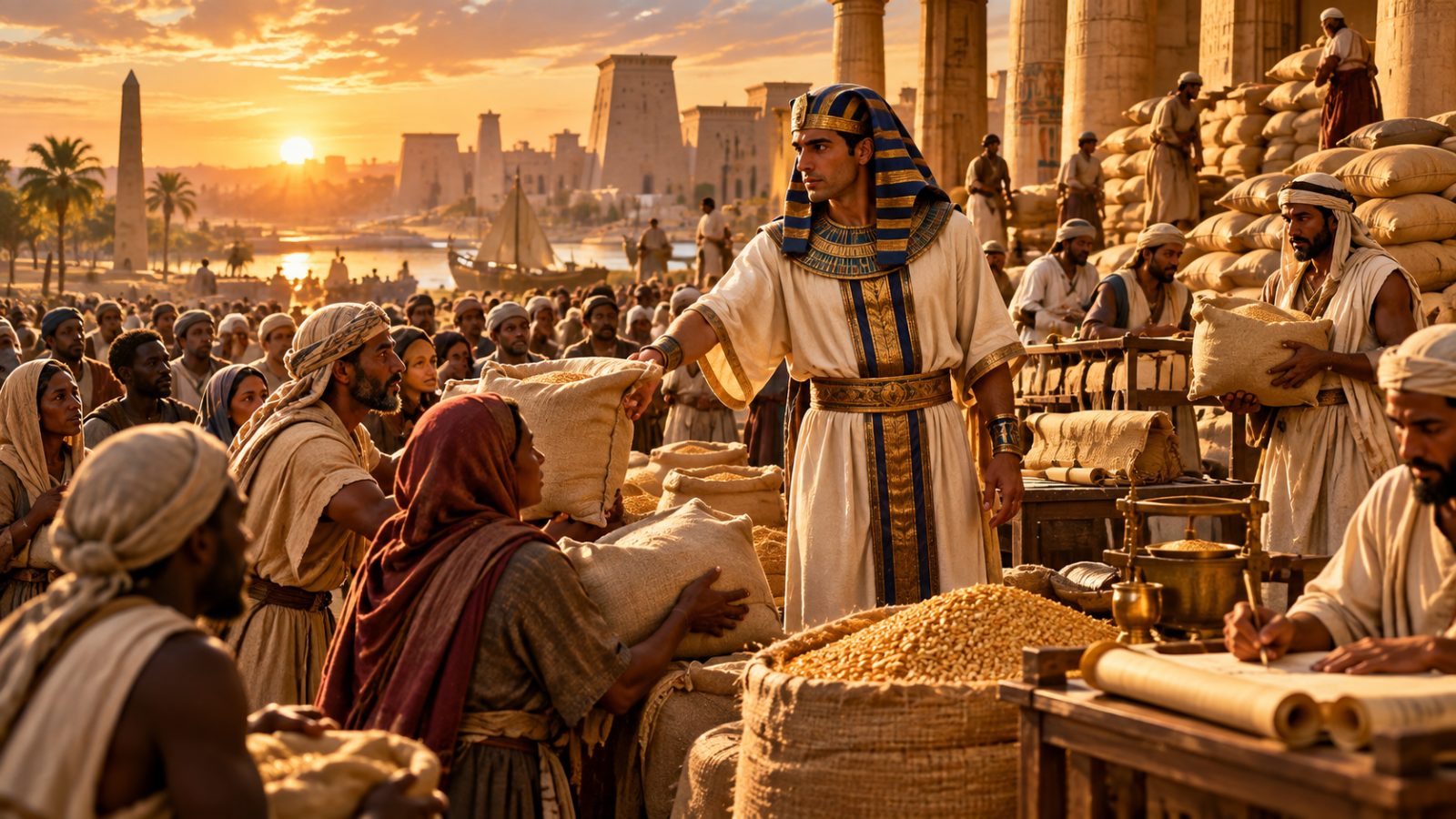
If your investment strategy is purely about "building a bigger barn" so you can "eat, drink, and be merry" (Luke 12:19), you are in the danger zone. But if your investing is about creating a "storehouse" so that you can be a blessing in times of famine , like Joseph did in Egypt , then you are following a biblical pattern of wisdom.
I believe the modern equivalent of "moth and rust" is inflation and market volatility. These are the "thieves" that remind us our earthly wealth is never truly secure. When you understand this, you stop holding your portfolio with a clenched fist. You realise that the only way to "lay up treasure in heaven" is to use your earthly resources for things that have eternal value.
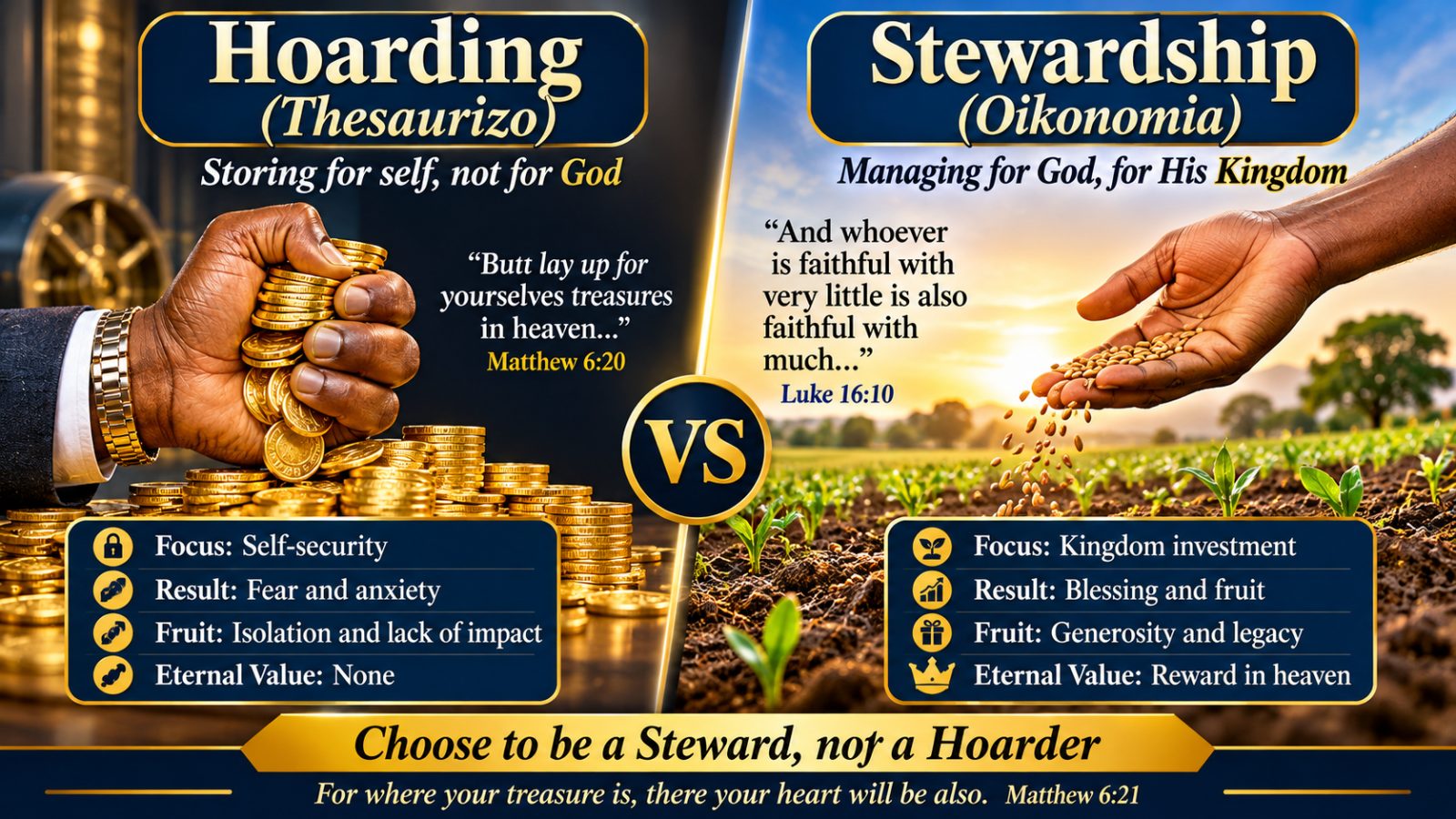
The Difference Between a Hoarder and a Manager
The Parable of the Rich Fool in Luke 12 is the ultimate warning for the high earner. This man was not a criminal; he was an excellent businessman. His "ground brought forth plentifully." His problem was not his success, but his response to it. He had no plan for his surplus other than self consumption.
A hoarder asks: "How much can I keep?" A manager asks: "How much of the Master's money can I put to work?" This is why the Parable of the Talents is a business plan. In that story, the master expected a return on investment. He was actually angry with the servant who just "saved" the money by burying it.
If you are simply sitting on cash because you are afraid, you are not being "holy"; you are being the "wicked and slothful servant." God has given you the ability to create wealth so that you can expand His influence. Modern investing allows you to put capital into companies, technologies, and properties that can provide jobs, solve problems, and generate resources for the Great Commission.
High earning believers must learn to distinguish between their "living" fund and their "giving" fund. Your living fund should be modest and disciplined. Your giving fund , which includes your surplus and your investments , should be aggressive and strategic. This is how you balance Jesus' teachings on riches with modern investing without losing your soul.
Practical Steps for the Kingdom Investor
So, how do you actually do this in? How do you look at your Vanguard account or your real estate portfolio through the lens of the Gospel? It starts with a radical commitment to transparency with the Holy Spirit. You must give Him veto power over every trade and every acquisition.
Define Your "Finish Line": Decide how much is "enough" for your lifestyle. Anything above that line is not yours to keep; it is yours to deploy. This prevents the "lifestyle creep" that chokes out your generosity.
Audit Your Investments: Are you investing in companies that actively work against Kingdom values? As a Kingdom citizen, you cannot separate your returns from the ethics of the business. Seek out faith based investment funds or do your own due diligence.
Invest in People, Not Just Paper: Real wealth building often involves Kingdom financiers who use their capital to seed businesses led by other believers. This creates a cycle of Kingdom economy that goes far beyond a 7% return on the S&P 500.
Practice "Firstfruits" Investing: Before you fund your brokerage account, fund the work of the Lord. If you are waiting until you are "rich enough" to give, you will never reach that point. Giving is the antidote to the spirit of Mammon.
I have found that when I am intentional about these steps, the "guilt" of wealth is replaced by the "weight" of stewardship. It is a much healthier place to be. You stop checking the markets to see if you are "okay" and start checking them to see how much more you can give away.
The Role of Diversification in Biblical Wisdom
Some Christians believe that "trusting God" means having no insurance and no investments. They think that planning for the future is a lack of faith. However, the Bible teaches the exact opposite. Proverbs tells us that "a prudent man foreseeth the evil, and hideth himself" (Proverbs 22:3, KJV).
Diversification is actually a biblical principle. "Give a portion to seven, and also to eight; for thou knowest not what evil shall be upon the earth" (Ecclesiastes 11:2, KJV). This is a direct instruction on how to handle capital in an uncertain world. It is not a lack of faith to diversify; it is an acknowledgement that we are not God and we do not know the future.
When you are balancing Jesus' teachings on riches with modern investing, you should look at multiple income streams as a way to stabilise your ability to give. If one market fails, your other investments can still support your family and the ministries you fund. This is not about fear; it is about resilience for the sake of the Kingdom.
I often think about Joseph. He didn't just "trust God" that the famine would be okay; he used God's wisdom to build a massive grain reserve. He was a Kingdom investor on a national scale. His "portfolio" saved the known world and preserved the lineage of Christ. That is the power of sanctified wealth building.

Is Your Retirement Plan an Act of Worship?
For many, a retirement plan is a "get out of work" card. It is the hope that one day we can stop being productive and just exist. But for the Kingdom citizen, there is no such thing as retiring from the Great Commission. Your retirement fund is simply a "deferred giving" account.
If your goal for your pension is to spend twenty years playing golf and sitting on a beach, you have missed the heart of Jesus' teaching on riches. But if your goal is to reach a point of financial independence so that you can volunteer your time, mentor younger believers, or fund missions full-time, then your retirement plan is an act of worship.
We must be careful not to adopt the world's definition of "freedom." The world says freedom is having enough money to do whatever you want. The Bible says freedom is having enough grace to do what God wants. When you align your long-term investing with that truth, every contribution to your retirement account becomes a seed sown into your future ministry.
I encourage you to look at your accounts today. Don't just look at the numbers. Ask the Holy Spirit: "Lord, how can this fund serve You in twenty years?" You might be surprised at the vision He gives you. He may want you to fund a school, plant a church, or provide the capital for a business that transforms a community.
The Eye of the Needle and the Heart of the King
Balancing Jesus' teachings on riches with modern investing is not a one time decision. It is a daily walk of surrender. You will feel the pull of Mammon every time the market dips or every time you see a peer buy a more expensive car. You must return to the feet of Jesus and remember that you are a steward, not an owner.
The "eye of the needle" is only impossible for the man who refuses to unpack his camel. If you are carrying the heavy burdens of pride, self-sufficiency, and greed, you will never make it through. But if you are willing to lay those down and carry only what the Master has assigned to you, you will find that "with God all things are possible" (Matthew 19:26, KJV).
May God grant you the wisdom to build wealth righteously, the discipline to live modestly, and the heart to give extravagantly. You were made for more than just a high net worth. You were made to be a conduit of heaven's resources on earth. Walk in that calling today.
Where To Read Next
To go deeper into how to manage wealth with a Kingdom perspective, I recommend exploring these resources:
Biblical Investment Principles: What Scripture Teaches and What It Does Not
What Did Jesus Say About Money and Wealth? The Teaching Most People Miss
Who Were the Kingdom Financiers in the Bible and What Did They Do?
When Wealth Becomes an Idol: Biblical Warnings and Protection
Frequently Asked Questions
How do I balance Jesus' teachings on riches with modern investing?
You balance these by shifting your mindset from ownership to stewardship, treating your investments as tools for God's Kingdom rather than a source of ultimate security. Jesus warned against the love of money and hoarding for self, not the wise management of resources. "Moreover it is required in stewards, that a man be found faithful" (1 Corinthians 4:2, KJV).
Is it a sin for a Christian to have a large investment portfolio?
No, having wealth is not a sin, but the trust in wealth or the greedy accumulation of it is. The Bible shows many righteous people, like Joseph and Job, who managed vast resources for God's purposes. The key is whether your heart is attached to the portfolio or to the Provider.
What does the Bible say about saving for retirement?
The Bible commends the wisdom of planning for the future, such as the ant in Proverbs who stores food in the summer (Proverbs 6:6-8). However, it warns against "retiring" into a life of purely selfish ease. Your retirement should be a season of increased service to God, funded by your previous stewardship.
Should Christians use the stock market?
Christians can use the stock market as a tool for diversification and growth, provided they are mindful of the ethics of the companies they support. Investing is essentially providing capital for businesses to grow, which can be a form of biblical stewardship when done with discernment. "A good man leaveth an inheritance to his children's children" (Proverbs 13:22, KJV).
Can I still be a faithful Christian if I want to be wealthy?
You can be faithful if your desire for wealth is driven by a desire to fund the Kingdom and bless others, rather than personal pride or security. If your "want" for wealth is an idol, it will destroy your faith; if it is a "want" for capacity to serve, God can use that desire. Seek first the Kingdom, and the "things" will be added as He sees fit (Matthew 6:33).
Found this helpful? Share it with someone who needs it.