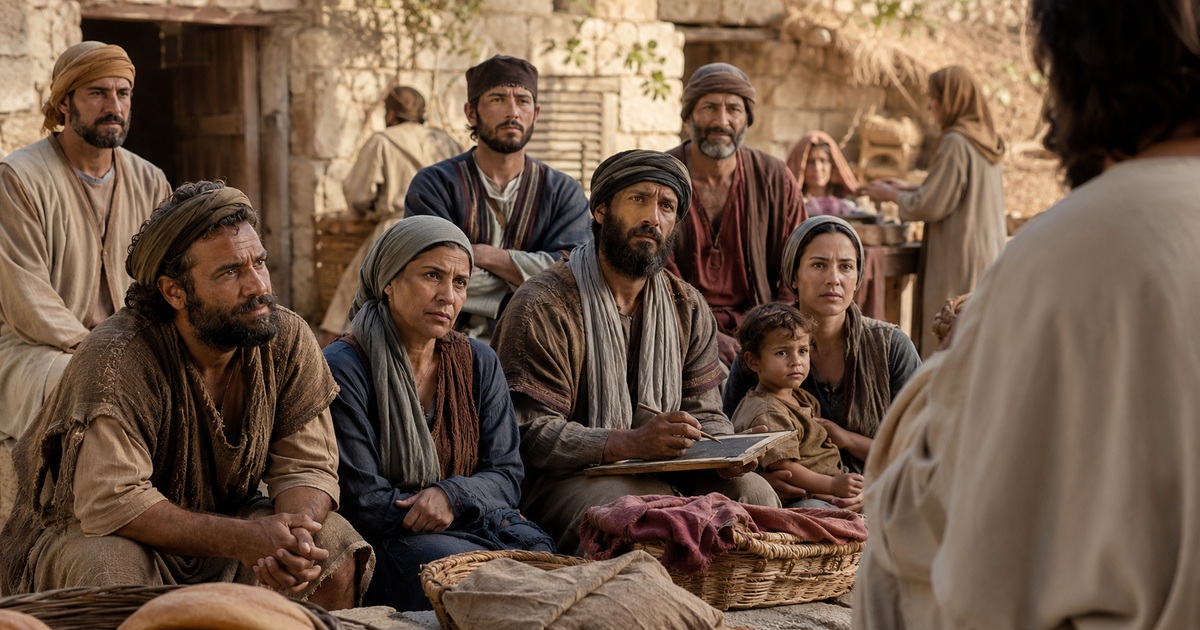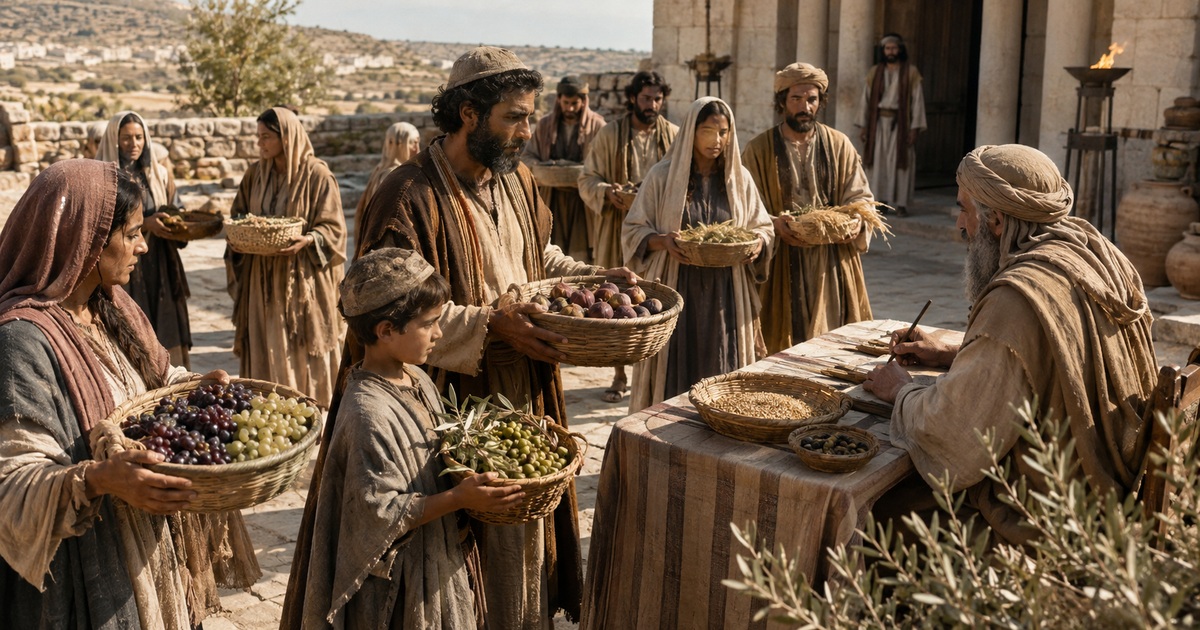
Every single financial decision you make is made from inside a system. The question is not whether you are operating from a system. The question is which system is actually governing your choices, and whether that system is the one God designed for you to live from.
I remember sitting in a business seminar years ago, listening to a high priced consultant explain how to boost profit margins. His main strategy was simple: push down workers' pay, charge hidden service fees, and take advantage of clients who had no other options. People in the room were nodding, taking notes, and clapping. But deep in my spirit, a sharp disquiet settled in. Something was broken at the very root of what he was saying. It treated human beings like disposable tools and money like an absolute god.
That day, I realised I had been trying to mix two completely opposite financial operating systems. Worldly economics is not just a collection of market rules or banking software. It is a mindset built on sinful assumptions: that money determines your worth, that fear justifies hoarding, and that the person with the most possessions wins. Scripture confronts those ideas head-on. When you begin understanding how Kingdom money principles from the Bible operate, you discover that God has given us a battle-tested blueprint for how wealth, work, and community ought to function.
The Root of Economics: Why Stewardship Is the Foundation of Kingdom Economics

To really understand kingdom economics, we have to examine the word itself. The English word economy comes from the Greek word oikonomia. It combines two words: oikos, meaning house or household, and nomos, meaning law, rule, or management. Literally translated, oikonomia means household management.
When the New Testament writers used this word, they were not thinking about central bank interest rates or national debt figures. They were talking about how a master's household is managed by an entrusted servant. The Apostle Paul used this exact word when describing his ministry, and Jesus used it in His parables when teaching about faithful managers. In the biblical mindset, an economy is simply how a manager looks after resources that belong to someone else. "Moreover, it is required in stewards, that a man be found faithful." (1 Corinthians 4:2, KJV)
This root meaning exposes the fundamental flaw of the world's economic framework. The world's financial engine is built on the lie of total personal ownership. It tells you that whatever you earn belongs entirely to you, to hoard or spend as you see fit. Kingdom economics begins from the opposite premise: God owns everything, human beings are made in His image, work is meant to serve human needs, and every penny remains accountable to the Creator. Realising the truth about biblical stewardship versus ownership is what finally breaks the fear of financial loss.
The Fundamental Difference: Accumulation Versus Multiplication Through Service
Worldly economics is obsessed with accumulation. It measures your success by how much you pull into your personal storehouse and keep for yourself. Kingdom economics inverts that logic completely by placing the focus on multiplication through service.
"And he said unto them, Take heed, and beware of covetousness: for a man's life consisteth not in the abundance of the things which he possesseth." (Luke 12:15, KJV)
That statement from Jesus is not a prohibition against having assets. It is a diagnosis of the world's broken operating system. The world has tricked millions of believers into believing that life consists in what they store up, when God designed life to consist in what they contribute through faithful management.
The Kingdom model is not about how much money you lock away under your mattress. It is about how many lives are improved through your honest, practical work. The more useful you become to the people around you, the more real problems you solve, and the more value you create, the more sustainable your income becomes. Not through greedy acquisition, but through genuine, excellent service that leaves your community better off than you found them.
[IMAGE: Cinematic wide shot of a middle-aged East Asian craftsman teaching a young Black apprentice how to repair wooden furniture in a bright workshop, natural sunlight filtering through windows, wood shavings on the floor, focused and joyful expressions] Alt: Faithful Christian service and skills applied in kingdom economics Filename: christian-service-and-work-kingdom-economics.jpg
When I studied what Jesus actually taught about money and wealth, I noticed He constantly shifted attention away from personal status toward faithful work. He never commended the man who hid his coin in the dirt out of fear. He commended the stewards who traded, served, and multiplied what was placed in their care.
The Scarcity Lie vs Divine Sufficiency: How Heaven's System Operates
The world's financial system runs on the engine of fear and perceived scarcity. Advertisements are designed to make you feel incomplete so you will buy things you cannot afford. Financial markets panic when bad news spreads. Scarcity is real in this fallen world; droughts happen, jobs end, and economic downturns occur. But the world's lie is that scarcity gives you permission to panic, hoard, or exploit others.
Kingdom economics operates from a posture of divine sufficiency. Trusting God does not mean ignoring reality or failing to prepare. It means refusing to let fear become your financial master. Look at how Jesus handled scarce resources when feeding the five thousand. He did not pretend five loaves and two fish were plenty for a massive crowd. He acknowledged what was available, gave thanks to the Father, organized the people into groups, and broke the bread.
Notice the structure in that miracle. There was prayer, there was order, there was fair distribution, and there was systematic gathering of leftovers so nothing went to waste. Kingdom economics pairs sincere prayer with practical organization. It eliminates waste, protects the vulnerable, and trusts God to meet the deficit.
If you are struggling under heavy debt or low wages right now, panic will only push you toward quick-fix schemes that leave you bruised. By applying timeless Proverbs financial wisdom to your money, you can begin organizing your small resources with diligence, knowing that God delights in blessing order and faithful effort.
Worldly Exploitation vs Kingdom Protection: Debt and Interest
In the world's system, money is often used to trap people. Financial institutions prey on desperate individuals, charging high interest rates that make it almost impossible to pay off the principal balance. The borrower becomes a servant to the lender, bound to a cycle of interest payments that drain their strength for years.
Scripture takes a firm stand against predatory financial practices. The Old Testament law repeatedly warned Israel against charging high interest to brothers who were struggling to survive.
"If thou lend money to any of my people that is poor by thee, thou shalt not be as an usurer to him, neither shalt thou lay upon him usury." (Exodus 22:25, KJV)
Kingdom economics protects the vulnerable instead of squeezing them for profit. It views money as a tool to build people up, not as a net to trap them. Where the world uses debt to enslave, the Kingdom promotes financial freedom, debt reduction, and mutual aid. As Kingdom citizens, we must be careful not to adopt the world's lending habits, whether in business transactions or personal relationships.
What the Early Church Showed About Kingdom Economics in Practice
When you look at the early church in the Book of Acts, you see kingdom economics working at a practical level. It was not a political theory forced by government decree. It was a movement of the Holy Spirit inside hearts that had been freed from greed.
"And the multitude of them that believed were of one heart and of one soul: neither said any of them that ought of the things which he possessed was his own; but they had all things common. And with great power gave the apostles witness of the resurrection of the Lord Jesus: and great grace was upon them all. Neither was there any among them that lacked..." (Acts 4:32-34, KJV)
Pay close attention to that statement: neither was there any among them that lacked. That was not because everyone was born into wealth. It was because the principle of shared stewardship and targeted generosity was working effectively. Nobody claimed their possessions as their sole personal right.
That posture created a community where one believer's extra met another believer's urgent need. It was private property surrendered to Kingdom purpose. When you realize that your money is held in trust for God's household, hoarding loses its grip on your soul. You stop asking, "How much of my money should I give to God?" and start asking, "How much of God's money should I use for my household needs?"
Kingdom Generosity vs Public Performance
We live in a culture where charity has become a publicity tool. People film themselves giving food or cash to homeless individuals on the street, uploading the video to gain likes, views, and ad revenue. That is performance generosity, and it belongs entirely to the world's economic system.
Kingdom generosity is quiet, purposeful, and humble. Jesus made this standard clear during His Sermon on the Mount.
"But when thou doest alms, let not thy left hand know what thy right hand doeth: That thine alms may be in secret: and thy Father which seeth in secret himself shall reward thee openly." (Matthew 6:3-4, KJV)
Kingdom giving does not require an audience or a social media tag. It does not give in order to buy influence or secure tax write-offs. It gives because giving reflects the generous nature of God. This quiet, faithful giving breaks the power of materialism in your home and opens the door for God to trust you with greater responsibility.
[IMAGE: Overhead close-up shot of a Hispanic woman silently sliding an unmarked envelope of money into a church offering box, soft warm morning light, shallow depth of field, focused on her hands and the modest silver ring on her finger] Alt: Quiet kingdom generosity in practice without public performance Filename: kingdom-generosity-hidden-giving.jpg
I have talked with many believers who wonder why their prayers for financial deliverance seem unanswered year after year. Often, the barrier is not a lack of prayer, but a breakdown in stewardship. In my article on why so many faithful Christians struggle with money, I explained that God rarely multiplies resources for a heart that plans to spend them on personal pride or selfish luxury.
4 Practical Steps to Transition to Kingdom Economics Today
Moving out of the world's economic system and into God's financial framework does not happen automatically when you accept Christ. It requires deliberate action and a daily renewing of your mind. Here are four practical steps you can take today:
Audit Your Financial Motives: Look through your receipts and bank statements from the past month. Ask yourself honestly: how much of this spending was driven by the urge to look successful to others, and how much was driven by faithful stewardship, family provision, and Kingdom work?
Build Honest Income Through Useful Skills: Reject get-rich-quick schemes and dishonest shortcuts. Focus on turning your God-given gifts into honest work and income by mastering skills that solve real problems for people around you.
Practice Systematic Firstfruits Giving: Do not give God whatever pocket change happens to be left at the end of the month. Set aside the first portion of your earnings immediately as an act of worship, recognizing that He owns the entire harvest.
Protect Your Schedule With Sabbath Rest: The world tells you to hustle seven days a week until your body breaks down. God's system commands rest. Understanding why Sabbath rest is a biblical wealth principle protects your health and keeps you from making desperate, exhausted financial decisions.
When you start applying these steps, you step off the world's endless treadmill. You begin operating under heaven's peace and provision, where quiet diligence is rewarded and fear no longer dictates your choices.
What Kingdom Citizens Are Called to Do in the Marketplace

In Matthew 5, Jesus called His followers the salt of the earth and the light of the world. Salt preserves, flavours, and stops decay. Light exposes dark areas and shows the right path forward. Neither salt nor light exists for itself; they exist to change whatever environment they are placed in. "Ye are the light of the world. A city that is set on an hill cannot be hid." (Matthew 5:14, KJV)
As Kingdom citizens, we are not called to run away from business or pretend that money does not exist. We are called to step into the marketplace and demonstrate a completely different way of operating. When a Christian employer pays fair wages on time, they bring kingdom economics into their industry. When a Christian contractor refuses to cut corners or cheat clients, they act as preserving salt.
We see this principle clearly when examining how the parable of the talents functions as a business plan for believers. God expects us to take the capital, opportunities, and talents He provides, bring them into the market, and produce clean, honest multiplication that honours His name.
Child of God, remember that the Lord you serve owns the cattle on a thousand hills. He is not limited by inflation figures, interest rate spikes, or government recessions. The question is never whether God has enough resources to supply your daily bread or fund your assignment. The question is whether you will train your heart and hands to operate by His Kingdom principles rather than the world's economic lies.
Walk in faith, brethren. Steward what you have been given with unyielding integrity, serve people with excellence, and trust the Lord to back His system in your life.
Where To Read Next
If you want to continue aligning your personal finances with God's Word, here are four guides to read next:
Biblical Stewardship Versus Ownership: The Truth That Frees You From the Fear of Loss
What Did Jesus Say About Money and Wealth? The Teaching Most People Miss
- What Does Nehemiah Teach About Planning and Leadership? — Another piece in this series.
- How Did Abraham, Isaac, and Jacob Build Generational Wealth? What the Bible Teaches — Another piece in this series.
- Does the Bible Support Multiple Income Streams? What Scripture Says About Financial Diversification — Another piece in this series.
- Tithes, Offerings and Firstfruits: What Is the Difference?
- What Does the Bible Say About Saving Money?
- What Does the Year of Jubilee Mean for Christians in Debt?
- How to Develop a Kingdom Financial Mindset for Successful Living
- When Wealth Becomes an Idol: Biblical Warnings and Protection
- Biblical Investment Principles: What Scripture Teaches and What It Does Not
Frequently Asked Questions
What is kingdom economics according to the Bible?
Kingdom economics is the biblical financial system based on God's absolute ownership of all things, human stewardship, honest work, service to others, and divine sufficiency. Unlike worldly economics, which promotes self-centered accumulation through fear and competition, kingdom economics emphasizes faithful management, ethical trade, generous giving, and meeting human needs under God's authority.
How is kingdom economics different from capitalism or socialism?
Kingdom economics is not a political policy. Capitalism often elevates individual accumulation and profit above human well-being, while socialism relies on state force to redistribute wealth. Kingdom economics relies on voluntary stewardship, moral accountability to God, personal diligence, private property surrendered to God's purpose, and compassionate community care without political coercion.
Is it a sin for a Christian to accumulate wealth under kingdom economics?
No, Scripture shows many faithful believers like Abraham, Job, and Lydia who held substantial assets. However, under kingdom economics, wealth is never seen as a tool for personal pride or selfish indulgence. It is viewed as a stewardship trust to be acquired honestly, managed wisely, and used to care for family, support the local church, and help those in need.
How do I start living by kingdom economics if I am currently broke or in debt?
Start by shifting your mindset from panic to stewardship. Stop taking on new consumer debt, create an honest budget based on Proverbs principles, prioritize giving to keep your heart open, and focus on building income through diligent, skilled service. God honors practical order and faithful steps taken in obedience.
Does kingdom economics discourage saving and investing money?
No, saving and investing are encouraged in Scripture when done with the right motives. Proverbs commends the ant for storing provision for the winter, and Jesus praised the stewards who multiplied their talents. Kingdom economics opposes hoarding out of fear or greed, but supports prudent saving and productive investing to prepare for future needs and bless others.
Found this helpful? Share it with someone who needs it.