God does not need your money.
That is the whole point of the tithe. It is a tool for your heart, not a payment for His services. I have sat in far too many services where the offering message felt more like a late night television advert for a get rich quick scheme than a call to worship. The preacher promises that if you "sow your seed" of a thousand pounds, God is somehow obligated to return ten thousand to your bank account by Friday. This transactional view of the Kingdom is not just misleading; it is dangerous. It turns the Creator of the universe into a spiritual vending machine where your coins dictate His actions.
If you have been searching for the truth about tithing as an act of obedience to God, you are likely tired of the hype. You want to know if giving is about your bank balance or your soul. In my own walk, I had to unlearn the idea that tithing was a financial investment strategy. I had to realise that tithing is a question that leads us back to the heart of Lordship, not the pursuit of luxury. It is about who owns you.
The Lie of the Spiritual Slot Machine
The prosperity gospel has done a massive disservice to the Body of Christ by framing the tithe as a "key" to wealth. When we approach the collection plate with the primary goal of getting a return, we aren't tithing; we are gambling. We are putting in a little bit of our "chips" in the hope that God will hit the jackpot for us. This is the exact opposite of the heart posture God requires from His people. It is greed masked as faith.
I have seen and read on how believers give their last penny not out of love for Jesus, but out of a desperate, coached greed. They were told that their lack of wealth was a "seed problem," and if they just gave more, the "windows of heaven" would pour out literal gold bars. But God is not looking for investors who want to turn a profit on Him. He is looking for children who trust Him enough to obey even when the numbers don't seem to add up. I talked about this more in my post on is tithing mandatory for Christians in the New Testament, and honestly, it changed how I think about my bank balance.
The Bible tells us that "the silver is mine, and the gold is mine, saith the Lord of hosts" (Haggai 2:8, KJV). If He already owns it all, He doesn't need your ten per cent to fund His operations. He asks for it to see who truly sits on the throne of your heart. When we tithe to get rich, we are still serving Mammon; we are just trying to use God as a means to reach it. It is a subtle form of idolatry that many of us have fallen for at some point.
What the Hebrew Word for Obedience Really Means
The English word "obedience" often feels cold and clinical. It sounds like a soldier following a command he doesn't understand or a child fearing a rod. Cold. Rigid. Unfeeling. But the Hebrew word used throughout the Old Testament for obedience is shama, and this changes everything because it ties your ears directly to your feet.
Shama does not merely mean to hear a sound. It means to listen with the specific intent to respond and act upon what is heard. It is a word of relationship. In Exodus 19:5, God says, "Now therefore, if ye will obey (shama) my voice indeed, and keep my covenant, then ye shall be a peculiar treasure unto me." The hearing and the doing are the same word. When we tithe, we are telling God that we have heard His voice regarding His ownership of our lives, and we are responding with our actions. It is a physical echo of a spiritual truth.
This reframes the tithe entirely. It is not a tax you pay to stay in God's good graces. It is a physical manifestation of your shama, your attentive listening to the Father. You aren't giving to "open up" a blessing; you are giving because you have heard the King's decree that He is the source of all you have. "To obey (shama) is better than sacrifice, and to hearken than the fat of rams" (1 Samuel 15:22, KJV). God prefers the heart that listens and responds over the hand that gives out of a sense of religious duty or greedy expectation. He wants your ears, not just your wallet.
What Does the New Testament Say About Tithing 10 Percent?
Many people get caught up in the "legal" requirement of the ten per cent. They want to know: what does the New Testament say about tithing 10 percent? Is it still the rule? Or did grace lower the bar? If you are looking for a specific command from Jesus to pay exactly ten per cent to a local church building, you won't find it. But that doesn't mean the principle has vanished.
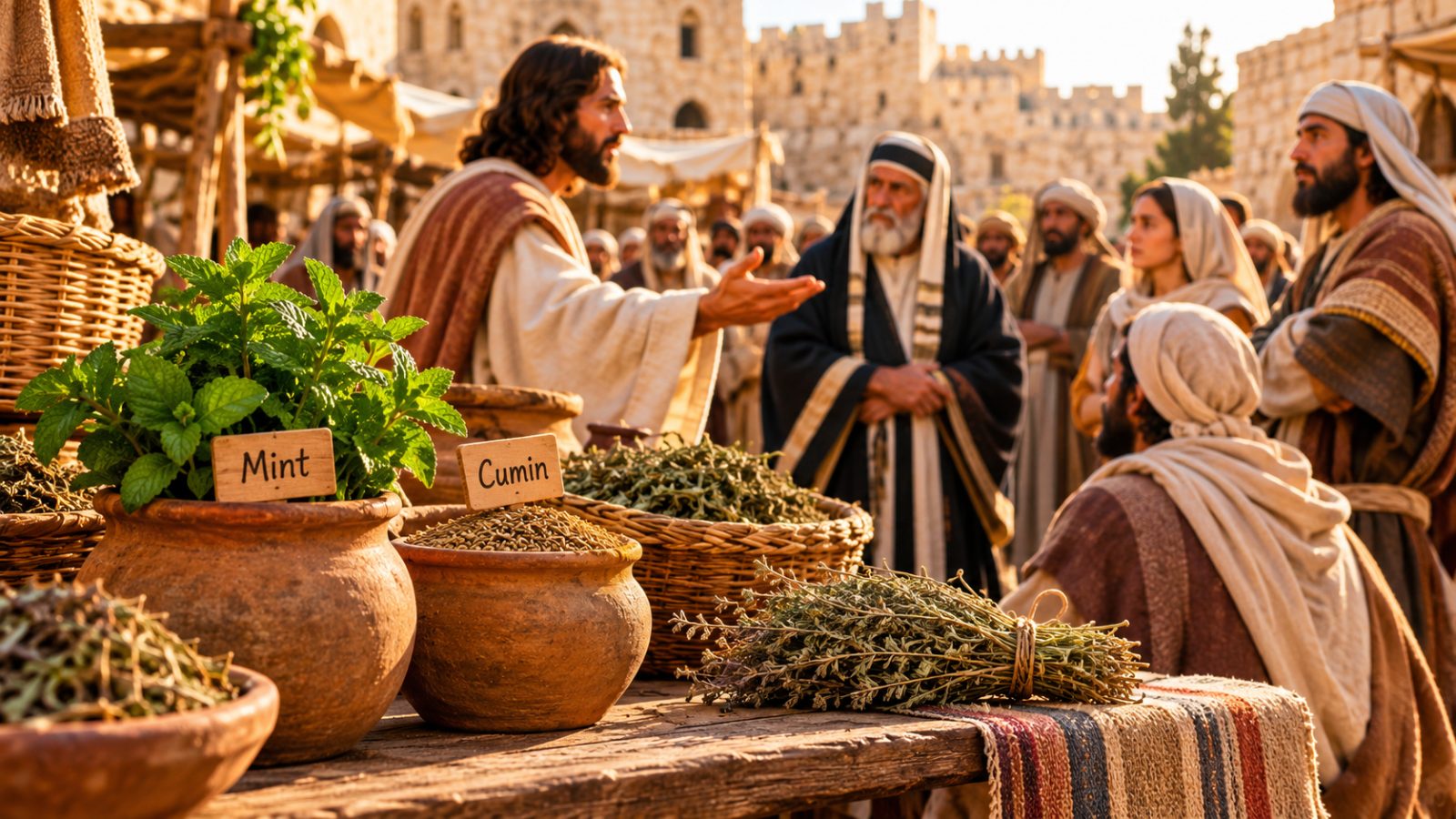
Jesus mentioned tithing when He rebuked the Pharisees for their hypocrisy. He told them they were careful to tithe their herbs but neglected "the weightier matters of the law, judgment, mercy, and faith" (Matthew 23:23, KJV). He said they should have done the latter without leaving the former undone. He wasn't abolishing the tithe; He was correcting the heart behind it. If you're struggling with the pressure of this, you'll want to read what I wrote about what does 2 Corinthians 9 7 mean by not under compulsion because it brings so much freedom.
The New Testament standard is actually higher than ten per cent. It moves from a fixed quota to total surrender. We see the early believers selling entire fields and laying the whole amount at the apostles' feet. They didn't ask "how little can I give?" They asked "how much can I contribute to the Kingdom?" When you understand what is tithing money in a biblical sense, you realise it was always about acknowledging God as the provider of the harvest, whether that harvest was grain or a monthly salary.

Can I Give My Tithe to the Poor Instead of Church?
This is a question that comes up a lot, especially when people are frustrated with how churches handle money. You might wonder: can I give my tithe to the poor instead of church? It is a valid question. The Bible is incredibly clear about our responsibility to the poor, the widow, and the fatherless. In fact, James tells us that "pure religion and undefiled before God and the Father is this, To visit the fatherless and widows in their affliction" (James 1:27, KJV).
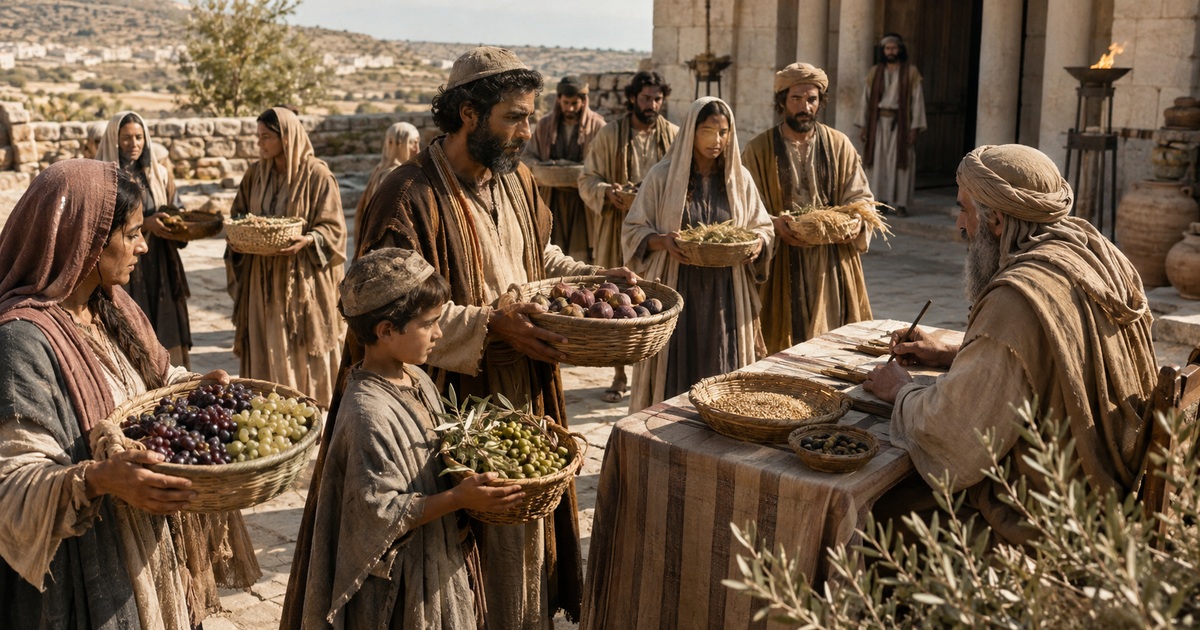
However, we have to distinguish between the tithe and our general almsgiving. In the Old Testament, the tithe was specifically for the support of the Levites and the maintenance of the sanctuary. It was the "storehouse" mentioned in Malachi. While there was a specific "poor tithe" every three years, the primary tithe was for the spiritual infrastructure of the nation. Giving to the poor is a command, but it is usually seen as an "offering" or "alms" rather than the tithe itself.
I believe we should do both. If your church is preaching the Gospel and feeding your soul, that is where your tithe belongs. If you see a brother in need, that is where your extra generosity should flow. Don't use the poor as an excuse to withhold from the storehouse, and don't use the storehouse as an excuse to ignore the person starving on your doorstep. Both are acts of shama. If you are wondering why am I struggling financially if I trust God with my money, it might be time to look at how you are balancing these two areas of giving.
3 Types of Tithes in the Bible: Understanding the Context
When we talk about tithing, we often act like there was only one. But there were actually 3 types of tithes in the Bible that the Israelites were commanded to observe. Understanding this helps us see that tithing was never just about a flat ten per cent tax. It was a comprehensive system of social and spiritual care. It was brilliant.
First, there was the Levitical tithe. This was the ten per cent given to the Levites because they had no inheritance of land; they were dedicated to the service of God. Second, there was the Festival tithe. This was used to fund the religious feasts and celebrations in Jerusalem. It was essentially a "holy holiday fund" that ensured everyone could celebrate God's goodness. Third, there was the Poor tithe, collected every three years to care for the stranger, the widow, and the orphan. When you add them up, the average Israelite was giving closer to 23 per cent of their increase.
This blows the "ten per cent is too much" argument out of the water. God was teaching His people that their resources were for more than just their own comfort. They were for the priesthood, for the community's joy, and for the vulnerable. We covered the biblical view on tithes offerings and firstfruits what is the difference in an earlier post, and it goes deep into these distinctions. It shows that God's heart has always been about a generous, caring society.
[IMAGE: INFOGRAPHIC - A vertical flow chart showing the 3 types of tithes in the Bible. Section 1: The Levitical Tithe (icon of a temple). Section 2: The Festival Tithe (icon of a wheat sheaf and a cup). Section 3: The Poor Tithe (icon of two hands joined). The colour scheme is navy, gold, and warm cream. Each section has 1-2 sentences explaining the purpose of that tithe based on KJV scripture.] Alt: Infographic explaining the 3 types of tithes in the Bible Filename: three-types-of-tithes-infographic.jpg
5 Reasons Why Tithing Actually Benefits You
I want to be careful here. I am not saying tithing is a magic spell to get a Lamborghini. I am saying that 5 reasons why tithing actually benefits you have everything to do with your character and your peace. It changes the person giving more than it changes the bank account of the church receiving. It really does.
It breaks the spirit of greed. Money has a way of wrapping itself around our hearts. Tithing is the scissors that cut those strings every single month.
It forces you to trust God. When you give the first ten per cent, you are forced to manage the remaining ninety with wisdom and reliance on Him.
It aligns you with Kingdom purposes. You become a stakeholder in the work of God on earth. Your heart follows your treasure.
It builds financial discipline. I have found that tithers are often better at practical money management for Christians because they have to be intentional with their spending.
It provides spiritual peace. There is a rest that comes from knowing you are being faithful with what God entrusted to you. You aren't "hiding" anything from Him.
These benefits are internal and eternal. They don't depend on the stock market. When you tithe as an act of obedience, you are investing in a version of yourself that is free from the fear of lack. That is a wealth that money cannot buy and the world cannot take away from you. It is the peace of a steward who knows the Master is good.
Does Tithing Really Work?
People ask this all the time: does tithing really work? Usually, they mean "will I get more money back?" If that is your metric, you might be disappointed. God is not a vending machine. But if "working" means "does God provide for those who are faithful to Him?", then the answer is a resounding yes. I have lived this. I have seen the "coincidences" where a bill is exactly covered by an unexpected check just after I decided to be faithful with my tithe.
But here is the thing. Is tithing a sin if you don't do it? No. You aren't going to hell because you missed a payment. But you are missing out on the discipline of trust. You are choosing to carry the full weight of your provision on your own shoulders. That is a heavy burden that God never intended for you to bear alone. He wants to be your provider, but He requires your shama to lead the way.
Scripture says, "Bring ye all the tithes into the storehouse... and prove me now herewith" (Malachi 3:10, KJV). This is the only place where God invites us to test Him. Not to see if we can get rich, but to see if He is faithful. He is. He always has been. If you've been hesitant, I encourage you to start. Not out of fear, but out of a desire to see God's hand move in your life in ways that have nothing to do with a spreadsheet. Once you've got your heart sorted, the next thing worth looking at is did Jesus command his disciples to tithe to see the full context of His teaching.

Encouragement About Giving Tithes and Offering
If you are feeling guilty or pressured, stop. God loves a cheerful giver, not a coerced one. My encouragement about giving tithes and offering is this: start where you are. If you can't do ten per cent right now without falling into fear, start with two. Start with five. The point is the direction of your heart, not the perfection of the percentage. God is looking for the "widow's mite" heart, not the "Pharisee's formula" heart.
Remember that you are a Kingdom citizen. You aren't just a worker in a secular economy; you are a child of the King. He knows what you need before you even ask Him. When you give, you are simply returning a portion of what He already gave to you. It is an act of worship. It is a "thank you" note written in currency. Let your giving be a joy, a celebration of the fact that you serve a God who is more than enough.
Walk in faith. Steward with wisdom. Trust the One who owns it all. He has never failed a person who put their trust in Him, and He isn't going to start with you. Your obedience is a sweet-smelling savour to Him, and He delights in the faithfulness of His children. Go with grace, and trust that He is already working in your finances in ways you cannot yet see. He is faithful.
Where To Read Next
If you want to go deeper into the heart of Kingdom giving and stewardship, I've put together some resources that will help you move past the legalism and into true freedom.
Did Jesus Command His Disciples to Tithe in the New Testament?
What Is the New Testament Principle of Giving Without Tithing?
Why Am I Struggling Financially If I Trust God With My Money?
Frequently Asked Questions
Does the Bible say tithing is money?
In the Old Testament, the tithe was primarily agricultural increase, such as grain, wine, oil, and livestock. However, the principle was about the "firstfruits" of one's primary source of income. In a modern economy, our increase is currency, so tithing money is the contemporary application of this biblical principle.
What are 10 benefits of tithing?
While I listed five main ones, other benefits include: breaking the power of materialism, supporting the local church, fostering a grateful heart, developing a long-term perspective, participating in global missions, building a legacy of generosity, receiving spiritual protection, growing in faith, experiencing God's provision, and finding joy in obedience.
Is tithing a sin if I can't afford it?
No, tithing is not a "sin" if you are in a season of extreme lack. God looks at the heart. However, tithing is often the very discipline that helps us manage our money better so that we eventually can afford to be generous. It is about trust, not a legalistic debt you owe to avoid punishment.
Did Jesus talk about paying tithes?
Yes, Jesus mentioned tithing in Matthew 23:23 and Luke 11:42. He affirmed that it should be done, but He strongly warned against doing it while neglecting justice, mercy, and faith. He was more concerned with the heart of the tither than the coins in the box.
What are some tithes and offering verses I can study?
You should look at Malachi 3:10, Proverbs 3:9-10, 2 Corinthians 9:6-7, Matthew 6:21, and Leviticus 27:30. These verses cover the range from the Old Testament law to the New Testament heart posture of a cheerful giver. Study them with an open heart.
Found this helpful? Share it with someone who needs it.