You pray for supernatural overflow, spend every pound that lands in your account, and secretly assume that setting aside cash for lean times proves you lack faith. We have been taught that real believers live purely on the edge of the miraculous, expecting manna to drop every morning while ignoring the storehouse entirely.
That mindset quietly ruins families. When inflation spikes, grocery bills double, and redundancies sweep through entire industries, quoting scriptures about abundance without having any grain in the barn leaves you completely stranded. Joseph did not pray away the seven years of famine. He managed the grain before the drought arrived.
What Joseph Understood About Economic Cycles That Most Believers Miss
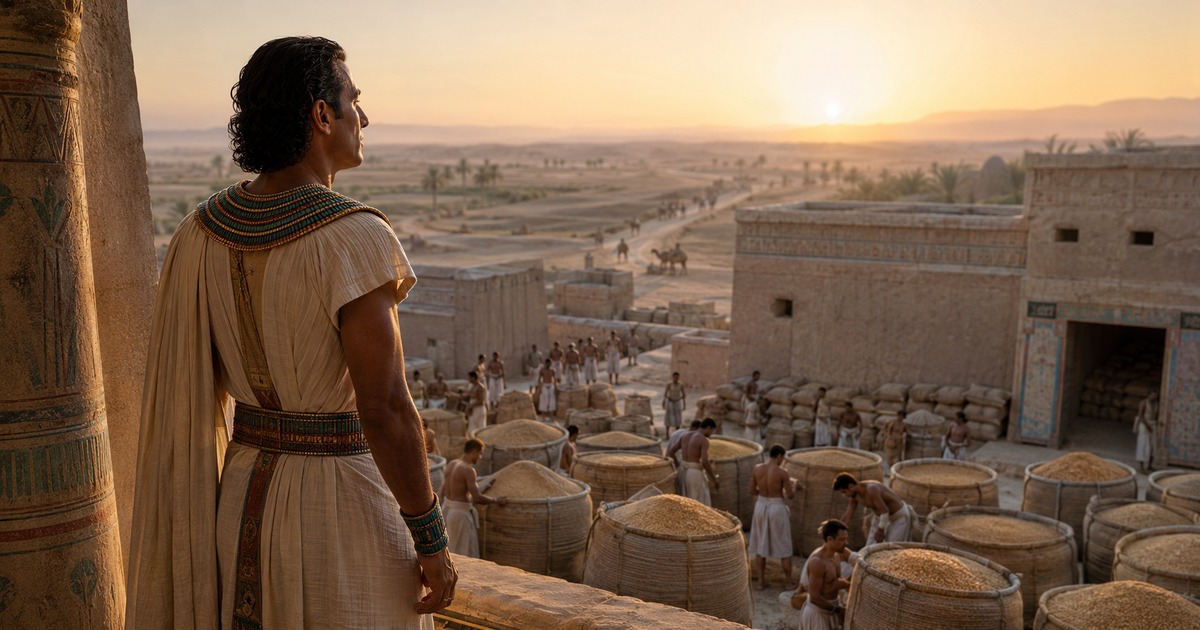
Pharaoh had a nightmare, but Joseph produced an administrative masterclass. When Pharaoh saw seven gaunt cows devour seven fat cows by the riverbank, the politicians of Egypt panicked. Joseph, however, recognised a basic truth: every economy runs in cycles, and abundance is never permanent.
I examine this deeply in my study on the story of Joseph in the bible and the lessons from his journey, because his promotion was not just about prophetic gifting. Pharaoh elevated him because he possessed the practical competence to manage national production under pressure. Joseph understood that seasons of surplus are not given so you can upgrade your lifestyle; they are granted to fund your survival through the downturn that follows.
Scripture records Joseph's concrete proposal to the crown: "Let Pharaoh do this, and let him appoint officers over the land, and take up the fifth part of the land of Egypt in the seven plenteous years." (Genesis 41:34, KJV)
Look at the mathematics here, child of God. Joseph established a mandatory national reserve rate of twenty percent. He did not tell Pharaoh to wait until the harvest was finished and skim off whatever loose change remained at the bottom of the cart. It was an upfront deduction taken off the top while the fields were still heavy with wheat.
If you consume one hundred percent of your household income simply because it sits inside your current account, you are not walking by faith. You are walking in presumption. God gave Egypt seven bumper harvests, but the blessing only preserved them because someone had the spine to lock twenty percent of it away before anyone could eat it.
Understanding What Scripture Really Means by Hard Seasons
To prepare your household properly, you have to understand what a famine actually represents in Scripture. The word "famine" in the Old Testament comes from the Hebrew root ra'av, which means hunger, scarcity, or an utter lack of bread. But look closer at how Moses describes Joseph's action during the surplus years.
When Genesis 41:34 commands Pharaoh to "take up the fifth part", the Hebrew verb used is chamash. It literally means to divide into five, to take a fifth part, or to arm for battle. Think about that revelation for a moment. In ancient Hebrew thought, setting aside a fifth was not a passive bookkeeping entry; it was an act of arming the nation against destruction.
When you allocate your savings, you are arming your household against coming vulnerability. The Word gives us this sobering reminder about what happens when the season turns: "And the seven years of dearth began to come, according as Joseph had said: and the dearth was in all lands; but in all the land of Egypt there was bread." (Genesis 41:54, KJV)
Notice the contrast. The drought touched every border, but Egypt had bread because Joseph operated with foresight. When economic contraction hits your country, the company you work for does not care about your church attendance before restructuring its payroll. A hard season tests the strength of your foundations, and wisdom demands that you build your reserves long before the first clouds disappear from the sky.
The Difference Between Biblical Grain Storage and Carnal Hoarding
Whenever I teach believers about aggressive multi year reserves, someone inevitably brings up Luke 12 and the rich fool who built bigger barns. People confuse holy preparation with faithless hoarding, and that confusion keeps good families vulnerable.
Hoarding is rooted in terror, greed, and self preservation. A hoarder builds walls, locks doors, and hides resources out of a cold distrust of God and a total contempt for his neighbour. Biblical storage, by contrast, gathers resources during plenty so that lives can be preserved when production fails. Joseph did not hide Egypt's grain under floorboards to enrich himself; he built a distribution network that fed entire civilisations.
Solomon explained the moral distinction with unmistakable directness: "He that withholdeth corn, the people shall curse him: but blessing shall be upon the head of him that selleth it." (Proverbs 11:26, KJV)
If you hoard bread to exploit people when they are starving, Scripture calls you cursed. But when you gather resources faithfully to sustain your household and assist the needy, you carry God's favour. I wrote extensively about this balance in my study on gathering resources to serve future kingdom needs, because your storehouse must always remain an instrument of mercy rather than a monument to fear.
I had to learn this difference the hard way years ago. My family experienced a brutal drop in household income when two major clients cancelled contracts within forty eight hours of each other. Because we had spent our previous high earning years treating extra income as play money rather than grain for the bins, we scrambled in panic. True stewardship protects your peace so you can stand firm and help others when the wider community falls apart.
How to Calculate Your Twenty Percent Grain Allocation
Most modern households fail with money because they try to micro manage pennies instead of establishing macro rules. Joseph did not stand in the field counting individual stalks of barley; he set an unbending macro-policy of twenty percent across the whole empire.
To execute this in your own home, you have to separate your income before it touches your regular spending accounts. If you wait until the final week of the month to see what remains after meals out, subscriptions, and random shopping, there will never be any grain left for the bin. The harvest gets eaten every single time.
Here is how you divide your net household income under a Joseph style framework:
Firstfruits and Giving (10% minimum): Honour the Lord first with your tithe and offerings, acknowledging that He owns the entire field before you touch a crumb.
The Joseph Storehouse (20%): Channel twenty percent of your take home pay straight into locked, separate liquid savings that you cannot reach with an ordinary bank card.
Essential Living Costs (50% maximum): Keep rent or mortgage, council tax, groceries, basic utilities, and essential transport strictly within half of your net pay.
Debt Elimination and Skill Development (10%): Attack consumer debts aggressively, or reinvest this portion into professional training that raises your earning capacity.
Household Margin (10%): Use this small remaining portion for modest family leisure and clothing, living within your means without raiding the stored grain.
I know what many brethren are thinking right now: living costs are brutal, energy bills are high, and putting away twenty percent feels impossible. If you cannot manage twenty percent today, you start with three percent. Then next quarter you stretch it to five percent, then eight, then twelve. The habit of cutting off the first portion matters far more in the early stages than the exact figure you transfer.
If you are struggling to find any margin at all in your current numbers, I walked through the mechanics in my guide on building a workable christian budget when finances are tight, which will help you spot the spending leaks you have normalised.

What Steps Should You Take to Build a Multi Year Crisis Reserve?
Mainstream financial advisers typically tell you to save three to six months of expenses. While that advice works reasonably well for minor interruptions like an unexpected boiler repair, it completely fails during deep systemic crises.
Joseph had to prepare Egypt for seven unbroken years of drought. While storing seven years of living expenses in cash is neither realistic nor practical for an ordinary working family today, aiming for a twelve to twenty four month defensive cushion is achievable if you build it intentionally over several years. You do not build a storehouse in a weekend; you fill it bin by bin during times of peace.
I discussed the spiritual discipline required for this in my breakdown of how to prepare for an economic crisis as a believer, because true preparation requires steady patience over emotional reactions. You must divide your storehouse into distinct layers:
Immediate Cash Buffer: Keep one month of baseline operational costs in your daily checking account to stop small overdraft fees from eroding your peace.
Short-Term Liquid Reserve: Place three to six months of bare bones survival expenses in an accessible high yield savings account or money market fund, insulated from stock market swings.
Extended Famine Capital: Build a secondary reserve covering six to eighteen months of foundational overhead, held in short-dated government treasury bills or secure capital-preservation instruments.
Tangible Household Staples: Maintain a practical pantry with non perishable food, water filtration, and essential home supplies that insulate your family against immediate supply chain disruptions.
Notice that these layers prioritise capital preservation over speculative returns. Joseph did not take Egypt's wheat to gamble on high risk commercial ventures; he stored raw grain in secure granaries across every city. Your crisis fund is an insurance policy for your calling, not an investment portfolio designed for quick profit.
Managing the Kitchen Table When the Harvest Drops
Preparing for famine is not just about hoarding bank balances; it requires cultivating domestic restraint before hardship forces your hand. Joseph was able to rule Egypt during the famine because he had already mastered discipline in Potiphar's house and inside the prison.
I reflected on this progression when writing about learning faithfulness in another mans house before promotion, because character under restriction determines how you handle authority later. If your household requires maximum luxury, expensive brands, and constant entertainment to feel content during good months, you will crumble emotionally when circumstances force you to cut back.
When my own income plummeted years ago, my wife and I sat down and pruned our monthly ledger with ruthless honesty. We cut subscription packages immediately. We stopped dining out entirely and rediscovered the simple blessing of home-cooked soup and bread. Our children did not suffer from that season of restraint; in fact, our home grew warmer and far more peaceful because we stopped running after things we did not need.
Scripture reminds us of the power of contentment: "Better is an handful with quietness, than both the hands full with travail and vexation of spirit." (Ecclesiastes 4:6, KJV)
Practice trimming non essentials while you still have abundant income. When you voluntarily live on eighty percent of what you earn, an unexpected twenty percent drop in income does not shock your family into panic. You simply keep walking forward because your household was never built on excess.

Turning Your Household Storehouse Into a Ministry of Mercy
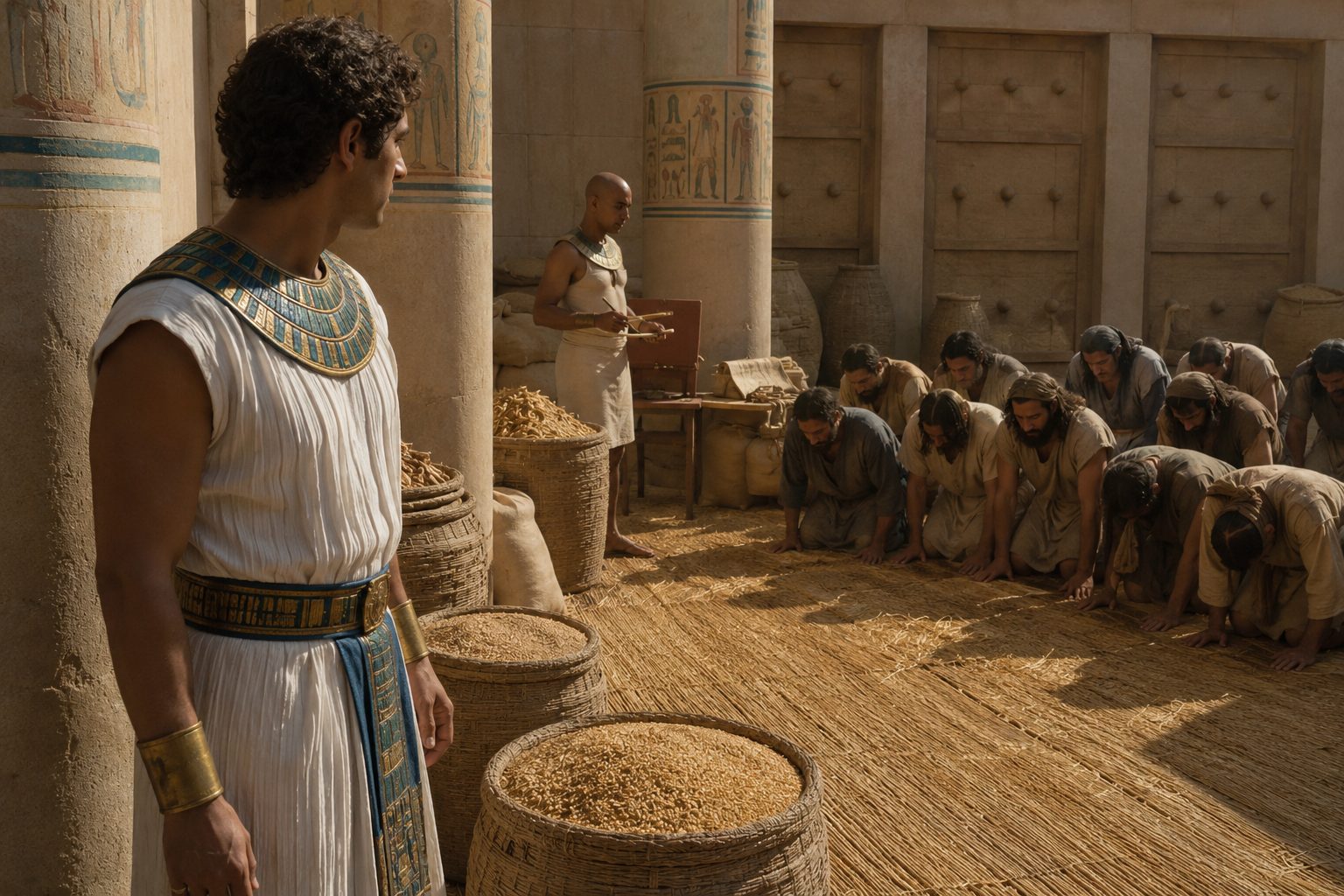
The ultimate goal of Joseph's preparation was not Egypt's balance sheet. The ultimate goal was the preservation of God's covenant people. When Jacob and his sons were starving in Canaan, Egypt was the only place on earth with grain to spare.
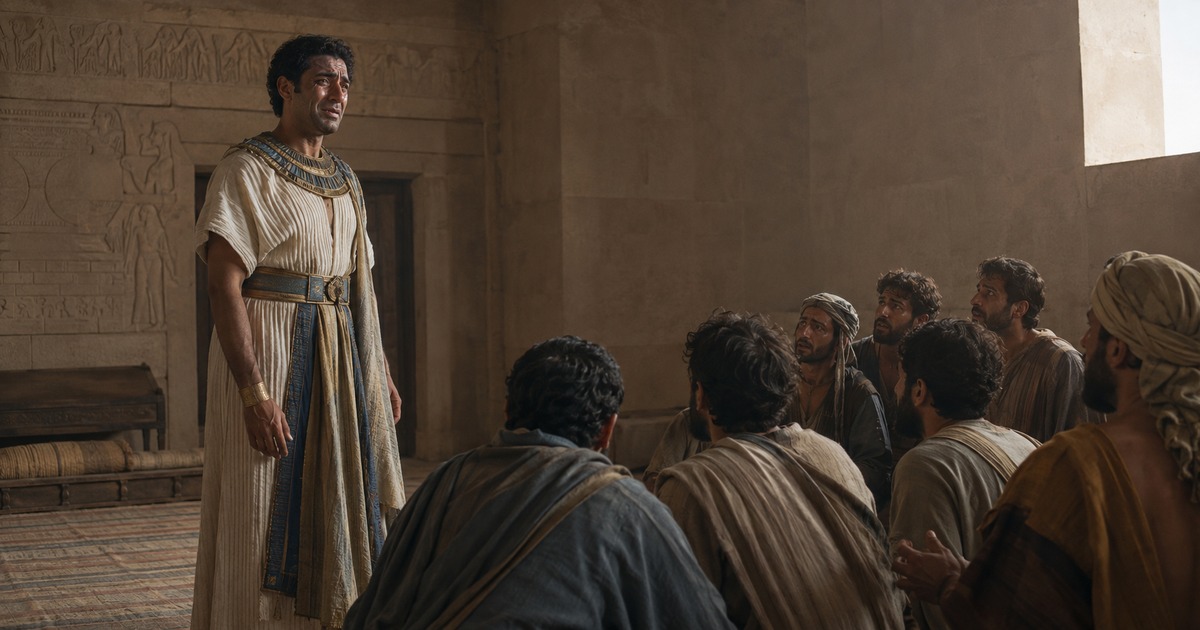
When Joseph finally revealed himself to the very brothers who had betrayed him into slavery, he explained the sovereign purpose behind his hardship and his administrative appointment: "And God sent me before you to preserve you a posterity in the earth, and to save your lives by a great deliverance." (Genesis 45:7, KJV)
Think about the magnitude of that statement, fellow believers. God positioned Joseph to save lives through systematic food distribution. When you manage your household finances with biblical prudence, God can use your stability to rescue people who have no cushion of their own.
If you live paycheque to paycheque with empty cupboards and maxed-out credit cards, you become another person who needs rescuing the moment an economic shock lands. But when you build your storehouse, you can write cheques for struggling single mothers, feed vulnerable neighbours, and keep church ministries funded while other donors pull back in panic. You step into the ministry of Joseph.
I walked through the daily disciplines that make this generosity possible in my comprehensive guide on practical biblical money management for ordinary christian families. You are not building wealth to boast of your security; you are gathering grain so that the name of Jesus is glorified when the world runs out of bread.
Where To Read Next
If you want to study how God uses administrative wisdom, trials, and faithfulness to prepare His servants for leadership, explore these detailed Bible studies:
The Story of Joseph in the Bible: 10 Powerful Lessons From His Life
Faithful in Someone Else's House: A Bible Study on God's Presence, Stewardship and Trust
Frequently Asked Questions
Is saving twenty percent of my income unspiritual or lacking faith?
No, setting aside twenty percent is following the exact biblical blueprint Joseph established in Genesis 41:34 under God's guidance. True faith works in harmony with practical wisdom rather than expecting God to rescue you from deliberate financial negligence. Storing grain during surplus years honours God's provision by ensuring it is not wasted.
How can a family save twenty percent when living costs are already high?
Start by auditing your monthly bank statements to eliminate subscriptions, dining out, and brand-name consumer habits that drain margin. If you cannot afford twenty percent immediately, begin with three to five percent automated straight from your salary, then increase the rate by one percent each quarter. Consistency in building the habit matters far more than the starting amount.
Did Joseph hoard grain in Egypt?
Joseph did not hoard grain; he stored it systematically on behalf of the nation so it could be distributed to save human lives when agriculture collapsed. Proverbs 11:26 condemns those who withhold grain for selfish gain, but commends those who sell and distribute it wisely. Biblical storage preserves communities, whereas carnal hoarding is driven by fear and greed.
Where should a modern Christian keep their crisis reserves?
Keep your emergency reserves in stable, liquid vehicles such as high-yield savings accounts, notice accounts, or short-term government treasury bills where the principal is protected. A crisis fund should never be placed in volatile stock markets or speculative digital assets. The goal of this money is absolute preservation and rapid availability, not high-risk capital growth.
How does building a crisis fund help me minister to others?
Having a funded storehouse stops you from becoming a financial burden on your church or community during economic downturns. More importantly, it gives you surplus cash and tangible supplies to support struggling families, feed neighbours, and assist kingdom causes when others are forced to withdraw their giving. Stability transforms your home into a sanctuary of mercy.
Found this helpful? Share it with someone who needs it.