If you have been told that your bank balance is the direct result of "sowing a financial seed" into a ministry, you have been lied to. It is time we spoke plainly about the damage this doctrine has done to the people of God.
I have seen too many believers give away their rent money because a preacher promised them a "hundredfold return" that never arrived. This is not faith. It is a spiritualised form of gambling that uses the Bible as a tip sheet. If you are asking is sowing a financial seed biblical, you are likely looking for relief from the pressure of modern fundraising tactics. You want to know if the "seed faith" message you hear on television matches the Word of God.
The short answer is that while the principle of sowing and reaping is found in Scripture, it has been twisted into a transactional formula that the apostles would not recognise. To understand the truth, you must first understand how we transitioned from the old requirements of the Law to the grace of the New Covenant. I recommend you start by reading my core study on Is Tithing Mandatory for Christians in the New Testament? to see the wider context of biblical giving.
The "seed faith" doctrine teaches that money is a seed that, when given to a "man of God," triggers a supernatural financial harvest for the giver. It turns God into a vending machine. But the Bible uses the metaphor of sowing to describe our character, our service, and our communal generosity , never as a way to "buy" a miracle from heaven.
The Greek word used for sowing in the New Testament is speiro. In the world of the first century, this was a common, everyday action. To speiro was to scatter. It was an act of letting go, trusting that the life within the grain would produce fruit for the sake of the harvest. But here is the shift: in the New Testament, speiro is almost always linked to the Word of God or the spiritual life. "He that soweth to his flesh shall of the flesh reap corruption; but he that soweth to the Spirit shall of the Spirit reap life everlasting" (Galatians 6:8, KJV).
The word "soweth" here is speiron. It refers to the direction of your life's energy. When Paul uses this agricultural language, he is not teaching you how to get rich. He is teaching you how to live. The "seed" is not your ten pound note; the seed is the Word of God or the investment of your life into Kingdom purposes. To suggest that speiro is a financial mechanism for personal ROI is to strip the word of its spiritual weight. It reframes a holy surrender into a selfish investment. You are not scattering your resources to help the poor; you are "investing" them to help yourself. That is not the Gospel.
I remember sitting in a conference years ago where the speaker spent forty minutes explaining why a "one thousand pound seed" was the only way to break a "poverty curse." I looked around at the people reaching for their credit cards. Many of them looked desperate. That is not the atmosphere of the Kingdom. That is the atmosphere of a casino.
The Real Context of 2 Corinthians 9:6
This is the verse most often weaponised by "seed faith" teachers. "But this I say, He which soweth sparingly shall reap also sparingly; and he which soweth bountifully shall reap also bountifully" (2 Corinthians 9:6, KJV). On the surface, it sounds like a financial formula. Give more, get more. But we must look at who Paul was writing to and why he was writing.
Paul was not raising money for a private jet or a luxury parsonage. He was collecting an offering for the "poor saints which are at Jerusalem" (Romans 15:26, KJV). These were believers facing literal starvation due to famine and persecution. The "sowing" Paul describes is the act of one church helping another survive. It was communal survival, not individual enrichment.
When Paul says you will reap bountifully, he is not promising a bigger house. He is talking about the "increase the fruits of your righteousness" (2 Corinthians 9:10, KJV). The harvest is spiritual maturity and the joy of seeing the needs of the brethren met. If you give to the poor, the "harvest" is that the poor are fed and God is glorified. Any teaching that turns this into a way for you to get more money is a perversion of the text.
I find it interesting that we rarely hear the next verse quoted with the same enthusiasm. "Every man according as he purposeth in his heart, so let him give; not grudgingly, or of necessity: for God loveth a cheerful giver" (2 Corinthians 9:7, KJV). If you are giving because a preacher told you that you "must" sow a seed to get a breakthrough, you are giving "of necessity." You are giving under pressure. I have written extensively about what 2 Corinthians 9 7 means by not under compulsion, and it is the direct antidote to the seed-faith trap.
What Luke 6:38 Actually Teaches
"Give, and it shall be given unto you; good measure, pressed down, and shaken together, and running over, shall men give into your bosom" (Luke 6:38, KJV). This is the second "pillar" of the seed sowing doctrine. It is used to promise that if you give money, God will move "men" to give money back to you in even larger quantities.
But read the verses immediately preceding it. Jesus is teaching about mercy, not money. "Be ye therefore merciful, as your Father also is merciful. Judge not, and ye shall not be judged: condemn not, and ye shall not be condemned: forgive, and ye shall be forgiven" (Luke 6:36-37, KJV). The context of "give and it shall be given" is the measure of forgiveness and mercy you extend to others.
If you are judgmental and harsh, people will be judgmental and harsh toward you. If you are generous with your mercy, God will ensure that mercy returns to you in "good measure." To rip this verse out of a teaching on forgiveness and use it to solicit donations is a gross handling of the words of Christ. It turns a command to love our enemies into a strategy to increase our net worth.
I have seen the damage this causes. People give their last bit of savings based on a misinterpretation of Luke 6:38, and when the "running over" bank balance doesn't manifest, they don't blame the preacher. They blame God. They think their faith was too small or their "seed" wasn't "significant" enough. This is how the enemy uses scripture to destroy the trust of the sheep.

The Difference Between a Gift and a Bribe
We need to be honest about the motivation behind modern seed sowing. If you are giving money specifically because you expect to receive more money back, you are not giving a gift. You are attempting to bribe God. You are treating the Almighty like a high interest savings account.
Biblical giving is an act of worship and obedience. It is done because we love God and we love our neighbour. It is not a transaction. In the Old Testament, people brought their firstfruits as an acknowledgment that God owned the whole harvest. They weren't trying to "get" a harvest; they were thanking Him for the one He had already provided.
When we "sow a seed" for a financial return, we are operating in the spirit of Simon the Sorcerer. He saw the power of the Holy Spirit and offered the apostles money, saying, "Give me also this power" (Acts 8:19, KJV). Peter’s response was terrifying: "Thy money perish with thee, because thou hast thought that the gift of God may be purchased with money" (Acts 8:20, KJV). You cannot purchase a financial breakthrough, a healing, or a blessing with a "seed." The blessings of God are given by grace, through faith , not through a bank transfer.
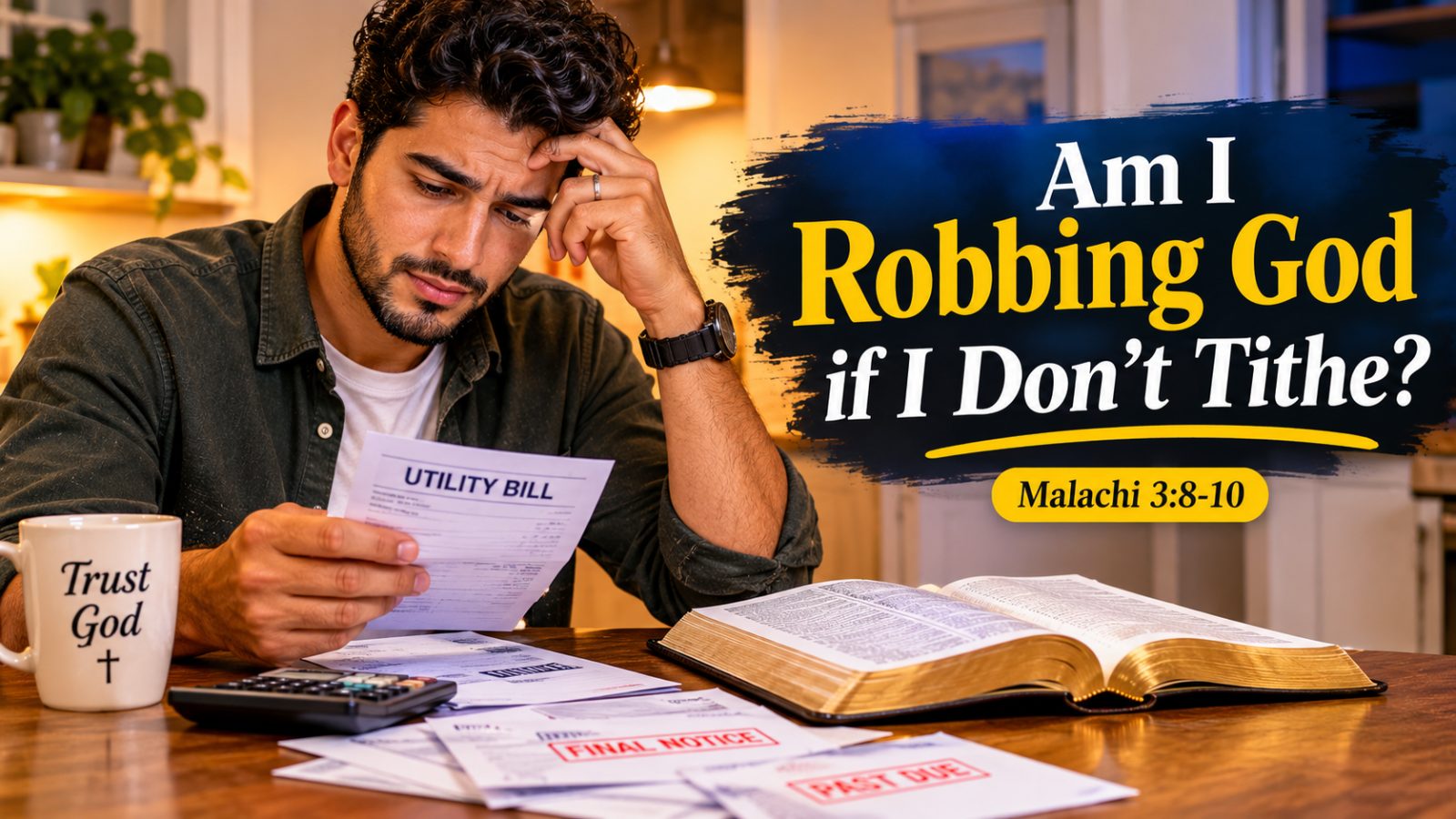
If you are struggling with the guilt of not "sowing" enough, I want you to hear this clearly: you cannot out-give God, but you also cannot manipulate Him. If you are in debt, your priority should be the stewardship of your obligations. I discuss this in detail in my article on am I robbing God if I don't tithe while I am in debt. God is more concerned with your integrity in paying what you owe than He is with you "sowing" into a television ministry.
Three Signs of Manipulative Seed Teaching
How do you know if the teaching you are hearing is biblical or manipulative? Here are three red flags I have learned to watch for in my own walk. If these are present, walk away.
The Focus is on the Return, Not the Recipient: If the preacher spends more time talking about what you will get than how the money will help the poor or spread the Gospel, it is a manipulation. Biblical giving is about the needs of others, not the greed of the giver.
The "Significant Seed" Requirement: When a speaker suggests that your blessing is tied to a specific, usually large, amount of money, they are practicing divination, not Christianity. God looked at the widow's two mites and called it the greatest gift of all (Luke 21:1-4). He does not need your "significant" amount to move on your behalf.
The "Limited Window" Tactic: If you are told you must give right now to unlock a specific blessing or that there is a "special anointing" on a specific amount for the next ten minutes, you are being pressured. God’s grace does not have an expiry date, and His blessings are not on a first-come, first-served basis.
I have stood at the back of many churches and felt the weight of this pressure. It feels like a sales pitch because it is a sales pitch. The apostles never used high-pressure tactics to fund their ministries. They simply stated the need, and the people, moved by the Holy Spirit, gave what they had purposed in their hearts. That is the New Testament way.
The Harvest You Should Actually Expect
Does this mean there is no reward for giving? Of course not. God is a rewarder of them that diligently seek Him (Hebrews 11:6, KJV). But the "harvest" of a generous life is rarely just more money. If you give to the work of the Kingdom, here is what the New Testament promises you will reap:
Contentment: Paul said, "I have learned, in whatsoever state I am, therewith to be content" (Philippians 4:11, KJV). Generosity breaks the power of greed over your life.
Eternal Fruit: When you give to help the poor or spread the Gospel, you are "laying up for yourselves treasures in heaven" (Matthew 6:20, KJV).
God's Provision: God promises to supply all your need according to His riches in glory (Philippians 4:19, KJV). Note that He promises to meet your needs, not necessarily your wants or your desire for luxury.
A Heart Like God's: Every time you give without expecting anything in return, you become more like your Father, who "maketh his sun to rise on the evil and on the good" (Matthew 5:45, KJV).
The "seed" you sow today in 2026 might be your time, your prayer, your service, or your financial support of a local church. But the harvest is a life transformed. If you are looking for a way to get rich, the Bible points you toward hard work, wisdom, and stewardship , not "miracle seeds." I recommend looking at biblical investment principles for a more grounded approach to your finances.
How to Give Without Being Manipulated
I believe we should be the most generous people on earth. But we should also be the most discerning. You can be a "cheerful giver" without being a "gullible giver." The key is to return to the simplicity of the New Testament pattern.
First, give to your local church where you are being fed spiritually. This is your primary responsibility. Second, give directly to the poor. "He that hath pity upon the poor lendeth unto the Lord; and that which he hath given will he pay him again" (Proverbs 19:17, KJV). Notice that God calls it a loan , He will ensure you are taken care of, but the focus is on the "pity" for the poor, not the "profit" for you.
Third, stop listening to teachers who make you feel like you are one "seed" away from God finally loving you or blessing you. You are already blessed with all spiritual blessings in heavenly places in Christ (Ephesians 1:3, KJV). You don't give to get a blessing; you give because you are already blessed. This shift in posture changes everything. It takes the anxiety out of the offering plate.
If you have been burned by these teachings in the past, I want to encourage you to keep your heart open to the Holy Spirit. Don't let the abuse of a principle stop you from the joy of genuine generosity. Just ensure that your giving is an act of love, not a desperate attempt to fix your bank account. You can read more about the New Testament principle of giving without tithing to see how this works in practice.
Where To Read Next
Did Jesus Command His Disciples to Tithe in the New Testament?
How to Pray for Financial Breakthrough in Jesus Name (Biblical Guide)
Frequently Asked Questions
Is sowing a financial seed biblical?
The concept of sowing and reaping is biblical, but the modern "seed-faith" doctrine of giving money to get more money is not. In the New Testament, sowing refers to our character, our service to others, and our communal generosity. Paul used this language in 2 Corinthians 9:6 to describe a collection for starving believers, not a personal investment strategy for wealth.
Is it a sin to not sow a seed in church?
No, it is not a sin to refrain from giving a "seed," especially when you are being pressured to do so. Biblical giving must be done "not grudgingly, or of necessity" (2 Corinthians 9:7, KJV). If you feel forced or manipulated into giving, that gift is not an act of faith, and you are under no scriptural obligation to participate in such fundraising tactics.
What does the Bible say about sowing and reaping money?
The Bible teaches that if we are generous, God will ensure our needs are met, but it never promises a specific financial "return on investment." Scripture warns against giving with the motive of getting. "But they that will be rich fall into temptation and a snare, and into many foolish and hurtful lusts" (1 Timothy 6:9, KJV). True biblical sowing is about meeting the needs of others and trusting God for your own provision.
Should I sow a seed for a financial breakthrough?
You should not try to "buy" a breakthrough from God with money. Breakthroughs come through prayer, obedience, hard work, and the sovereign grace of God. While giving is part of a faithful Christian life, using it as a transaction to solve financial problems is a form of superstition. Instead, seek God's wisdom for your situation and practice faithful stewardship of what you already have.
What is the 100 fold return in the Bible?
The "hundredfold" return mentioned by Jesus in Mark 10:30 refers to the blessings received by those who leave everything for the sake of the Gospel. Jesus clarifies that these blessings come "with persecutions" and include spiritual family and eternal life. It was never intended as a mathematical formula for financial prosperity based on a "seed" given to a ministry.
Found this helpful? Share it with someone who needs it.