
Nobody tells you what to do when you have to choose between the tithe envelope and the electricity bill. You sit in the pew, the bucket passes by, and your heart sinks because you know your bank balance is already in the red. You have heard the sermons, you have seen the posters, and you have felt the weight of that one specific question: am I robbing God if I don't tithe while I am drowning in debt?
The fear is real. It is a cold, gripping anxiety that tells you God is going to blow on your finances or let the devourer loose on your family because you didn't give ten per cent of a salary that doesn't even cover your rent. I want to tell you right now that God is not a celestial debt collector waiting to pounce on you for being broke. He is a Father who sees your heart, your struggle, and your debt, and His grace is far wider than the legalistic formulas we often hear from the pulpit.
Searching for clarity on this? You are likely trying to reconcile your desire to be faithful with the brutal reality of your bank account. I believe it is vital to understand the context of the New Covenant before you let another Sunday of guilt pass you by. You should start by reading my core study on is tithing mandatory for Christians in the New Testament to get the full theological foundation, but today, I want to show you the intersection of debt, survival, and the robbing God narrative.
The True Meaning of Robbing God in Malachi
The English word rob in Malachi sounds like a common mugging, but the Hebrew root tells a much deeper, more specific story. The word is gazal, and it appears in Malachi 3:8: "Will a man rob God? Yet ye have robbed me." This root doesn't just mean to steal. It means to pluck off, to take by force, or to strip away. In the context of the Old Covenant, the tithe was a legal requirement, a national tax that funded the Levitical priesthood and the social welfare of Israel.
To gazal was to withhold what was legally and contractually owed under the Mosaic Law. "But ye say, Wherein have we robbed thee? In tithes and offerings" (Malachi 3:8, KJV). For an Israelite under the Law, withholding the tithe was stripping the Levites of their livelihood. But here is the shift. You are not an Old Covenant Israelite living under the Mosaic civil code. You are a New Covenant believer. That is a massive distinction.
When you understand that gazal refers to a breach of a specific legal contract that was fulfilled in Christ, the fear of robbing God begins to lose its power over your conscience. You are not stripping God of anything. He owns the cattle on a thousand hills. I have learned the hard way that God is more interested in your heart posture than He is in a legalistic percentage that leaves your children hungry.
The word tithe itself comes from the Hebrew ma'aser, meaning a tenth. It was a specific portion of the land's increase. If there was no increase, there was no tithe. If you are in deep debt, you are currently living in a season of decrease, not increase. God's heart is for your restoration, not for your further financial destruction under a misinterpreted verse.
Will God Punish Me for Not Paying Tithes?
This is the question that keeps people awake at night. You worry that if you miss a payment, God will let your car break down or cause your boiler to explode as a "penalty" for your disobedience. Let's be very clear here. Under the New Covenant, Jesus Christ took the full weight of the law's demands upon Himself. Galatians 3:13 says, "Christ hath redeemed us from the curse of the law, being made a curse for us."
If you are in Christ, God is not looking for ways to punish you. He is not a landlord waiting for a reason to evict you from His favour. The idea that there is a penalty for not paying tithes on time is a carryover from a legalistic system that Jesus finished at the cross. Punishment is for criminals; discipline and guidance are for children. God may guide you to manage your money better, but He is not "fining" you for being in debt.
I have seen believers stay in a state of constant panic, thinking every flat tyre is a divine judgement. That is a miserable way to live. It is also a complete misunderstanding of the Gospel. Your standing with God is based on the blood of Jesus, not the consistency of your giving record. If you are struggling, God is your helper, not your accuser. He knows exactly what is in your bank account, and He knows the weight of the debt you are carrying.
When you realise that God's love isn't something you buy with a ten per cent fee, the pressure lifts. You can start to breathe again. You can look at your finances with a clear head instead of a heart full of terror. I talked about this more in my post on is tithing an act of obedience to God or a way to get rich, and honestly, it changed how I think about the motives behind our giving.
Did Jesus Warn About Tithing While in Debt?
People often search for a specific verse where Jesus talks about debt and tithing, but we have to look at the principles He taught. Jesus was far more concerned with the weightier matters of the law , judgement, mercy, and faith , than He was with the meticulous counting of seeds. In Matthew 23:23, He rebuked the Pharisees for tithing their herbs while neglecting the heart of God's requirements.
Jesus never issued a command for His followers to tithe while they were unable to pay their bills. In fact, He spent a massive amount of His ministry warning against the religious systems that "devour widows' houses" (Luke 20:47). If a religious teaching is demanding money from someone who has nothing, it is doing exactly what Jesus condemned. Does God want me to tithe or pay off debt? The answer is found in the principle of integrity and mercy.
If you are asking, how do you tithe when you are in debt, the first step is to recognise that Jesus wants you to be a person of your word. If you have promised to pay a lender, that is a vow. God is not honoured when you break a vow to a man to give money to a church that He never commanded you to give. Jesus valued the heart of the giver, like the widow with her two mites, but He never demanded that people ignore their earthly obligations to satisfy a religious quota.
I believe that if you are tithing while deep in debt and your bills are going unpaid, you are missing the mercy that Jesus preached. He wants you free. He wants you to be a light in the world. A Christian who doesn't pay their debts is a poor witness for the Kingdom. If you want to dive deeper into this, you'll want to read what I wrote about did Jesus command His disciples to tithe in the New Testament.
The Higher Priority of Providing for Your Family
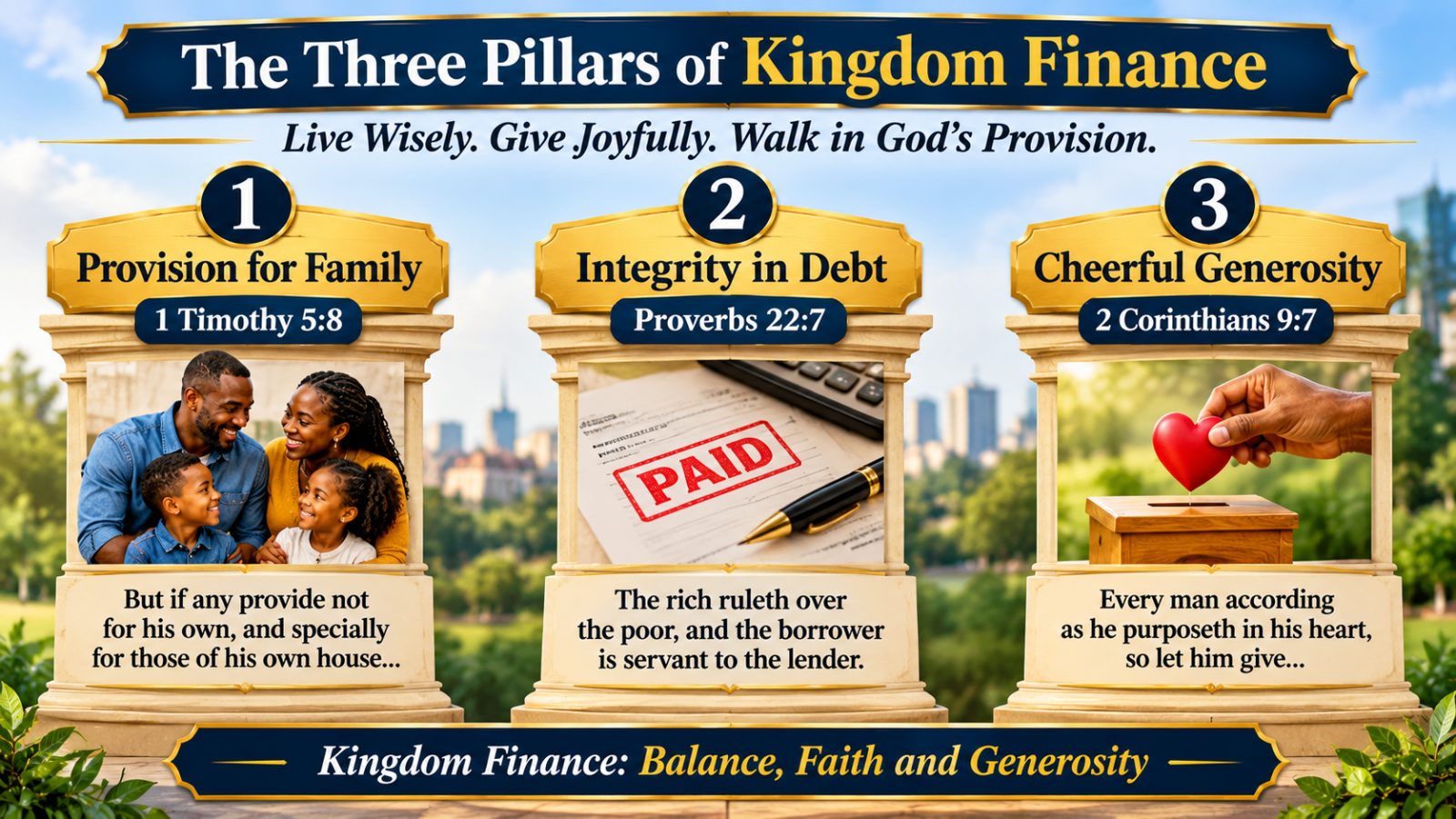
Struggling to choose between tithing and feeding your children? The Bible actually gives you a very clear, very blunt instruction. It is found in 1 Timothy 5:8. This verse is often ignored in tithing sermons because it complicates the give first no matter what narrative. But for a Kingdom citizen, this is a non-negotiable priority that must be weighed against any religious tradition.
"But if any provide not for his own, and specially for those of his own house, he hath denied the faith, and is worse than an infidel." (1 Timothy 5:8, KJV)
Read those words carefully. Paul says that if you do not provide for your own household, you have "denied the faith." He doesn't say "unless you are tithing." He says your primary stewardship, after your devotion to God, is the provision and protection of your family. If tithing means your children go hungry or you lose the roof over your head, you are not being faithful. You are neglecting a primary biblical mandate.
God does not want you to be "worse than an infidel" just to put a specific percentage in a collection plate. You can read more about why this matters in my post about why is God keeping me poor and what the Bible says about money struggles. It is about understanding that stewardship starts at your own front door, not at the church door.
This doesn't mean you stop being generous. It means you stop being legalistic. Generosity in the New Testament is about the heart, not the calculator. If you can only give two pounds this month because you are paying off debt and keeping the lights on, then give those two pounds with a heart of worship. That is far more pleasing to God than a hundred pounds given out of a terrified heart that is neglecting its family responsibilities.
Do You Pay Tithe on Borrowed Money?
This is a common point of confusion. People get a loan or a credit card limit increase and wonder if they should "tithe" on that money. The answer is a firm no. Borrowed money is not "increase." It is a liability. You have to pay it back, usually with interest. If you tithe on a loan, you are essentially giving away money that belongs to the bank, and you are putting yourself further into a hole to do it.
The biblical tithe was always on the "increase" of the land or the flock. A loan is the opposite of increase; it is a weight. If you are paying tithes and still broke, and you are using credit to do it, you are trapped in a dangerous cycle. God does not require you to borrow from Peter to pay the church. That is not faith; it is a lack of financial understanding.
I have seen people "sow a seed" using a credit card, hoping for a breakthrough. All they got was a high-interest bill at the end of the month. God is not a gambler, and He doesn't ask you to be one either. He wants you to be a wise steward. If you want to understand how to handle these daily choices, look at what are the best Bible verses for making daily financial decisions to get some solid ground under your feet.
Integrity means you treat the bank's money as the bank's money. You use it for the purpose it was intended, and you pay it back as agreed. Adding a religious tax to a debt only makes the debt harder to clear. God is honoured when you are a man or woman of your word who pays their debts on time. Should you tithe if you can't pay your bills? No. Pay your bills. Be a light of integrity in a world of debt.
Can I Give My Tithe to the Poor Instead of Church?
If you are struggling with the traditional tithing model, you might wonder if your giving can go elsewhere. Many believers ask, can I give my tithe to the poor instead of church? In the Old Testament, a portion of the tithe was specifically for the poor, the widow, and the orphan. It was a social safety net as much as a religious fund.
In the New Testament, giving is not about a specific destination as much as it is about a heart of compassion. If your local church is pressuring you for money while you are in debt, but you see a brother or sister in your community who is hungry, your priority should be the person in need. James 1:27 tells us that "Pure religion and undefiled before God and the Father is this, To visit the fatherless and widows in their affliction."
Giving to the poor is an act of worship. It is a way to be the hands and feet of Jesus. If you are in debt, you might not have much to give, but even a small amount given to someone in crisis is a beautiful thing. It shifts your focus from your own lack to someone else's need. This is the heart of the New Testament principle of giving without tithing.
I have found that when I stopped worrying about the "10% rule" and started looking for where the Holy Spirit was leading me to be a blessing, my joy in giving returned. It wasn't a bill anymore; it was a privilege. If you are in debt, don't feel guilty about helping a neighbour instead of putting a specific envelope in a bucket. God sees the heart behind the gift.
The Bondage of Debt and the Goal of Freedom

I believe many people stay in debt longer than they should because they are trapped in a cycle of giving their way out of a problem that requires stewardship and discipline. If you have high-interest debt that is compounding every month, that debt is a form of bondage. Proverbs 22:7 tells us that "the borrower is servant to the lender." God wants you free from that servitude.
In some seasons, the most spiritual thing you can do with your money is to pay off the lender so you can stop being their servant. When you are in debt, you are essentially giving your "increase" to a bank or a credit card company. If you are serious about becoming a Kingdom financier who can fund the work of God, you have to get out of the servant's seat first. You can't fund the Kingdom if the bank owns your future.
Is it a sin to stop tithing while paying off debt? No. Sin is the transgression of the law (1 John 3:4). Since the New Covenant believer is not under the Mosaic Law, failing to meet a ten per cent quota is not a sin. It is a failure to meet a religious tradition, perhaps, but it is not a breach of your standing with God. You are justified by faith in Jesus Christ, not by the consistency of your giving record.
I have learned that true stewardship requires a plan. If you are just throwing money at the church while your debt grows, you aren't being faithful; you are being irresponsible. You need to look at how to get out of debt as a Christian without stopping giving to find a balance that honours God and respects your creditors.
A Practical Path Forward for the Kingdom Citizen
So, what do you actually do? If you are in debt and you feel the weight of tithing, I want to give you a practical way to move forward that honours God and respects your reality. First, stop the guilt. You cannot walk in faith while you are crippled by religious shame. God loves you, and your standing with Him is secure in Christ.
Second, look at your numbers. If you cannot give ten per cent, can you give one per cent? Or two? Start somewhere. Not because you have to, but because you want to keep your heart open to generosity. This keeps you in the habit of giving without the crushing weight of a quota you cannot meet. It is about training your heart to trust God even in the middle of the struggle.
Prioritise Essentials. Ensure your family has food, shelter, and basic needs met because providing for your own is a non-negotiable biblical command (1 Timothy 5:8).
Maintain Integrity. Pay your debts. Every pound you pay back to a lender is a pound of integrity.
Give from the Heart. Set aside a small, consistent amount to give as an act of worship rather than a fearful tax. This keeps your heart soft.
Kill the debt. Use every spare penny to pay off your smallest balance first and build the momentum you need to get free forever.
Communicate. Talk to your church leaders. A healthy church will want to help you get your finances in order, not just take your last pound.
Child of God, the goal is freedom. God wants you to be a cheerful giver, and it is hard to be cheerful when you are terrified of the bailiffs. Use this season to grow in stewardship. As you pay off your debts, your capacity to give will grow naturally. One day, you will be able to give far more than ten per cent, and you will do it from a place of abundance and joy, not lack and fear.
I am praying for you as you navigate this. It's not easy, but the Lord is faithful. He sees your desire to be obedient and He sees the bills on your table. Trust His grace to lead you out of the red and into a place where you can be the blessing you've always wanted to be. Walk in faith. Steward with wisdom. Trust the One who owns it all.
Where To Read Next
If you are working through your finances and want to ensure you are building on a solid biblical foundation, here are the next steps I recommend for your walk.
Did Jesus Command His Disciples to Tithe in the New Testament?
How to Get Out of Debt as a Christian Without Stopping Giving: A Biblical Approach
Frequently Asked Questions
Are you robbing God if you don't tithe?
In the New Testament, you are not robbing God by failing to hit a 10% quota. Malachi's warning was to a specific nation under a legal contract. Today, God looks at your heart and your stewardship of all He has entrusted to you.
Will God punish me for not paying tithes?
No. Jesus took the punishment for our shortcomings. God is a Father who wants to help you manage your money wisely, not a debt collector waiting to strike you down for being in a difficult financial season.
Did Jesus warn about tithing while in debt?
Jesus warned against religious systems that took money from the vulnerable (devouring widows' houses). He prioritised mercy, faith, and integrity over legalistic rituals that left people in ruin.
How do you tithe when you are in debt?
You give according to what you have, not what you don't have. Prioritise your family's needs and your debt obligations, then give a heart-led amount that you have purposed in your heart with joy.
What does God say about tithing when in debt?
Scripture emphasises integrity (Proverbs 22:7) and provision for your family (1 Timothy 5:8). God is honoured when you handle your debts responsibly and give out of a heart of love rather than a sense of legalistic compulsion.
Found this helpful? Share it with someone who needs it.