
There are moments when doing the right thing does not make life easier. Sometimes it makes life harder. I have learned that integrity is easy to admire when we are speaking about someone else. It is easy to celebrate courage when we are not the ones being tested. Yet when obedience begins to cost us something, that is when we discover what is really inside us.
It is one thing to say that we fear God. It is another thing to choose Him when compromise could protect our position, preserve a relationship or make life more comfortable. It is one thing to speak about holiness in public. It is another thing to remain holy when nobody is watching and nobody would ever know.
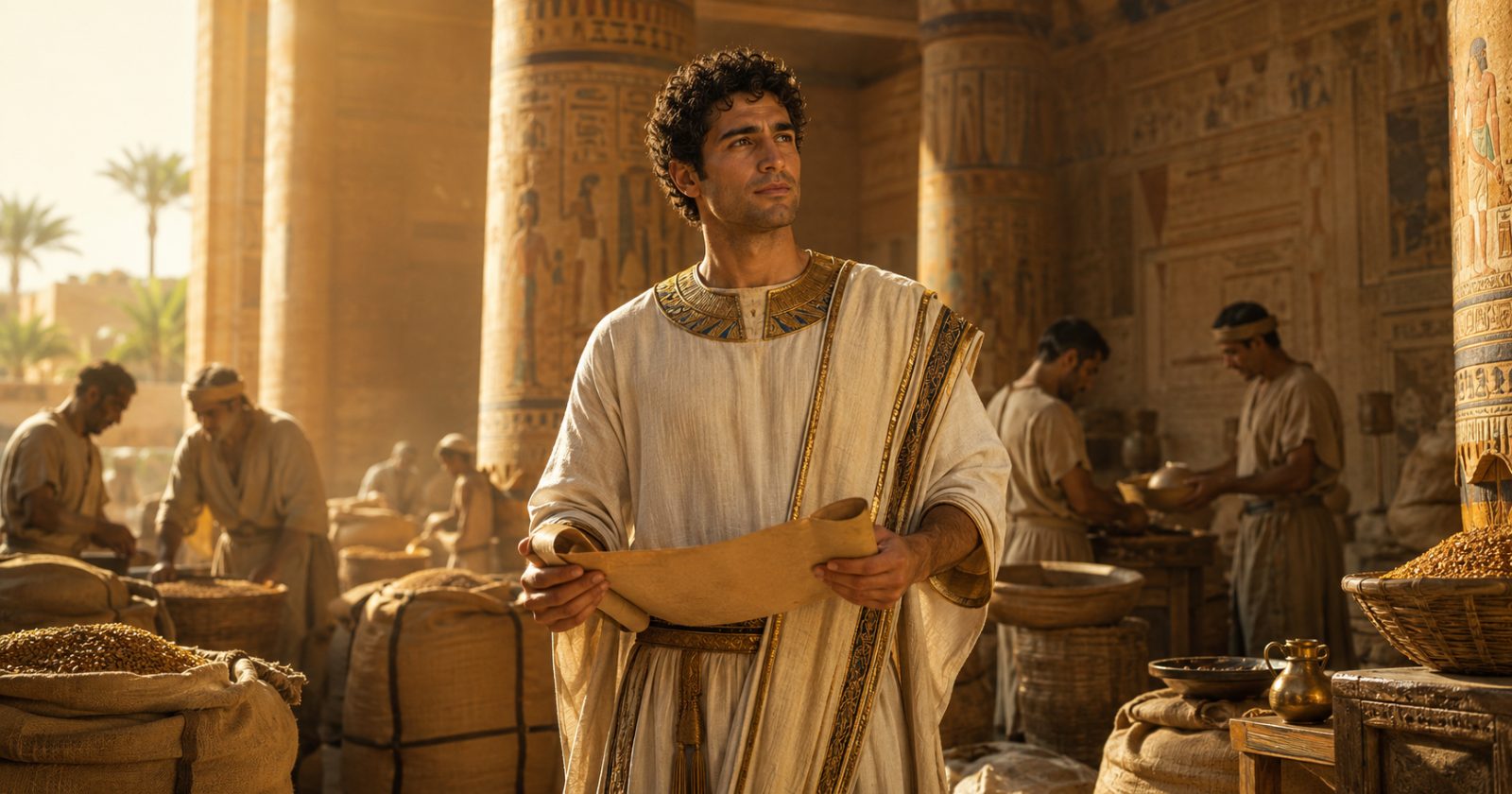
Joseph faced that kind of moment in Potiphar’s house. He was already carrying the pain of betrayal. His own brothers had rejected him, sold him and watched him disappear into a future he did not choose. He had been taken into a foreign land, separated from his father and everything familiar to him, and forced to serve in another man’s house.
Yet even there, the hand of God was upon him. His work prospered. Trust grew around him. Responsibility increased. Potiphar placed more and more into Joseph’s hands, and for a moment it may have looked as though his life was finally becoming stable again. Then temptation entered the very place where favour had found him.
Potiphar’s wife did not approach Joseph only once. Scripture tells us that she spoke to him day after day. This was repeated pressure, waiting for him to become tired, careless or weak. Joseph was being asked to trade private holiness for temporary comfort.
You may never stand in Potiphar’s house, but you will face moments when something wrong appears easier than something right. You may be offered an opportunity that requires you to silence your convictions. You may be pressured to protect a relationship by compromising your boundaries. You may be tempted to become one person in public and another person in private.
Joseph’s response reveals something deeper than self-control. He did not only think about Potiphar or about losing his position. He thought about God. His words show that his private life was governed by a living awareness of God’s presence.
This lesson is not only about Joseph running from a woman. It is about a man who valued the presence of God more than the protection of his position. It is about the kind of character that can survive temptation, misunderstanding, false accusation and delay without becoming corrupt. It is also about you and me, because before God entrusts us with influence, He often deals with who we are when nobody is watching.
1. Temptation Entered a Place of Favour
Genesis 39 begins by showing us that the Lord was with Joseph. Potiphar saw that Joseph’s work prospered and eventually placed the entire household under his care. This matters because temptation did not arrive only when Joseph was weak, forgotten or unsuccessful. It entered a season in which responsibility and favour were increasing.
Many believers assume that spiritual progress will remove temptation. Scripture teaches something more sober. Greater responsibility often exposes deeper tests because influence enlarges both opportunity and vulnerability. A new role, a trusted relationship or a season of visible blessing can become the setting in which character is examined.
You should not interpret temptation as proof that God has left you. Joseph was tempted while the Lord was with him. The presence of pressure did not mean the absence of God. What mattered was how Joseph responded while God was present with him.
2. Joseph Remembered the Trust Placed in His Hands
Joseph answered Potiphar’s wife by speaking first about trust. His master had placed everything in his care and had withheld nothing except his wife. Joseph understood that sin would not only violate a rule; it would betray a relationship and corrupt a responsibility.
This is one of the practical foundations of integrity. Mature people remember what has been entrusted to them. They remember the confidence of a spouse, the trust of a leader, the innocence of a child, the responsibility of a ministry and the sacredness of their own calling. When temptation tries to narrow our attention to one moment of pleasure or advantage, integrity widens our vision again.
Ask yourself what God has placed in your hands. Your answer may include a family, a reputation, a business, a ministry, a gift or a future that is still developing. A careless private decision can damage something that took years to build. Joseph refused to exchange a sacred trust for a passing moment.
3. Joseph Saw Sin as an Offence Against God
Joseph’s deepest reason appears in Genesis 39:9: “How then can I do this great wickedness, and sin against God?” He did not base his obedience only on the possibility of being discovered. His conscience was formed by relationship with God.
In the Hebrew Scriptures, sin is not merely a social mistake or a broken regulation. It is rebellion against the God who sees, knows and calls His people to holiness. Joseph was living in Egypt, far from his father’s household and without the public support of his family, yet the God of Abraham, Isaac and Jacob remained real to him.
This is where private holiness begins. When God’s presence becomes more real to you than secrecy, pressure or applause, you stop asking only, “Will anyone know?” You begin asking, “What will this do to my fellowship with God, my conscience and the person I am becoming?”
Rules may restrain behaviour for a time, but reverence for God reaches the heart. Joseph did not merely fear consequences. He loved God enough to refuse what would grieve Him.
4. The Pressure Came Day After Day
Genesis 39:10 says that Potiphar’s wife spoke to Joseph day by day. The text does not present temptation as a single dramatic moment that was easily defeated. It describes repeated pressure.
This is spiritually important because many compromises do not begin with one great decision. They grow through small permissions, repeated conversations, private messages, emotional familiarity and boundaries that are slowly weakened. A person may resist the first approach and still become vulnerable if he continues to remain close to the same environment.
Joseph would not listen to her, lie with her or even be with her. He did not only reject the final act. He also rejected the closeness that would feed the temptation. There are relationships, conversations and environments that may not yet be openly sinful, but they are carrying you towards a place where your resistance is becoming weaker.
Holiness requires more than good intentions. It requires wise distance. You do not prove your strength by standing unnecessarily close to what can destroy you. Read the complete story of Joseph and all 10 lessons from his life
5. When Wisdom Means Leaving the Room
When Potiphar’s wife caught Joseph by his garment, he left it in her hand and fled outside. Joseph did not remain to argue, negotiate or demonstrate how spiritual he was. He removed himself from the situation.
There are moments when prayer must be joined with immediate movement. If an environment is feeding compromise, leaving may be the most spiritual decision available to you. This can involve ending a private conversation, refusing an invitation, changing access, seeking accountability or walking away from an opportunity that continually attacks your convictions.
Joseph lost his garment, but he kept his character. That is a powerful picture for our lives. Sometimes obedience may leave something in another person’s hands. You may lose an opportunity, a relationship, a title or the approval of people who do not understand your decision. Yet what you preserve within yourself is worth more than what you leave behind.
6. A Word About Power, Vulnerability and False Accusation
Joseph was not an equal participant in this situation. He was a Hebrew servant in the house of a powerful Egyptian official. Potiphar’s wife possessed social authority that Joseph did not have. When she later described him as “the Hebrew servant,” she used both his ethnicity and his position to shape the accusation against him.
This part of the story must be handled with care. It should never be used to blame victims of abuse, harassment or coercion. Joseph’s example does not teach people to remain silently in unsafe conditions. He fled. When there is danger, wisdom may require leaving, seeking help, documenting what happened and involving trustworthy authorities.
The passage also reminds us that false accusations can be devastating. Joseph did what was right and still lost his reputation and freedom. Integrity does not guarantee immediate vindication, and obedience does not always prevent people from misunderstanding you.
7. The Garment He Lost and the Character He Kept
This was not the first garment used against Joseph. In Genesis 37, his brothers took his special coat and used it to support a lie about his death. In Genesis 39, another garment was kept and used to support a false accusation. In both cases, others controlled the garment, but they could not control the purpose of God or the character Joseph was developing.
There are times when people may hold the evidence, control the story or influence how others see you. You may not have the power to correct every rumour immediately. You may not be able to force everyone to believe the truth. What remains within your control is the person you choose to become before God.
A clean conscience does not remove pain, but it gives you somewhere firm to stand when your name is attacked. Joseph entered prison without his position, but he did not enter without God.
8. God Was With Joseph in Prison
Genesis 39 does not end with Joseph’s vindication. It ends with Joseph in prison. Yet the same chapter that says the Lord was with Joseph in Potiphar’s house also says that the Lord was with him in prison.
This is one of the deepest truths in Joseph’s story. God’s presence was not limited to favourable circumstances. The house changed, the clothing changed, the people around him changed and his freedom changed, but the presence of God did not change.
You may be in a season where obedience appears to have cost you more than compromise would have cost. You may be asking why God did not defend you immediately or why doing the right thing led to a painful place. Joseph’s story does not give us permission to pretend that prison is pleasant. It gives us confidence that prison cannot remove the presence of God.
Sometimes the first reward of integrity is not promotion. Sometimes it is the quiet knowledge that your soul remains clean and that God is still with you.
9. Character Before Authority
Joseph would eventually stand before Pharaoh and carry national authority. He would manage food, wealth and power during a crisis. Genesis 39 shows us that God was forming the inner man before placing him in the public role. Read What Did Joseph Do to Succeed in the Bible? What Most Christians Refuse to Do
A person who cannot govern desire will struggle to govern influence. A leader who depends on secrecy to maintain an image is already divided within. Joseph’s refusal was part of his preparation because Egypt did not only need a gifted administrator. It needed a man whose gift could be trusted.
We often pray for doors to open, but God also works on the person who will walk through those doors. Your private choices are not disconnected from your calling. They are shaping the kind of person who will carry it.
10. How This Applies to Our Lives
Build your convictions before the moment of pressure
Joseph’s answer was immediate because his values were already settled. Decide what faithfulness means before temptation asks you to negotiate. Clear convictions reduce confusion when emotions become strong.
Do not manage temptation alone
Secrecy gives temptation room to grow. Speak with a mature believer, pastor, counsellor or trusted friend before the struggle becomes a crisis. Accountability is not weakness. It is wisdom.
Create practical boundaries
Avoid private settings, messages, meetings and patterns that repeatedly weaken your judgement. Boundaries are not signs that you lack faith. They are ways of protecting what God has entrusted to you.
Leave when remaining is dangerous
There are situations where the most faithful response is to walk away. Do not stay in an unsafe or coercive environment because you are afraid that leaving will look unspiritual. Joseph’s flight was not cowardice. It was obedience.
Trust God when the truth is not immediately recognised
You cannot control every opinion, but you can remain truthful, seek wise support and refuse to become bitter. God’s timing may not match your desire for immediate vindication, yet His presence can sustain you while the truth is still hidden.
Let private holiness support public calling
The strength of your public ministry, leadership or influence will eventually be tested by the condition of your private life. Give attention to the hidden places because they are where trustworthiness is formed.
Reflection Questions
· What area of your private life requires greater honesty before God?
· Are you remaining too close to a person, conversation or environment that repeatedly weakens your convictions?
· What responsibility or relationship would be harmed if you chose temporary compromise?
· Have you confused God’s presence with comfortable circumstances?
· Is there a painful misunderstanding that you need to place into God’s hands while continuing to walk truthfully?
· What practical boundary can you establish this week to protect your integrity?
Prayer for Integrity
Father, I ask You to form in me the kind of character that remains faithful when nobody is watching. Make Your presence more real to me than secrecy, pressure or human approval. Give me wisdom to recognise temptation early, courage to establish healthy boundaries and strength to leave every environment that draws me away from You. When obedience costs me something, keep my heart from bitterness and remind me that nothing I preserve through compromise is worth losing a clean conscience. Help me to honour every trust You have placed in my hands, and prepare me to carry influence without becoming corrupt. When people misunderstand me, remain close to me and teach me to rest in Your truth. In Jesus’ name, amen.
Final Word
Joseph’s victory in Genesis 39 was not that he escaped pain. His victory was that pain did not persuade him to become unfaithful. He lost a garment, a position and his freedom, but he kept his integrity and the presence of God remained with him.
You may not be able to choose every situation that enters your life, but by the grace of God you can choose the person you are becoming within it. Character is formed through ordinary decisions, repeated boundaries and a heart that remembers God when nobody else is looking.
Where To Read Next
The Story of Joseph in the Bible: 10 Powerful Lessons From His Life
The Dreamer and the Pit: What Joseph's Story Teaches About Favor and Betrayal
Faithful in Someone Else's House: What Joseph Teaches About Excellence Without Ownership
Study Sources
Genesis 39:7–23, King James Version.
Sefaria, Genesis 39 and classical Jewish commentary on Genesis 39:14–15, consulted for Hebrew wording and cultural context.
The cultural observations in this lesson support the biblical text but do not replace it. Scripture remains the primary authority.
Found this helpful? Share it with someone who needs it.
Related articles